
RFID Wet Inlays
RFID Wet Inlay (UHF)
PSA Glassine-Liner Roll

Quick answer
RFID wet inlays are pressure-sensitive chip-on-antenna components on 23-50 µm PET film with permanent acrylic PSA + 61 gsm yellow glassine (or PET) release liner — supplied on 76 mm (3″) cores at 2,000-10,000 inlays per roll, with web widths and pitch matched to Mark Andy P5/P7, Nilpeter FA-17, MPS EF-Symjet, Edale FL3, Mühlbauer TAL-M, Melzer ST and Bielomatik PiP converting cassettes. Default UHF chip set (Impinj M730 / M750 / M770, NXP UCODE 8 / 9, Monza R6 / R6-P, Alien Higgs-9) plus HF / NFC variants (NTAG21x, NTAG 424 DNA, MIFARE Ultralight, ICODE SLIX2). 100% RF-tested at converting speed; per-lot sensitivity histogram + yield report + GS1 SGTIN-96 EPC manifest in CSV/XML. Auburn ARC + Walmart T2/T3 + Target SUPPLIERS + Macy's audit-ready.
- PSA + glassine release liner — peel-and-stick onto thermal-transfer / direct-thermal / synthetic label face stock at converter; 50-150 m/min line speed.
- Roll format 2,000-10,000 inlays / 3″ core; web widths 45 / 50 / 58 / 76 / 100 mm; pitch 14 / 16 / 18 / 20 / 22 / 25 / 30 / 35 mm matched to converter cassette geometry.
- Adhesive grade options — general-purpose acrylic (FTM 2 ≥18 N/25 mm), all-temperature cryo-grade (-40 °C), low-surface-energy rubber-based, removable low-tack — specified per FINAT FTM.
Used in these industries
Deployments where this product is referenced on our industry landing pages.


At a glance
Use these short answers to decide whether this page matches the project before moving into the detail.
What wet inlay is + what it is not
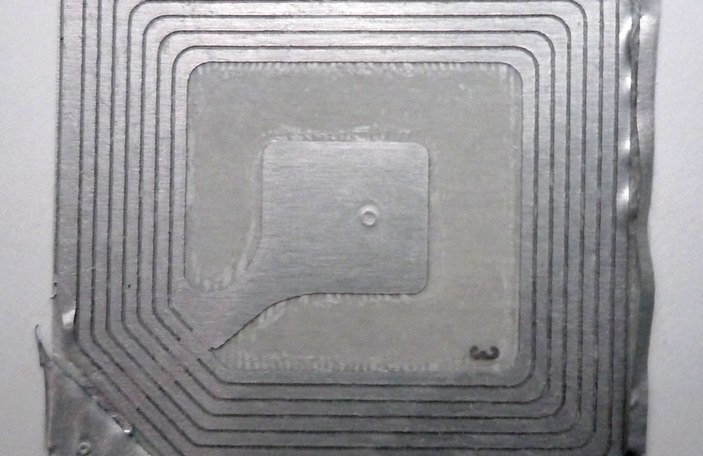
Wet inlay = chip + antenna on PET film + permanent acrylic PSA + silicone-coated PET / glassine release liner. Designed for label converters laminating between thermal-t...
Substrate, antenna and chip-attach
Face film — 23 µm or 50 µm PET; aluminium-etched antenna (cost-optimised) or copper-etched (premium). Chip-attach — anisotropic conductive paste (ACP) for PET; thermocom...
Next step
Ready to move forward? Start your inquiry to get specific answers for this project.
Request quote and samples- Adhesive grades — match to face stock + end-use
-
- General-purpose permanent acrylic — paper / cardboard / synthetic at room temperature; FTM 2 peel ≥18 N/25 mm.
- All-temperature cryo-grade acrylic — -40 °C cold-chain / freezer; cross-linked promoter, 200-cycle freeze-thaw stable per ASTM D3330.
- Low-surface-energy rubber / modified acrylic — polyethylene / polypropylene / PE-coated paper; tackifier-loaded for LSE wet-out.
- Removable low-tack acrylic — returnable-asset / event-wristband / temporary-promotion; FTM 2 peel 50-150 g/25 mm.
- High-tack acrylic — corrugated case / kraft / textile; FTM 2 peel ≥25 N/25 mm.
- All graded per FINAT FTM 1 (peel adhesion), FTM 2 (180° peel), FTM 8 (shear), FTM 9 (loop tack), FTM 19 (release force).
- Release liner options
-
- Standard 61 gsm yellow glassine — paper liner; room-temperature web converting at <50 m/min.
- PET release liner 50-75 µm — for high-speed (>50 m/min) or low-tack inlays where glassine tears.
- Clear PET liner — for see-through label converting and inspection-window applications.
- Silicone release force 10-25 g/25 mm at FINAT FTM 19 — specified on per-lot COA.
- Liner side identification — yellow glassine has visible facing; PET liner often clear or tinted.
- Roll format — web width + pitch + core
-
- Core — 76.2 mm (3″) standard; 152 mm (6″) for high-speed converting lines.
- Roll outer diameter — 300 mm OD ≈ 5,000-8,000 inlays; 400 mm OD ≈ 10,000-16,000 inlays.
- Web widths — 45 / 50 / 58 / 76 / 100 mm; specifying width wrong forces a slitting pass and adds 0.3-0.8 ¢/inlay.
- Pitch — 14 / 16 / 18 / 20 / 22 / 25 / 30 / 35 mm or custom; pitch tolerance ±0.5 mm + chip position ±0.3 mm.
- Splice — ≤1 splice / 2,000 inlays, marked with 25 mm metallic tag for line auto-detection.
- Label converter equipment compatibility
-
- Mark Andy P5 / P7 / Performance series — flexo / digital hybrid; 50-150 m/min.
- Nilpeter FA-17 / FA-22 — flexo / digital hybrid; mid-volume label converter.
- MPS EF-Symjet — UV-flexo + inkjet hybrid; high-volume label.
- Edale FL3 / FL5 — flexo; mid-volume label converter.
- Bobst M5 / M6 — flexo; high-volume.
- OMET Varyflex / iFlex — flexo; mid-large volume.
- Mühlbauer TAL-M (label) — sheet-fed RFID label assembly.
- Melzer ST + Bielomatik PiP — RFID-specific converter cassette geometries; specify cassette match before order.
- Chip silicon — UHF default + HF + NFC
-
- UHF Impinj M730 / M750 / M770 — Auburn ARC-W + ARC-Q certified; default for retail apparel + cold-DC.
- UHF Monza R6 / R6-P — proven 5+ year retail + reusable hard-tag.
- UHF NXP UCODE 8 / 8m / 9 — UCODE 9 best-in-class -23.5 dBm sensitivity for dense-reader.
- UHF Alien Higgs-9 — Tier-2 retail with self-tuning antenna.
- HF / NFC NTAG213 / 215 / 216 + NTAG 424 DNA — consumer NFC tap + brand-protection.
- HF / NFC MIFARE Ultralight EV1 — disposable transit / event ticket.
- HF / NFC ICODE SLIX2 — library / asset / DESCO ISO 15693.
- Auburn ARC + retailer programme readiness
-
- Auburn ARC categories — Q (high-volume retail), W (apparel), G (general purpose), X (cold-DC), L (logistics), M (RTI / metal-near).
- Walmart Tier 2 + Tier 3 — apparel, footwear, home, hardlines, toys, jewelry, beauty + grocery + pharma.
- Target SUPPLIERS portal compliance.
- Macy's, Nordstrom, Dick's, Lululemon, Decathlon — item-level RFID mandates.
- Per-lot quality pack — sensitivity histogram + yield report + EPC manifest in CSV/XML — included for orders ≥50,000.
- EPC pre-encoding service
-
- GS1 SGTIN-96 / SGTIN-198 (longer serial) — retail + apparel default.
- GS1 SSCC-96 — pallet + carton aggregation.
- GS1 GIAI-96 — Global Individual Asset Identifier; reusable assets.
- GS1 GRAI-96 — Global Returnable Asset Identifier; RTI tag.
- Sequential / random / customer-supplied list; CSV or XML manifest.
- Lock bits + access password armed per programme spec.
- Procurement reality
-
- MOQ 5,000-10,000 inlays per chip + antenna combo; 50,000 for fully-custom antenna design.
- Lead time 12-18 business days for stock chip + standard antenna; 4-6 weeks for fully-custom.
- Unit price USD 0.05-0.20 ex-works depending on chip + antenna + adhesive grade + EPC pre-encoding + roll length.
- Web-width slitting pass adds 0.3-0.8 ¢/inlay; specify converter cassette before order to avoid.
- Pitch mismatch causes 1-3% inlay waste at line startup; specify pitch with ≤0.5 mm tolerance.
- Application inventory
-
- Retail apparel hang-tag + woven care label — UHF M730 / UCODE 8 + dogbone 96 mm + general-purpose acrylic.
- Cold-chain frozen food + pharma cold-storage — UHF UCODE 9 + dogbone + cryo-grade acrylic.
- Smart packaging + folding carton + blister + pouch — HF NTAG213/216 + low-surface-energy adhesive.
- Event ticket + transit ticket + parking pass — HF NTAG213 / MIFARE Ultralight + paper face + standard adhesive.
- Wristband manufacturing — laminated into Tyvek / vinyl / fabric / silicone wristband stock.
- Pharma vial / cosmetic / luxury authentication — NTAG 424 DNA SUN + near-field 27 mm + small-format roll.
- Library label — ICODE SLIX2 + ISO 28560 encoding + acid-free adhesive.
- What this product is NOT
-
- Not a no-adhesive inlay — for card press / over-mold / ISO 7810 lamination see rfid-dry-inlay.
- Not a finished label — has no face stock, print, die-cut or top-coat.
- Not a UHF reader — pair with Impinj Speedway / Zebra FX9600 / handheld reader hardware.
- Not a temperature sensor — pair with Murata SL900A / Sensitech / ELPRO logger if cold-chain monitoring required.
Why converters source at inlay stage instead of buying finished labels
- Finished-label sourcing locks the converter into supplier's face stock + adhesive + label format choices.
- Wet inlay procurement keeps the converting margin (face stock + print + die-cut) in-house.
- Web width + pitch + core specified to converter's existing cassette → zero rewinder + slitter overhead.
Wet inlay vs dry inlay — when to use which
Dry inlay (rfid-dry-inlay)
- Bare PET / polyimide / PEN substrate — no adhesive, no liner.
- For ID-1 / CR-80 PVC + PC card lamination, hard-tag housing assembly, RTI over-mold.
- Heat-press, ultrasonic bond, injection over-mold, ICAO 9303 PC press.
- PET 23-50 µm for PVC card press; polyimide 75 µm for PC + ICAO 9303; epoxy-encap for over-mold.
- Card press equipment — Mühlbauer CL, Melzer CLX, HID FARGO, Matica MX, Atlantic Zeiser DigiLine.
Wet inlay (this SKU)
- Permanent acrylic PSA + silicone-coated PET / glassine release liner.
- For label converter laminating into thermal-transfer / direct-thermal / synthetic label stock.
- Peel-and-stick onto face stock; roll-to-roll converter at 50-150 m/min.
- Adhesive grade specified per face stock + end-use (general / cryo / LSE / removable / high-tack).
- Web converter — Mark Andy P5/P7, Nilpeter FA-17, MPS EF-Symjet, Edale FL3, Bobst M5/M6, OMET Varyflex.
- Same chip + antenna available in either format — choice is downstream-process driven.
- Wet inlay is the dominant volume — global RFID label market consumes ~25-30 billion wet inlays / year vs ~5-8 billion dry inlays.
- Wet inlay adhesive grade is the procurement specification that most often gets wrong — confirm FINAT FTM peel + face stock + end-use temperature.
FINAT FTM + Auburn ARC — the QC framework converters specify in the RFP
- FTM 2 180° peel must match the face stock — paper / synthetic / fabric / corrugated have very different bond requirements.
- FTM 19 release force determines whether the liner tears at converter speed — PET liner is the fix for >50 m/min lines.
- Auburn ARC category drives the chip + antenna combo — ARC-W for apparel hang-tag, ARC-X for cold-DC pallet.
Where wet inlay-stage sourcing earns its margin — the application inventory
- Retail apparel hang-tag + woven care label — UHF M730 / UCODE 8 + dogbone 96 mm + general-purpose acrylic on synthetic face stock.
- Cold-chain frozen food + pharma cold-storage — UHF UCODE 9 + dogbone + cryo-grade acrylic on PET face stock.
- Smart packaging — folding carton, blister, pouch, sleeve — HF NTAG213 / 216 + low-surface-energy adhesive.
- Ticket and credential — event ticket, transit ticket, parking pass, ID badge — HF NTAG213 / MIFARE Ultralight + paper face.
- Wristband manufacturing — laminated wet inlay into Tyvek, vinyl, fabric, silicone wristband stock.
- Pharma vial + cosmetic + luxury authentication — NTAG 424 DNA SUN + near-field 27 mm + small-format roll.
- Library label — ICODE SLIX2 + ISO 28560 + acid-free adhesive on archival face stock.
- Logistics + 3PL — UHF M730 / UCODE 8 + dogbone or rectangular 70 mm + corrugated-friendly adhesive.
From paper-only labelstock to GS1 EPCIS 2.0 — milestones that shaped wet inlay supply
- 1958
FINAT founded — establishes the European labelstock-industry technical framework that defines FTM peel + tack + release-force tests.
- 2004
Walmart RFID mandate — Class-0 + Class-1 Gen1 wet inlays specified for top-100 supplier pallet + case tagging; first volume RFID converter market.
- 2007
EPC Gen2v1 + ISO/IEC 18000-6C ratified; wet inlay procurement standardises on dogbone 96 mm + Monza chip family.
- 2013
EPC Gen2v2 published; chip sensitivity baseline crosses -20 dBm; converters adopt Mark Andy P5/P7 + Nilpeter FA-17 RFID converter cassettes.
- 2016
Auburn ARC certification launches; retailer mandates begin specifying ARC-W (apparel) + ARC-Q (high-volume retail).
- 2018
Impinj M700 + NXP UCODE 9 launch — sensitivity crosses -22 dBm; cold-DC + dense-reader programmes viable on wet inlay.
- 2021
GS1 EPCIS 2.0 (ISO/IEC 19987:2021) — Commission, ObjectEvent, AggregationEvent become standardised; wet inlay pre-encoding + manifest become inspection artifact.
- 2026 — Today
Cross-buyer reference experience on retail-apparel-source-tag, cold-chain-frozen-DC, pharma-vial-serialisation, smart-packaging-fmcg, logistics-pallet-case and wristband-converter programmes shows.
Useful next pages
Use these linked product, guide and comparison pages to keep the next click specific and practical.
Sister inlay SKUs
Wet vs dry, generic UHF, and per-chip flagship inlays.
Finished label products built from these inlays
Ready-to-use UHF + HF RFID label products built from wet inlays.
Chip-level technical reference
Deep-dive specifications and chip-family comparisons relevant to this SKU.
Industry applications
Industry deep-dives where this SKU is commonly specified.
FAQ
What is the difference between a wet inlay and a dry inlay?
A wet inlay includes a permanent acrylic pressure-sensitive adhesive backing with a 61 gsm yellow glassine (or PET) release liner — ready to peel-and-stick to a face-stock surface or laminate into a label structure on a Mark Andy P5/P7, Nilpeter FA-17, MPS EF-Symjet, Edale FL3, Bobst M5/M6 or OMET Varyflex converter at 50-150 m/min. A dry inlay has no adhesive and no liner — it is a bare 23-50 µm PET (or polyimide / PEN for high-temp) film with chip and antenna, designed to be laminated between card / tag / housing layers using heat + pressure, ultrasonic bond, or 200-280 °C injection over-mold. Wet inlays are used by label converters; dry inlays are used by card manufacturers (ISO 7810 PVC / PC press), hard-tag assemblers and over-mold tag producers.
What quality testing is performed on wet inlays before shipment?
Every wet inlay undergoes 100% inline RF testing during production at converting speed — each inlay is individually read-tested by a high-speed RFID reader on the production line. Any inlay that fails to respond or falls below the minimum sensitivity threshold is marked with a reject flag and excluded from the roll, with the roll-position logged for the per-lot yield report. We also perform statistical sampling for read-range measurement, FINAT FTM 1 / 2 / 8 / 9 / 19 adhesive-peel-tack-shear-release tests per the customer's adhesive-grade RFP, and Auburn ARC environmental stress testing for retail / cold-DC / industrial use cases. Per-lot quality pack — sensitivity histogram + yield report + GS1 EPC manifest + FINAT FTM measurements + COA — ships with every order ≥50,000 inlays.
Can wet inlays be pre-encoded with custom data before shipment?
Yes. We offer pre-encoding services including GS1 SGTIN-96 / SGTIN-198 / SSCC-96 / GIAI-96 / GRAI-96 EPC writing (sequential, random, or customer-supplied list with TID-based serialisation), NFC NDEF URL / vCard / Smart Poster programming, lock bit + access-password arming per programme spec, and full per-roll EPC manifest in CSV or XML keyed to roll position so downstream label printers correlate printed GTIN + serial to the encoded EPC for traceability. Pre-encoding adds minimal lead time (1-3 days) and is recommended for large production runs where on-site encoding would bottleneck converter line speed. Encoding data is provided via CSV upload or REST API integration to our pre-encoding service.
Which chip should I specify when I don't know what my end customer needs yet?
For NFC converting lines that need one flexible stocking inlay, NTAG213 is the mainstream choice — 144 bytes user memory, standard NDEF URL fit, widest smartphone compatibility, lowest per-unit cost. For UHF, Impinj M730 is the equivalent default — 96-bit EPC, no user memory to complicate encoding, volume pricing, Auburn ARC-W certified at standard antenna sizes. Stock these two chips as your base inventory and layer in speciality variants (NTAG 424 DNA for cryptographic authentication, NTAG215 for Amiibo-compatible long-URL, M770 for mixed-surface cold-DC, UCODE 9 for dense-reader 18 m range) as customer requirements firm up. Avoid stocking NFC and UHF on the same web width or you'll waste feeder changeover time — keep the two frequency families on dedicated converter cassettes.
How do I match wet-inlay adhesive to the end-use substrate?
For standard paper and cardboard face stocks at room temperature, a general-purpose permanent acrylic (180-day peel adhesion per FINAT FTM 2, peel ≥18 N/25 mm) is the correct default. For low-surface-energy substrates (polyethylene, polypropylene, PE-coated paper), specify a rubber-based or modified acrylic with tackifier loading to wet out the plastic. For cold-chain and frozen applications (pharma cold-storage, frozen food), an all-temperature cryo-grade acrylic rated to -40 °C is mandatory — standard acrylic loses bond at <-5 °C. For removable labels (returnable asset tags, event wristbands, temporary promotion), specify a low-tack acrylic with FTM 2 peel of 50-150 g/25 mm. For corrugated case + kraft + textile, specify a high-tack acrylic with FTM 2 peel ≥25 N/25 mm. Always run FINAT FTM 1 / FTM 2 / FTM 9 (peel + tack) tests on the target face stock before committing to a production run — and we supply 100-piece sample rolls at no charge for converter qualification.
Sources & references
Primary standards, OEM datasheets and regulatory documents cited by this article. All URLs were verified on the access date shown below.
- ISO/IEC 18000-63:2015 — RFID for item management — Part 63: Parameters for air interface communications at 860 MHz to 960 MHz Type C
ISO standard codifying EPC Class-1 Gen2v2 — the air-interface every UHF wet inlay implements; replaces ISO/IEC 18000-6C.
- ISO/IEC 14443-3:2018 — Identification cards — Contactless IC cards — Proximity cards — Part 3: Initialization and anticollision
13.56 MHz HF proximity-card air-interface implemented by HF / NFC wet inlays (NTAG21x, NTAG 424 DNA, MIFARE, ICODE).
- GS1 — EPC Tag Data Standard (TDS) 2.0 — SGTIN, SSCC, GRAI, GIAI encoding schemes for Gen2 UHF
Authoritative spec for EPC binary encoding patterns retailers + 3PL programmes require on every wet inlay; SGTIN-96 covers retail + apparel + cold-chain pre-encoding.
- FINAT — Technical Handbook + Test Methods FTM 1 (peel adhesion), FTM 2 (180° peel), FTM 8 (shear), FTM 9 (loop tack), FTM 19 (release force)
Labelstock-industry QC framework that defines the peel + tack + shear + release-force tests every wet inlay roll ships against; the converter procurement-spec language.
- NFC Forum — NFC Forum Type 2 + Type 4 Tag Operation Specifications
Type 2 (NTAG 21x) + Type 4 (NTAG 424 DNA + MIFARE DESFire) command sets — the protocols every NFC-Forum-certified phone supports for HF wet inlay tap.
- Auburn University RFID Lab — ARC (Auburn RFID Certification) Programme + Category Specifications
Performance classification of Gen2 UHF inlays for retail (Q, W), cold-DC (X), logistics (L), general (G) and metal-near (M); the audit framework Walmart Tier 2/3, Target SUPPLIERS, Macy's, Lululemon, Decathlon vendor-compliance reference.
- RAIN RFID Alliance — Inlay Performance, Reader/Tag Interoperability and Application Profiles
Industry alliance defining UHF RAIN profiles + interoperability standards across chip / inlay / reader / middleware vendors.
- Impinj — M700 Series + Monza R6 / R6-P Tag Chip Family Datasheet
M730 -22.7 dBm + M750 fastest encoder + M770 Autopilot + Monza R6 / R6-P proven 5+ year retail chip; the dominant UHF wet inlay chip family in 2024-2026.
- NXP Semiconductors — UCODE 8 / UCODE 9 / NTAG 21x / NTAG 424 DNA Datasheets
UCODE 9 best-in-class -23.5 dBm sensitivity for UHF dense-reader; NTAG 424 DNA AES-128 SUN for HF brand-protection wet inlay applications.
- GS1 — EPCIS 2.0 + Core Business Vocabulary 2.0 (ISO/IEC 19987:2021)
Standardised event-capture model — Commission, ObjectEvent, AggregationEvent — that downstream retailer + 3PL platforms consume from wet inlay pre-encoded EPCs.
Proud Tek is a Shenzhen-based RFID & NFC manufacturer supplying hotel chains, transit operators, event venues and retail brands worldwide. Every order includes free samples, RF testing and dedicated project support.
Get a Quick Quote
Tell us about your project and we'll respond within one business day. Fields marked (asterisk) are required.