
RFID Supply Chain
RFID Supply Chain Management
GS1 EPCIS 2.0

Quick answer
On most enterprise rollouts, RFID supply chain management uses UHF RAIN RFID tags on items, cases and pallets to provide real-time visibility at every node — manufacturing, distribution centres, in-transit, retail stores, returns processing — and binds that visibility to the GS1 EPCIS 2.0 (ISO/IEC 19987:2021) event-sharing standard so trading partners, regulators and brand owners consume the same chain-of-custody record. RFID-enabled supply chains reduce shipment errors materially, cut receiving time substantially and enable same-day inventory accuracy that barcode-based systems cannot achieve, while satisfying DSCSA (US pharma), EU FMD (EU pharma), FSMA Section 204 (US food traceability), EUDR (EU deforestation regulation), EU 2024/1781 ESPR (Digital Product Passport) and US CBP C-TPAT chain-of-custody requirements.
- End-to-end visibility. Track products from the factory floor through distribution, transit and retail with automated RFID reads at every handoff point.
- 95% fewer shipment errors. Automated RFID verification at packing and shipping catches mis-picks, wrong quantities and mislabeled cartons before they leave the facility.
- 80% faster receiving: portal readers scan an entire pallet of RFID-tagged cartons in seconds as it passes through the dock door, replacing manual barcode scanning.
Featured Supply Chain Products
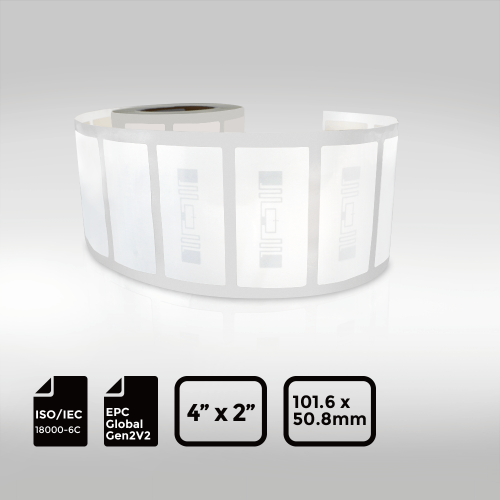
SKUs we typically deploy for supply chain. Tap a card for specs and samples.

At a glance
Use these short answers to decide whether this page matches the project before moving into the detail.
Where this programme view fits
Pharmaceutical manufacturers + wholesale distributors implementing DSCSA serialisation (US, effective 27 Nov 2024) + EU FMD (EU, since 9 Feb 2019). Food / produce proces...
Node-by-node coverage map
Factory / source — UHF item-level tag at production line; SGTIN-96 / SGTIN-198 commissioning event; chain-of-custody root. Pack-out — case-level RFID label on each carto...
Next step
Ready to move forward? Start your inquiry to get specific answers for this project.
Get supply chain RFID tag pricing- GS1 identifier scheme — what to encode
-
- SGTIN-96 (Serialised Global Trade Item Number) — item-level encoding; combines GTIN with serial.
- SGTIN-198 — pharma DSCSA / EU FMD requirement (longer serial range supports lot/batch + expiry).
- SSCC-96 (Serial Shipping Container Code) — case + pallet level; required for ASN / EDI 856.
- GRAI-96 (Global Returnable Asset Identifier) — reusable totes, IBCs, kegs, drums.
- GIAI-96 (Global Individual Asset Identifier) — fixed assets in supply-chain visibility scope.
- GLN (Global Location Number) — facility / building / dock-door identifier carried in EPCIS read events.
- GS1 Digital Link 1.3 (ISO/IEC 18975:2023) — web-resolvable URL form for ESPR DPP convergence.
- MIL-STD-130N IUID — defence supply-chain alternative to GS1.
- Regulatory carriers RFID supports
-
- DSCSA (US pharmaceutical, effective 27 Nov 2024) — serialised item-level tracking + verification + suspect-product reporting via SGTIN-198.
- EU FMD 2011/62/EU — Falsified Medicines Directive; serialisation + tamper-evidence + EMVS verification, in force since 9 Feb 2019.
- FSMA Section 204 (US food, effective 20 Jan 2026) — Food Traceability List traceability rule; key data elements per CTE (Critical Tracking Event).
- EUDR EU 2023/1115 (EU deforestation, effective 30 Dec 2025) — beef, soy, palm, cocoa, coffee, rubber, wood; Geographic origin claim per consignment.
- ESPR EU 2024/1781 (EU Digital Product Passport) — textiles 2027, batteries 2027 (under EU 2023/1542), electronics 2028+.
- MDR EU 2017/745 + IVDR — UDI requirements for medical devices supply chain.
- WHO PQS prequalification — vaccine cold-chain RFID temperature-logger compliance.
- GHS / REACH — hazardous substance chain-of-custody for chemicals supply chain.
- Reader hardware ecosystem
-
- Impinj R700 — flagship fixed UHF reader; 4-port + GPIO; deployed at dock-door portals.
- Impinj R420 / R510 — mid-range fixed reader for shelf, room, conveyor applications.
- Zebra FX9600 / FX7500 — high-performance fixed UHF reader at dock-door portals + cross-dock.
- Honeywell IF61 + IH40 — alternative fixed reader family.
- Alien ALR-9900+ — long-deployed fixed reader at warehouse + retail.
- Handheld: Zebra MC3300xR / RFD8500, Honeywell CT60, TSL 1128 / 1166 — picker-walk-around verification.
- Smartphone UHF sled: Zebra RFD90 + iPhone / Android — for direct-store-delivery + audit walk.
- Reader-as-a-service: Impinj ItemSense + Zebra MotionWorks for cloud-managed multi-site fleet.
- Antenna: Times-7 / Laird / KEONN A8060 / RFspace gen-purpose + on-shelf overhead.
- Visibility platform + EPCIS event consumer
-
- SAP EWM (Extended Warehouse Management) + SAP S/4HANA — enterprise WMS / ERP receiving EPCIS events.
- Manhattan Active WM / Active YMS / Active Omni — Tier-1 retail + 3PL warehouse-management.
- Blue Yonder (formerly JDA) WMS — alternative enterprise WMS.
- Oracle WMS Cloud + Oracle Fusion SCM — Oracle ecosystem.
- Microsoft Dynamics 365 Supply Chain — mid-market + SMB.
- Körber Supply Chain — global WMS / TMS provider.
- EPCIS 2.0 broker / repository: GS1 ONE Record + IBM Sterling Supply Chain Insights + atma.io (Avery Dennison) + EVRYTHNG.
- Track-and-trace SaaS: TraceLink (pharma DSCSA), Optel Vision (pharma + food), Antares Vision (multi-vertical), rfxcel (multi-vertical).
- Trading-partner mandates + retailer programmes
-
- Walmart T2 + T3 source-tagging — broadest US retail RFID mandate; expanded to consumer electronics, home goods, toys 2022–2026.
- Target SUPPLIERS programme — apparel + accessories source-tagging mandate at item level.
- Tesco — UK retail item-level apparel + footwear + general merchandise.
- Marks & Spencer — UK item-level apparel since 2007 (longest-running retail RFID programme).
- Inditex (Zara) — internal apparel RFID across global stores; OE supplier in Avery Dennison atma.io platform.
- H&M + PVH (Calvin Klein, Tommy Hilfiger) + VF Corp — apparel item-level brand programmes.
- JCPenney + Macy's + Kohl's + Nordstrom — US apparel + accessories item-level.
- Auburn ARC (Auburn University Research Center) — independent apparel RFID benchmarking + reference programme.
- EPCIS event taxonomy
-
- ObjectEvent — single object commissioning, observation, decommissioning at a single read point.
- AggregationEvent — case-to-pallet, item-to-case association.
- TransactionEvent — purchase order / shipping notice / receiving acknowledgment binding.
- TransformationEvent — manufacturing / processing converting input objects to output objects (FSMA-relevant for food).
- AssociationEvent — sensor-tag pairing (cold-chain logger to pallet).
- Event vocabularies: bizStep (commissioning, packing, shipping, receiving, retail-selling, etc.), disposition (active, in-transit, in-progress, sellable, returned, destroyed).
- Programme economics + TCO
-
- Per-tag BOM: $0.06–$0.18 standard UHF inlay at 1M+ qty; $0.20–$0.50 on-metal foam-back; $0.50–$2.00 hard-tag.
- Reader hardware capex: $1,500–$5,000 fixed reader + $500–$2,000 handheld; $50K–$500K dock-door portal estate per DC.
- EPCIS broker SaaS: $0.001–$0.01 per event; $50K–$500K annual platform licence at enterprise scale.
- Implementation: $250K–$5M depending on node count + integration complexity.
- Quantified savings: 95% shipment-error reduction, 80% receiving-time cut, 30–50% labour reduction, 10–20% inventory-carrying-cost reduction, 15–30% shrinkage reduction.
- Payback: typically 12–18 months for retail apparel; 18–36 months for pharma DSCSA / EU FMD compliance-driven.
- Compliance avoidance value: DSCSA non-compliance penalties up to $10K per violation; EU FMD up to €50K per batch; FSMA 204 penalties scaling per FDA guidance.
- Implementation programme stages
-
- Stage 1 — Scope + node mapping: which products, which nodes, which trading partners, which regulatory drivers.
- Stage 2 — GS1 identifier scheme + EPCIS event taxonomy lock-in.
- Stage 3 — Tag spec per node: source-tag, case-label, pallet-label, container-seal, returnable-tote.
- Stage 4 — Reader hardware + antenna + portal design per dock door + cross-dock + shelf.
- Stage 5 — Visibility platform + EPCIS broker selection (atma.io / IBM Sterling / GS1 ONE Record / TraceLink / Optel / Antares Vision / rfxcel / custom).
- Stage 6 — Pilot one node + one trading-partner edge for end-to-end validation.
- Stage 7 — Production ramp + multi-node + multi-partner rollout.
- Stage 8 — Operate + audit + extend to additional product groups + regulatory carriers.
- What this solution is NOT — adjacent scope
-
- NOT a single-node warehouse programme — see /solutions/rfid-warehouse-management/ for in-DC operational view.
- NOT a single-shipment vehicle / yard programme — see /solutions/vehicle-rfid-identification/ for yard / drayage / tolling.
- NOT a fixed asset / IT-asset programme — see /solutions/rfid-asset-tracking-labels/ for IT + fixed assets.
- NOT a tool / metrology calibration programme — see /solutions/rfid-tool-tracking/.
- NOT a brand-authentication programme — see /solutions/nfc-brand-authentication/ for NTAG 424 DNA SUN.
- NOT a returnable-container programme — see /products/rfid-tags/rfid-returnable-container-tag/ + sister SKUs.
RFID at each supply chain node
For most of its history, the supply chain ran on trust and paperwork: a carton was wherever the last scan said it was, and everyone downstream hoped the next scan would agree. That arrangement holds right up until a regulator, a recall, or a customer asks a question the paperwork cannot answer. A modern traceability programme exists to replace that hope with a record — what each item is, where it has been, and who handled it, captured automatically instead of typed in after the fact. The sections below walk through how RFID and a shared event standard build that record at every node, and how one carefully designed programme can answer to several regulators at once rather than standing up a separate stack for each.
Barcode + EDI 856 ASN baseline
- Barcode scanning at every handoff — line-of-sight required, manual operation, slow.
- EDI 856 ASN sent at shipment level only — no in-transit visibility, no item-level granularity.
- Receiving discrepancies surface days after delivery — chargebacks negotiated post-fact.
- DSCSA / FMD / FSMA 204 compliance evidence stitched together from disparate systems.
- Trading-partner visibility partial — buyer sees ASN, not actual item-level state.
- Reverse logistics blind — returns processed by manual SKU lookup.
RFID + GS1 EPCIS 2.0 visibility
- RFID portal + handheld reads at every node — non-line-of-sight, automatic, near-instant.
- EPCIS 2.0 events shared in near-real-time — item / case / pallet level granularity at every observation.
- Receiving discrepancies caught at dock-door portal — flagged before shipment leaves origin.
- Compliance evidence pulled directly from EPCIS broker — DSCSA / FMD / FSMA 204 / EUDR / ESPR DPP audit-ready.
- Trading-partner full chain-of-custody — buyer + regulator see same event stream.
- Reverse logistics automated — returned items identified by RFID, routed to disposition rule.
- Manufacturing
Source-tag products during production for full chain-of-custody from the point of origin.
- Distribution center
Automated receiving, put-away, pick confirmation and ship validation using portals and handhelds.
- In-transit
RFID scans at loading/unloading create shipment-level visibility and proof-of-delivery.
- Retail store
Backroom-to-floor transfers, replenishment triggers and shelf-level tracking for omnichannel.
- Returns
Returned items instantly identified, verified and routed to restock, repair or disposal.
- Cross-border + customs
RFID-enabled smart-seal events captured at container loading + bond-area transfer + customs release; CBP ACE filing aligned with EPCIS event stream; C-TPAT chain-of-custody evidence on demand.
- Trading-partner EPCIS event sharing
Outbound EPCIS events published to GS1 ONE Record / IBM Sterling / atma.io broker; inbound trading-partner events consumed and reconciled. Discrepancies flagged for chargeback resolution. Regulatory feed pushed to FDA / EMA / EU customs / TraceLink as required by DSCSA / FMD / FSMA 204 / EUDR / ESPR DPP.
- Operate, audit and extend continuously
Field-reference operating notes — logistics, retail-apparel, pharmaceutical, cold-chain-food-traceability and eu-compliance estates — quarterly reader fleet firmware update, annual EPCIS broker contract review, multi-vertical mandate-tracker (Walmart T2 / T3, Target SUPPLIERS, Tesco, M&S, Inditex, H&M, PVH) and continuous expansion to additional product groups + regulatory carriers as ESPR delegated acts publish for textiles 2027, electronics 2028 and beyond.
- Manufacturing: source-tag products during production with UHF RFID labels, establishing item-level identity at the point of origin for full chain-of-custody tracking.
- Distribution center: automated receiving, put-away verification, pick confirmation, pack validation and ship confirmation using RFID portal readers and handheld devices.
- In-transit: RFID-tagged pallets and cases are scanned at loading and unloading points, creating shipment-level visibility and proof-of-delivery records.
- Retail store: backroom-to-sales-floor transfers, replenishment triggers and shelf-level inventory are tracked with RFID for omnichannel order fulfillment accuracy.
- Returns processing: returned items are instantly identified, verified and routed to restock, repair or disposal based on RFID-linked product data.
RFID tags for supply chain applications
- Item-level source tags. UHF RFID labels applied at the point of manufacture (garment source tags, product labels) for end-to-end item tracking from factory to consumer.
- Case-level labels: RFID shipping labels on cartons encoding SSCC (Serial Shipping Container Code) for automated case-level receiving and inventory management.
- Pallet-level tags: high-read-range UHF tags on pallets for dock-door portal reads, cross-dock routing and warehouse zone tracking.
- Reusable container tags: durable UHF hard tags on totes, bins and returnable transport items (RTIs) for closed-loop container tracking and pooling management.
- Seal and tamper tags. RFID-enabled tamper-evident seals for container doors, pharmaceutical shipments and high-value cargo requiring chain-of-custody verification.
GS1 EPCIS 2.0 — the event-sharing standard that makes RFID auditable
- EPCIS 2.0 (ISO/IEC 19987:2021) is the GS1 event-data standard that turns RFID reads into shareable chain-of-custody records. The 2022 update added JSON-LD + REST API + web-vocab alignment, and is the backbone every Tier-1 retailer and pharma regulator now expects.
- Five canonical event types: ObjectEvent (single-object observation), AggregationEvent (case-to-pallet, item-to-case), TransactionEvent (PO / ASN binding), TransformationEvent (manufacturing input→output, critical for FSMA 204), AssociationEvent (sensor-tag pairing for cold chain).
- Each event carries: what (EPC IDs), when (eventTime + recordTime), where (readPoint + bizLocation as GLN), why (bizStep + disposition), how (sensor data, transformation IDs).
- bizStep vocabulary: commissioning, packing, loading, shipping, receiving, picking, retail_selling, returning, repairing, decommissioning, destroying — 40+ canonical values.
- Disposition vocabulary: active, in_progress, in_transit, sellable, returned, recalled, expired, destroyed — drives downstream business logic.
- EPCIS Capture Interface (REST + JSON) — readers + middleware POST events to the broker; CBV (Core Business Vocabulary) controls vocabulary alignment.
- EPCIS Query Interface — trading partners + regulators GET filtered event streams; subscription patterns supported for near-real-time push.
- ONE Record — GS1's harmonised supply-chain data sharing initiative built atop EPCIS 2.0, adopted by IATA + air cargo + multi-modal logistics.
DSCSA (US pharma) — 27 November 2024 enforcement deep-dive
- DSCSA (Drug Supply Chain Security Act, signed 2013 under FDA Drug Quality and Security Act) reached full electronic interoperability on 27 November 2024 after FDA's one-year stabilisation period.
- Scope: manufacturers, repackagers, wholesale distributors, dispensers handling Rx prescription drugs in the US (OTC excluded, animal drugs excluded, blood products excluded).
- Required: SGTIN-198 serialisation at saleable-unit level — GTIN + serial number + lot + expiry, all encoded in 2D DataMatrix barcode AND optional RFID + human-readable.
- Required: T3 information transfer at every transaction — Transaction Information (TI), Transaction History (TH), Transaction Statement (TS) — typically EPCIS 2.0 events between trading partners.
- Required: verification — wholesale distributors verify SGTIN at each sale; dispensers verify saleable-units returned for resale; suspect-product reporting + illegitimate-product quarantine within 24 hours.
- Major DSCSA platforms: TraceLink (largest installed base, 1,400+ pharma manufacturers + distributors), Antares Vision rfxcel, Optel Vision, Systech UniSecure, IBM blockchain platform (sunsetted 2024).
- RFID's role in DSCSA: most pharma adopts 2D DataMatrix for primary SGTIN-198 carrier (lower cost, easier print-and-apply). RFID typically deployed at case + pallet level (SSCC-96) for aggregation events + automated receiving. Vaccines + biologics with cold-chain requirements add RFID temperature loggers (Sensitech, DeltaTrak, Berlinger).
- Penalties: FDA can issue Form 483 observations, warning letters, injunctions; civil monetary penalties up to $10K per violation; criminal penalties for falsification.
FSMA Section 204 (US food) — 20 January 2026 Food Traceability Final Rule
- FSMA Section 204 (Food Safety Modernization Act, 2011) final rule was published 21 November 2022 with compliance date 20 January 2026 — extended once but still on calendar.
- Scope: foods on the FDA Food Traceability List (FTL) — leafy greens, cucumbers, tomatoes, peppers, sprouts, herbs, melons, tropical tree fruits, shell eggs, ready-to-eat deli salads, finfish, crustaceans, molluscan shellfish, soft cheeses, nut butters.
- Required: Key Data Elements (KDEs) for each Critical Tracking Event (CTE) — growing, receiving, transforming, creating, shipping. Every covered entity must maintain electronic records 24 months and produce a sortable spreadsheet within 24 hours of FDA request.
- Traceability Lot Code (TLC) is the central identifier — assigned at initial packing, carried through transformation events, until last point before retail / restaurant.
- RFID's role in FSMA 204: case-level UHF RFID labels carrying SSCC-96 + TLC reference enable automated CTE capture at every receiving + shipping + transformation event. Without RFID, operators rely on barcode scan + manual data entry — fragile and slow.
- Cold-chain extension: RFID temperature loggers (Sensitech TempTale 4, DeltaTrak FlashLink, Berlinger Smartview) paired to pallet TLC via EPCIS AssociationEvent provide temperature provenance for compliance + insurance claims.
- Platforms: Wherefour (food + bev), IFT GS1 US Food Traceability initiative, Trustwell FoodLogiQ (Trustwell), HarvestMark (Trace Register), TraceGains, IBM Food Trust (formerly blockchain, refactored 2024).
- Penalties: FDA enforcement via warning letters, injunctions, seizures; reputational damage from public recall + FDA Public Health Advisory.
EU regulatory convergence — EUDR + EU FMD + Battery + ESPR DPP
- EUDR (Regulation EU 2023/1115) — Deforestation-free products regulation, effective 30 December 2025 for large operators (extended from 30 Dec 2024 originally). Covers beef, soy, palm oil, cocoa, coffee, rubber, wood + derived products. Requires geo-coordinates of every plot of land where commodity was produced + due-diligence statement filed in EU TRACES NT system before placing on EU market.
- EU FMD (Directive 2011/62/EU + Delegated Reg 2016/161) — Falsified Medicines Directive, in force since 9 February 2019. Required serialisation (GTIN + serial + batch + expiry as DataMatrix) + tamper-evident packaging + EMVS (European Medicines Verification System) end-to-end verification. NMVS (national systems) connect to EU Hub.
- EU Battery Regulation (EU 2023/1542) — applies from 18 February 2027 for portable + industrial batteries, 18 February 2028 for EV batteries. Mandates Digital Battery Passport per battery >2 kWh, GS1 Digital Link URL on packaging, supply-chain due diligence for cobalt + lithium + nickel + natural graphite.
- ESPR (EU 2024/1781) — Ecodesign for Sustainable Products Regulation entered force 18 July 2024. Establishes Digital Product Passport framework. Delegated acts in progress for: textiles + footwear (mandatory 2027), iron + steel (2028), aluminium (2028), furniture (2029), electronics (2028+), tyres (2028).
- Common thread: GS1 Digital Link 1.3 (ISO/IEC 18975:2023) URL syntax as the canonical data carrier — https://brand.com/01/{GTIN}/21/{serial} — resolves to JSON-LD passport. Compatible with QR code, DataMatrix and NFC NTAG / UHF RAIN RFID.
- RFID's role: at item level, NTAG 424 DNA SUN tags carry encrypted GS1 Digital Link URL for consumer-facing scan + brand-protection. At case + pallet level, UHF SSCC encoding feeds EPCIS chain-of-custody. Both share the same EPCIS broker.
- Single infrastructure dividend: a brand deploying EPCIS 2.0 + GS1 Digital Link for one regulation (e.g. ESPR textiles 2027) can extend to DSCSA, FSMA 204, EUDR, Battery, MDR/IVDR, EUTR successor regulations at marginal incremental cost — versus standing up parallel siloed compliance stacks.
Reader hardware + portal design — what gets deployed at every node
- Dock-door portal — flagship deployment. Twin portal frame (3.0–3.6 m wide × 3.0 m tall) with 4–8 antennas (Times-7 SlimLine A5530, Laird S9028PCR, KEONN A8060) connected to Impinj R700 (4-port) or Zebra FX9600 (4-port high power). Conveyor or forklift-driven pallets pass through, achieving 99.5%+ first-pass read accuracy on properly tagged cartons. Cost: $20K–$50K per portal installed.
- Cross-dock portal — same hardware as dock-door but configured for in-and-out flow with light-stack signal + dimensional verification + WCS (warehouse control system) integration. ROI strongest where cross-dock volume >1,000 cartons/day per door.
- Conveyor tunnel — narrower (0.8–1.5 m wide × 1.2 m tall) above carton conveyor; Impinj R420 or R510 + 2-4 antennas. Used at pack-out + sortation. Cost: $8K–$15K per tunnel.
- Picking handheld — Zebra MC3300xR (Android, gun-grip), Honeywell CT60-XP, TSL 1128 / 1166 (Bluetooth sled for iPhone / Android phones). Used by warehouse pickers + inventory auditors. Cost: $1,200–$2,500 per unit.
- Direct-store-delivery (DSD) handheld — Zebra RFD90 (compact UHF sled, iPhone clamp), TSL 1153 — used by drivers + reps for shelf audit + replenishment confirmation. Cost: $1,500–$3,000 per unit.
- Fixed shelf reader — Impinj R510 + KEONN A8060 ceiling-mount or Times-7 SlimLine on shelf-edge — used in pharmacy + retail apparel + spare-parts stockrooms. Cost: $3K–$8K per shelf zone.
- Smart-shelf antenna array — KEONN Advan Box + AdvanShelf NF — used in apparel + cosmetics + pharma stockrooms for second-by-second inventory state. Cost: $15K–$50K per zone.
- Reader management — Impinj ItemSense, Zebra MotionWorks Warehouse, Smartrac TagCentric, Atlas RFID Store Stack — cloud or on-prem reader fleet orchestration, firmware update, health-monitor + EPCIS publisher.
- Cabling + power — PoE+ (802.3at) preferred for R510 + IH40; PoE++ (802.3bt) for R700 + FX9600 at higher TX power. Cat6a / RJ45 to network closet; UPS-backed for high-availability dock-door.
Visibility platform selection — WMS, EPCIS broker, regulatory feed
- Tier-1 WMS receiving EPCIS events: SAP EWM (Extended Warehouse Management) on S/4HANA — natively supports EPCIS 2.0 events since SAP EWM 2022; Manhattan Active Warehouse Management (cloud-native, formerly Manhattan SCALE); Blue Yonder WMS (formerly JDA RedPrairie); Oracle WMS Cloud + Oracle Fusion SCM; Körber K.Motion Warehouse Edge; Microsoft Dynamics 365 Supply Chain Management with Sensor Data Intelligence add-on.
- EPCIS broker / repository: TraceLink Digital Network Platform (pharma DSCSA dominant), Avery Dennison atma.io (apparel retail + ESPR DPP), IBM Sterling Supply Chain Insights with Watson (cross-vertical), GS1 ONE Record (open standard, IATA-led for air cargo), Optel Vision Verify Brand (pharma + food), Antares Vision rfxcel (multi-vertical), EVRYTHNG (consumer goods + DPP).
- Pharma-specific T&T: TraceLink (largest, OS-as-a-Service Network for DSCSA), Systech UniSecure (brand-protection layer), Adents Cloud Serialization, Movilitas.Cloud, SAP ATTP (Advanced Track and Trace for Pharmaceuticals).
- Food-specific T&T: Trustwell FoodLogiQ (FSMA 204 + recall management), Wherefour (food + bev manufacturing), HarvestMark (Trace Register, produce), Connecting Food (EU food chain), IBM Food Trust (refactored 2024 off legacy blockchain).
- Retail apparel T&T: Avery Dennison atma.io (Inditex, PVH, Loop Industries), Nedap iD Cloud (apparel inventory accuracy at store), Detego (apparel item-level visibility), Checkpoint Systems Halo+ (loss-prevention + RFID).
- Sustainability + DPP: Aura Blockchain Consortium (LVMH, Prada, Cartier, OTB), Arianee (luxury watch + jewellery DPP), Circulor (EV battery + critical minerals provenance), CIRPASS-2 (EU-funded DPP reference architecture), TrusTrace (apparel sustainability tracing).
- ERP integration: NetSuite RF-Smart, Oracle Fusion Inventory Management, Microsoft Dynamics 365 Warehouse Insights, Infor CloudSuite WM — for mid-market + SMB where SAP EWM / Manhattan are oversized.
- Cold-chain telemetry: Sensitech ColdStream (Carrier), Roambee, Tive, Controlant, DeltaTrak FlashTrak, Berlinger SmartView — pair with RFID via EPCIS AssociationEvent.
Retailer mandates + supplier compliance reality
- Walmart RFID supplier programme — most cited mandate. T2 (apparel 2020) expanded to home goods + toys + electronics + auto-care + sporting goods 2022–2025 (T3 wave). Source-tag at item level (SGTIN-96), Avery Dennison + Smartrac dominant tag suppliers, Auburn ARC SUPPLIERS programme audits tag performance.
- Target SUPPLIERS programme — apparel + accessories item-level mandate active 2022+. Similar tag specs to Walmart; Avery Dennison + Checkpoint Systems primary suppliers. Audit-by-Auburn certification required.
- Marks & Spencer — UK item-level apparel RFID since 2007, longest-running retail RFID at scale; Detego + Nedap WMS layer; over 750M tags/year procurement.
- Inditex (Zara + Bershka + Massimo Dutti) — global apparel item-level RFID with proprietary woven-label tag format; Avery Dennison atma.io platform; reportedly 90%+ of finished garments tagged 2022+.
- Tesco + Sainsbury's + ASDA + Morrisons — UK grocery retailers using RFID at case level for clothing (F&F at Tesco, Tu at Sainsbury's, George at ASDA, Nutmeg at Morrisons).
- H&M + PVH (Calvin Klein, Tommy Hilfiger) + VF Corp (North Face, Timberland, Vans) + Levi Strauss — apparel item-level programmes.
- JCPenney + Macy's + Kohl's + Nordstrom + Dillard's — US department-store apparel item-level RFID since 2015+, with replenishment-trigger integration.
- Auburn ARC SUPPLIERS programme — audits tag quality + read-rate at standardised test deck (carton-on-pallet, dense apparel, on-metal, near-water). Pass = certified supplier for Walmart / Target / Macy's etc. Tag suppliers must register and pass annually.
- Tier-1 supplier financial impact: chargebacks for non-compliance (label format, tag location, read-rate) commonly $100–$500 per pallet at the receiving DC + risk of supplier suspension.
Programme economics, payback math + procurement leverage
- Tag BOM at scale: standard paper-face UHF inlay $0.06–$0.10 at 10M+ qty; specialty (on-metal, foam-back, high-temp) $0.20–$0.80; durable hard-tag (returnable container, IBC, RTI) $0.80–$3.00; smart-seal $2–$8; cold-chain temperature logger $8–$50.
- Reader capex per DC: typical 20-door DC with 12 portal-instrumented doors = $300K–$700K hardware + cabling; 10 handhelds = $15K; reader management software = $30K–$80K — call it ~$400K–$800K total per DC.
- EPCIS broker SaaS: $0.001–$0.01 per event at retail apparel volumes (billions of events/year); $50K–$500K annual platform licence; tiered by event count + retention + trading-partner edges.
- Implementation services: $250K–$5M depending on node count + WMS integration complexity + custom development. Big-4 + Tier-1 SI (Accenture, Deloitte, Cognizant, Infosys) at premium; specialist boutiques (RFID4U, Mojix Services, Smartrac Solutions, Avery Dennison Solutions) at value tier.
- Quantified savings benchmarks (Auburn ARC + ECR Europe + GS1 ROI studies): 95% reduction in shipment errors + chargebacks, 80% reduction in receiving labour minutes-per-pallet, 30–50% reduction in cycle-count labour, 10–20% reduction in inventory-carrying-cost (better turn), 15–30% reduction in shrinkage, 99%+ inventory accuracy at retail (vs. 65–70% pre-RFID).
- Payback by vertical: retail apparel 12–18 months, retail general merchandise 18–24 months, pharma DSCSA compliance-driven 18–36 months, food FSMA 204 compliance-driven 24–36 months, industrial RTI / IBC tracking 18–30 months.
- Compliance avoidance value: DSCSA non-compliance up to $10K per violation, EU FMD up to €50K per batch, FSMA 204 FDA injunction + product seizure, EUDR penalties up to 4% of EU annual turnover for non-compliant operators, ESPR DPP non-compliance bars EU market access for the SKU.
- Procurement leverage: tag SKU consolidation (3–5 strategic SKUs covering 90% of volume) yields 15–25% unit-price improvement vs fragmented spec sprawl; multi-year commitments + volume commitments unlock further 10–20%; co-located tag-encoding + label-print converts 5–8% cost from logistics back to manufacturer.
Risks, failure modes + how programmes go wrong
- RF environment failure — dense metal racks, water/liquid-bearing products, RF noise from neighbouring equipment kill read rates. Mitigation: pre-deployment RF site survey (vendor-led or independent like RFID4U), antenna pattern tuning, polarisation choice (linear vs circular), shielding + grounding.
- Tag location / orientation error — apparel-style hangtag works on garment but fails on cosmetics carton; metallic packaging requires on-metal-rated tag; pallet stretchwrap density attenuates signal. Mitigation: Auburn ARC tag-quality testing + per-SKU tag placement spec + on-line tag-quality verification at print-and-apply.
- Data governance gap — EPCIS event streams without master-data hygiene (GTIN allocation, GLN registration, EPC encoding rules) produce a mess of orphan events. Mitigation: GS1 member status + GTIN allocation discipline + GS1 GDSN data syndication + EPC encoding governance + per-trading-partner master-data exchange.
- EPCIS broker lock-in — proprietary T&T platforms (esp. legacy pharma stacks) can lock data behind vendor schema. Mitigation: insist on EPCIS 2.0 export + GS1 standard conformance + multi-tenant repository pattern; avoid blockchain-as-database (most major blockchain T&T platforms refactored 2023–2024).
- Trading-partner edge complexity — every new buyer + supplier adds an integration. Mitigation: GS1 ONE Record + EPCIS Query Interface + AS2/EDIINT VAN gateways; standard subscription patterns instead of bespoke per-partner builds.
- Reader fleet maintenance — firmware versions diverge, antennas drift out of alignment, PoE switches fail silently. Mitigation: reader-management platform (ItemSense, MotionWorks, TagCentric) + telemetry dashboards + scheduled site walk + annual fleet audit.
- Regulatory scope creep — DSCSA, FSMA 204, EUDR, ESPR keep evolving; delegated acts, product-category additions, deadline shifts. Mitigation: dedicated regulatory-affairs role + GS1 + industry-group membership (HDA, GMA, ECR, Auburn ARC) + quarterly regulator-tracker review.
- Privacy + ITAR + customs — RFID data crossing borders triggers GDPR (consumer-linked data), ITAR (defence supply chain), local customs disclosure rules. Mitigation: data-minimisation at EPC level (no PII in EPC; use serial number, reference DB), regional EPCIS broker residency (EU data stays in EU), customs-broker awareness of RFID-enabled shipments.
Implementation roadmap — 4 phases, 12-18 month enterprise rollout
- Phase 0 — Scope + business case (weeks 0–8): regulatory driver identification, value-driver quantification, node-mapping, trading-partner mapping, capex/opex envelope.
- Phase 1 — Architecture + standards (weeks 4–16): GS1 identifier scheme lock-in (SGTIN, SSCC, GRAI, GIAI, GLN); EPCIS 2.0 event taxonomy; tag spec per SKU group; reader fleet topology per node; broker platform shortlist + RFP.
- Phase 2 — Pilot (weeks 12–28): one source-tag manufacturer + one DC + one retailer edge OR one pharma manufacturer + one wholesaler + one dispenser. End-to-end EPCIS event capture + sharing + audit. Measure read-rate, event-completion, chargeback-discrepancy resolution.
- Phase 3 — Production ramp (weeks 24–52): multi-DC rollout, additional trading-partner edges, full reader fleet, WMS + ERP integration, EPCIS broker production cutover, full operating runbook.
- Phase 4 — Operate + extend (weeks 40+ ongoing): tag fleet management, reader firmware governance, quarterly mandate-tracker, annual broker contract review, extension to additional product categories + regulatory carriers.
- Pre-pilot must-haves: GS1 company prefix + sufficient GTIN block; named regulatory-affairs lead; named EPCIS architect; named procurement lead with tag-SKU consolidation mandate; RFP issued to 3 tag suppliers + 3 reader vendors + 3 broker platforms.
- Pilot exit criteria: 99%+ read rate at each instrumented portal; EPCIS event end-to-end latency <2 minutes; trading-partner sharing validated; one regulator-audit dry-run passed.
- Production exit criteria: full DC instrumentation; all in-scope trading-partner edges live; regulator feed in production (DSCSA T3 / EU FMD EMVS / FSMA 204 KDE / EUDR DDS / ESPR DPP URL); operating runbook in steady-state; chargeback reduction visible in P&L.
Worked example — apparel brand $500M revenue, 12-month rollout
- Brand profile: $500M revenue mid-market apparel, 12 manufacturing plants (Asia + LatAm + EMEA), 3 owned DCs (US East, US West, EU), 600 retail stores + DTC ecommerce + 20 wholesale accounts (incl. Walmart + Target + Macy's + JCPenney).
- Regulatory drivers: Walmart T2/T3 mandate, Target SUPPLIERS, ESPR textiles DPP (2027), some pharma-adjacent cosmetics SKUs need EU FMD parallel.
- Tag spec: Avery Dennison AD-237u8 (NXP UCODE 9, 96-bit SGTIN-96) at $0.07 per tag at 120M qty/year = $8.4M tag spend / year; hang-tag + woven-label form factors.
- Reader fleet: 36 dock-door portals (3 DCs × 12 doors) × $25K = $900K; 60 handhelds × $1,500 = $90K; reader management $80K; total reader capex $1.07M one-time.
- Broker platform: Avery Dennison atma.io at $0.003/event × 5B events/year = $15M/year — heavy. Negotiate flat-fee enterprise licence at $1.5M/year + overage.
- Implementation services: Avery Dennison Solutions + boutique partner at $1.8M one-time over 12 months.
- Year-1 P&L impact: tag spend +$8.4M; broker +$1.5M; reader depreciation $0.36M (3-yr SL); implementation amortised $0.6M (3-yr); total cost ~$10.9M. Savings: 95% chargeback reduction (was $4.5M/yr → $0.2M, saves $4.3M); 80% receiving labour reduction at 3 DCs (saves $2.8M); 1.5pt margin improvement from omnichannel inventory accuracy (saves $7.5M); 20% shrinkage reduction at retail (saves $3M). Net Year-1 benefit ~$6.7M cash positive after recovery of broker cost; Year-2+ recurring benefit $11M+ at marginal tag cost.
- Year-3 outlook: ESPR textiles DPP delegated act publishes 2026, mandatory 2027 — same EPCIS infrastructure handles DPP URL at zero marginal capex; Avery atma.io DPP module add-on $300K/year.
- Risk register: Walmart audit fail on tag-read-rate (mitigated by Auburn ARC pre-cert), Inditex-style atma.io vendor concentration (mitigated by GS1 EPCIS export commitment in MSA), DC labour shift during cutover (mitigated by 12-week phased ramp + parallel barcode), trading-partner edge complexity at 20 wholesale accounts (mitigated by GS1 ONE Record subscription pattern).
How Proud Tek delivers RFID supply-chain programmes
- Tag manufacturing: in-house UHF inlay assembly + die-cut + print-and-apply line + on-line tag encoding + Auburn ARC tag-spec compliance + per-SKU pick-and-place customisation. NXP UCODE 9 / 9xe / 9xm + Impinj M730 / M750 / M800 chip options.
- GS1 EPC encoding: SGTIN-96 / SGTIN-198 / SSCC-96 / GRAI-96 / GIAI-96 encoded at print-and-apply line per customer GS1 prefix + serial-range allocation; QC at 100% inline read verification.
- Compliance-grade label print: 2D DataMatrix + 1D linear barcode + human-readable + RFID, single-pass print on Zebra / SATO / Avery industrial printers for DSCSA / EU FMD / FSMA 204 / EUDR / ESPR DPP carriers.
- Form factor coverage: apparel hangtag, woven-label, garment care-label, paper-face inlay for carton + case + pallet, on-metal foam-back, IBC + drum + RTI hard-tag, RFID bolt-seal for container chain-of-custody, cold-chain temperature-logger pair.
- Reader hardware partnerships: Impinj R700 / R510 / R420, Zebra FX9600 / FX7500, Honeywell IF61, Alien ALR-9900+ — full stack from antenna (Times-7, Laird, KEONN) to PoE switch to reader management.
- Platform integration: EPCIS 2.0 publisher integration with SAP EWM, Manhattan Active WM, Blue Yonder WMS, Oracle WMS Cloud, Microsoft Dynamics 365 SCM; EPCIS broker integration with TraceLink, atma.io, IBM Sterling, GS1 ONE Record, Optel, Antares Vision rfxcel.
- Service span: pre-deployment RF site survey + tag-quality testing + pilot design + WMS integration + EPCIS broker integration + regulatory affairs support + multi-site rollout + operate-and-extend.
- Auburn ARC certified for Walmart T2/T3 + Target SUPPLIERS tag manufacturing.
- GS1 member with company prefix allocation, EPCIS 2.0 conformance testing, GS1 Digital Link 1.3 URL syntax compliance.
Useful next pages
Use these linked product, guide and comparison pages to keep the next click specific and practical.
Supply chain RFID tag products
Tags designed for logistics and supply chain tracking.
Adjacent solutions + industries
Companion programmes spanning the supply-chain stack.
FAQ
What is the ROI timeline for RFID supply chain deployment?
Most organizations achieve positive ROI within 12-18 months. The primary savings come from reduced labor for receiving and counting (30-50% reduction), fewer shipment errors and chargebacks (90-95% reduction), decreased inventory carrying costs (10-20% reduction through better visibility), and reduced shrinkage and loss (15-30% improvement). Pharma DSCSA / EU FMD compliance-driven rollouts pay back 18-36 months due to heavier regulatory infrastructure costs.
Do we need to tag every item or just cases and pallets?
It depends on your visibility goals. Case-and-pallet tagging provides facility-level and shipment-level visibility at lower cost (~$0.10 per case label + $0.20 per pallet tag). Item-level tagging provides the richest data (individual product tracking from factory to point of sale) and is most valuable for high-value goods, apparel and products requiring serialization. Walmart T2/T3, Target SUPPLIERS, Marks & Spencer, Inditex and most major retailers require source-tagged item-level. DSCSA / EU FMD pharma requires saleable-unit SGTIN-198. Many companies start case-level and expand to item-level over 18-24 months.
Which RFID encoding standard should we use for supply chain?
GS1 EPC (Electronic Product Code) standards are the industry default. Use SGTIN-96 for general item-level encoding (96-bit, ~67 trillion serials per GTIN), SGTIN-198 for pharma DSCSA + EU FMD (198-bit, supports lot + expiry in serial), SSCC-96 for case + pallet (Serial Shipping Container Code, required by ASN / EDI 856), GRAI-96 for reusable assets like totes + IBCs + kegs, GIAI-96 for fixed assets in supply-chain scope, GLN for location identification. Defence supply chains use MIL-STD-130N IUID as a parallel scheme. Proud Tek encodes tags in any GS1 EPC format inline during print-and-apply with 100% verify.
How does GS1 EPCIS 2.0 fit alongside RFID hardware?
GS1 EPCIS 2.0 (ISO/IEC 19987:2021, JSON-LD + REST API since 2022) is the event-sharing standard that lets trading partners + regulators consume the same chain-of-custody record from your RFID reads. Your reader fleet captures ObjectEvent / AggregationEvent / TransactionEvent / TransformationEvent / AssociationEvent events; an EPCIS broker (GS1 ONE Record, IBM Sterling Supply Chain Insights, atma.io by Avery Dennison, TraceLink, Optel Vision, Antares Vision rfxcel) publishes those events outward to subscribers. Without EPCIS the reads are operationally useful internally but invisible to regulators or trading partners — so EPCIS is the integration layer that makes RFID an enterprise + regulator-grade asset rather than a point solution.
Which regulatory mandates does RFID supply-chain visibility help satisfy?
DSCSA (US pharmaceutical, effective 27 Nov 2024) requires serialised item-level tracking via SGTIN-198 + T3 information transfer + 24-hour suspect-product reporting. EU FMD has been in force since 9 Feb 2019 with EMVS verification + tamper-evidence. FSMA Section 204 (US food, effective 20 Jan 2026) introduces the Food Traceability List with Critical Tracking Events + Key Data Elements. EUDR EU 2023/1115 (EU deforestation, effective 30 Dec 2025) requires per-consignment geographic-origin claims for beef + soy + palm + cocoa + coffee + rubber + wood. EU 2024/1781 ESPR Digital Product Passport requires GS1 Digital Link URL carriers for textiles + leather (2027), batteries (2027 under EU 2023/1542) and electronics (2028+). RFID + EPCIS 2.0 + GS1 Digital Link 1.3 satisfies all of these as a single shared infrastructure.
How does RFID supply chain differ from warehouse RFID?
Warehouse RFID (see /solutions/rfid-warehouse-management/) is a single-node operational programme — receiving, put-away, picking, packing, shipping inside one DC. Supply chain RFID spans every node — manufacturing, multiple DCs, in-transit, retail, returns — and binds visibility to GS1 EPCIS 2.0 events shared across trading partners + regulators. Architectural difference: warehouse RFID stops at the DC's WMS; supply chain RFID publishes outbound EPCIS to brokers (atma.io, TraceLink, GS1 ONE Record, IBM Sterling) and consumes inbound trading-partner events. Programme economics: warehouse rollout $50K-$500K per DC; supply chain rollout $250K-$5M enterprise-wide. Most companies start with warehouse RFID and extend to full supply chain over 18-36 months.
What's the difference between SGTIN-96 and SGTIN-198?
SGTIN-96 (96-bit) carries GTIN + serial number only — typical apparel, general merchandise, retail item-level use case. ~67 trillion serials per GTIN, fits in standard 96-bit Gen2 memory. SGTIN-198 (198-bit) is the pharma requirement under US DSCSA + EU FMD — carries GTIN + serial + lot/batch + expiry in a longer 198-bit serial range encoded as ASCII characters per GS1 TDS 2.1. SGTIN-198 requires Gen2 V3 / EPC Memory Bank capable of 198-bit storage. NXP UCODE 9 + UCODE 9xe support both; Impinj M730 / M750 / M800 support both. Print-and-apply must verify the encoded 198-bit content matches the 2D DataMatrix on the same label for DSCSA compliance.
How do retailer mandates like Walmart T2/T3 work in practice?
Walmart's RFID source-tagging mandate started with apparel (T2 wave 2020) and expanded to home goods, toys, electronics, sporting goods, auto-care (T3 wave 2022-2025). Suppliers must apply UHF RFID hangtags or labels at the point of manufacture before goods enter the Walmart distribution network — meaning the tag is born at the factory, not applied at the DC. Tag spec follows GS1 EPC SGTIN-96 encoded with the supplier's GS1 prefix + Walmart-allocated serial pattern; Auburn ARC SUPPLIERS programme audits read-rate at standardised test deck and certifies suppliers. Non-compliance produces chargebacks ($100-$500 per pallet typical) and risk of supplier suspension. Target SUPPLIERS, Macy's, JCPenney, Kohl's, M&S, Inditex follow analogous programmes.
Can RFID supply chain coexist with barcode and 2D DataMatrix?
Yes, and in practice every enterprise programme runs all three carriers in parallel. Compliance reasons: DSCSA mandates 2D DataMatrix on saleable units as primary; EU FMD mandates 2D DataMatrix; consumer-facing DPP under ESPR mandates QR code (visual + smartphone-accessible). Operational reasons: barcode + 2D DataMatrix work where line-of-sight is acceptable + at lower per-unit cost; RFID works for portal + non-line-of-sight + high-volume reads. Single-label strategy: print both 2D DataMatrix + 1D linear barcode + RFID encoding on one label at print-and-apply with inline verification. Single source of truth at EPCIS broker, multiple carriers at physical layer. Proud Tek delivers this single-label spec across DSCSA / EU FMD / FSMA 204 / EUDR / ESPR DPP applications.
Sources & references
Primary standards, OEM datasheets and regulatory documents cited by this article. All URLs were verified on the access date shown below.
- ISO/IEC 18000-63:2015 — UHF Gen2 air interface (860–960 MHz)
UHF Gen2 air-interface underlying inbound, outbound and shipment-level RFID supply-chain reads.
- GS1 EPC Tag Data Standard (TDS) 2.1
EPC encoding standard (SGTIN-96, SGTIN-198, SSCC-96, GRAI-96, GIAI-96, GLN) used across RFID supply-chain management programmes.
- GS1 EPCIS 2.0 (ISO/IEC 19987:2021) — Electronic Product Code Information Services
Event-data standard for sharing RFID visibility events across trading partners and regulators; JSON-LD + REST API in 2.0.
- GS1 Digital Link 1.3 (ISO/IEC 18975:2023)
Web-resolvable URL syntax (https://brand.com/01/{GTIN}/21/{serial}) — the data carrier behind ESPR DPP convergence.
- U.S. FDA — Drug Supply Chain Security Act (DSCSA)
US pharmaceutical supply-chain serialisation regulation effective 27 Nov 2024 — uses SGTIN-198 + EPCIS event sharing + T3 information transfer.
- U.S. FDA — FSMA Section 204 Food Traceability Final Rule
US food traceability rule effective 20 January 2026 introducing Food Traceability List + Critical Tracking Events + Key Data Elements.
- EU Directive 2011/62/EU — Falsified Medicines Directive (FMD)
EU pharma serialisation directive in force since 9 February 2019; EMVS (European Medicines Verification System) end-to-end verification at point of dispense.
- EU Regulation 2023/1115 — Deforestation Regulation (EUDR)
EU deforestation regulation effective 30 Dec 2025 covering beef, soy, palm, cocoa, coffee, rubber, wood — geographic origin per consignment + due-diligence statement filed via TRACES NT.
- EU Regulation 2023/1542 — Battery Regulation
EU Battery Regulation effective 18 February 2027 mandating Digital Battery Passport per battery >2 kWh.
- EU Regulation 2024/1781 — Ecodesign for Sustainable Products (ESPR)
EU ESPR establishing Digital Product Passport framework; textiles + footwear delegated act expected 2026, mandatory 2027.
- U.S. CBP — Customs-Trade Partnership Against Terrorism (C-TPAT)
Supply-chain security programme whose chain-of-custody expectations align with RFID + EPCIS visibility + smart-seal events.
- Impinj R700 — UHF RFID reader
Flagship 4-port fixed UHF reader cited across dock-door and cross-dock RFID supply-chain deployments.
- Zebra FX9600 — fixed UHF RFID reader
High-performance fixed UHF reader used at dock-door portals in RFID supply-chain-management stacks.
- Avery Dennison atma.io connected product cloud
EPCIS 2.0 broker + DPP platform serving Inditex, PVH, multiple Tier-1 retailers; reference platform for ESPR DPP rollouts.
- TraceLink — Drug Supply Chain Security Act (DSCSA) network platform
Largest installed pharma DSCSA + EU FMD track-and-trace platform; 1,400+ pharma manufacturers + distributors connected.
- IBM Sterling Supply Chain Insights
Cross-vertical supply-chain visibility platform integrating EPCIS 2.0 + Watson AI for anomaly detection.
- Auburn University RFID Lab — ARC SUPPLIERS programme
Independent retail RFID benchmarking + supplier-mandate (Walmart T2/T3, Target SUPPLIERS, Tesco, M&S, Inditex, H&M, PVH) reference programme.
- Walmart RFID supplier requirements
Walmart T2/T3 RFID source-tagging mandate expanded from apparel to home, toys, electronics, sporting goods, auto-care 2022-2025.
- GS1 US — Global Trade Item Number (GTIN) allocation rules
GS1 GTIN allocation discipline + master-data hygiene foundational to EPCIS 2.0 event integrity.
- ECR Europe — RFID return-on-investment study (apparel)
Independent apparel RFID ROI benchmark — 95% chargeback reduction, 80% receiving-time cut, 99%+ inventory accuracy.
- European Medicines Verification Organisation (EMVO) — EMVS
EU pharma end-to-end verification system under FMD — NMVS country hubs + central EU Hub.
- CIRPASS-2 — EU-funded Digital Product Passport reference architecture
EU reference architecture for ESPR Digital Product Passport — textiles, batteries, electronics implementation guidance.
Proud Tek is a Shenzhen-based RFID & NFC manufacturer supplying hotel chains, transit operators, event venues and retail brands worldwide. Every order includes free samples, RF testing and dedicated project support.
Get a Quick Quote
Tell us about your project and we'll respond within one business day. Fields marked (asterisk) are required.