
RFID Readers
Complete guide to RFID readers

Quick answer
In specification terms, RFID readers are the transmit-and-receive side of every RFID deployment. The radios, antennas, host interfaces and firmware that power tags and interpret their replies. A Proud Tek reader project splits into three form-factor classes: fixed readers (portal, dock-door, conveyor, overhead, zone) with external antennas and PoE/Ethernet/LLRP integration; handheld readers (pistol-grip and smartphone-sled) for asset audits, search-and-find and field work; and desktop NFC/HF encoders (ACR122U-class, ACR1252U-class, Omnikey 5xxx-class, uTrust 3x00-class) for card issuance, personalisation and bench-top development. This pillar indexes the full reader catalogue by form factor, frequency band, chip compatibility and software stack, and sits next to the solutions-side buyer's guide at `/solutions/rfid-readers-and-encoding/`.
- Three reader families in one catalogue (fixed UHF portals (Impinj R700 / Zebra FX9600 / Alien F800 class), handheld UHF (Zebra RFD40/RFD90 sled and Chainway C72/C76 integrated class) and desktop NFC/HF encoders (ACR122U / ACR1252U / Omnikey 5022 class)) each with its own antenna, interface and SDK matrix.
- Covers every major air-interface standard a specifier encounters: ISO/IEC 18000-63 (EPC Gen2 v3) for UHF RAIN, ISO/IEC 14443 Type A/B for HF card readers, ISO/IEC 15693 for vicinity readers, ISO/IEC 18000-2 for 125 kHz LF, ISO/IEC 18092 / NFC Forum for NFC tap. Region-specific RF: FCC 47 CFR Part 15.247 (902-928 MHz), ETSI EN 302 208 v3.3.1 (865.6-867.6 MHz), SRRC 920-925 MHz, ARIB STD-T106 (Japan 916.7-920.9 MHz).
- Software-first: every reader family is documented with its SDK and integration surface: LLRP (ISO/IEC 19762) and Octane/ETK for fixed UHF; PC/SC (CCID) and libnfc for desktop NFC; Zebra RFD SDK, Bluetooth-SPP and vendor iOS/Android APIs for handheld sleds; REST / MQTT / Kafka telemetry for modern IoT-grade fixed readers.
Browse all 3 RFID Readers
Every RFID Reader SKU we manufacture — click any card for spec sheets, chip options, MOQ and lead times, or send the inquiry form on the right to request a quote across multiple SKUs at once.
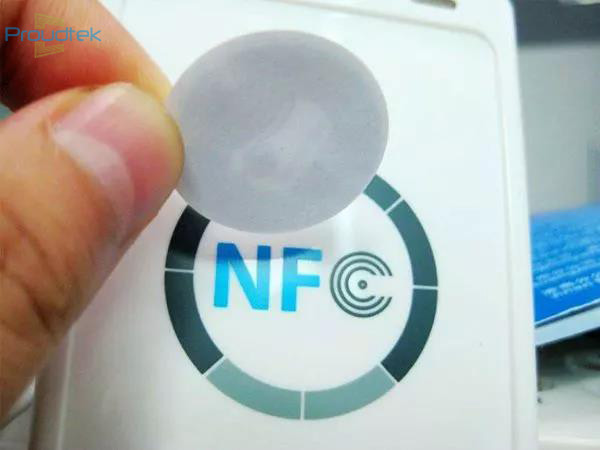
Desktop NFC Reader / Encoder
Desktop NFC readers and encoders are the bench-top USB devices that personalise, issue, test and author NFC and HF cards, tags and wristban...
Explore Desktop NFC Reader / Encoder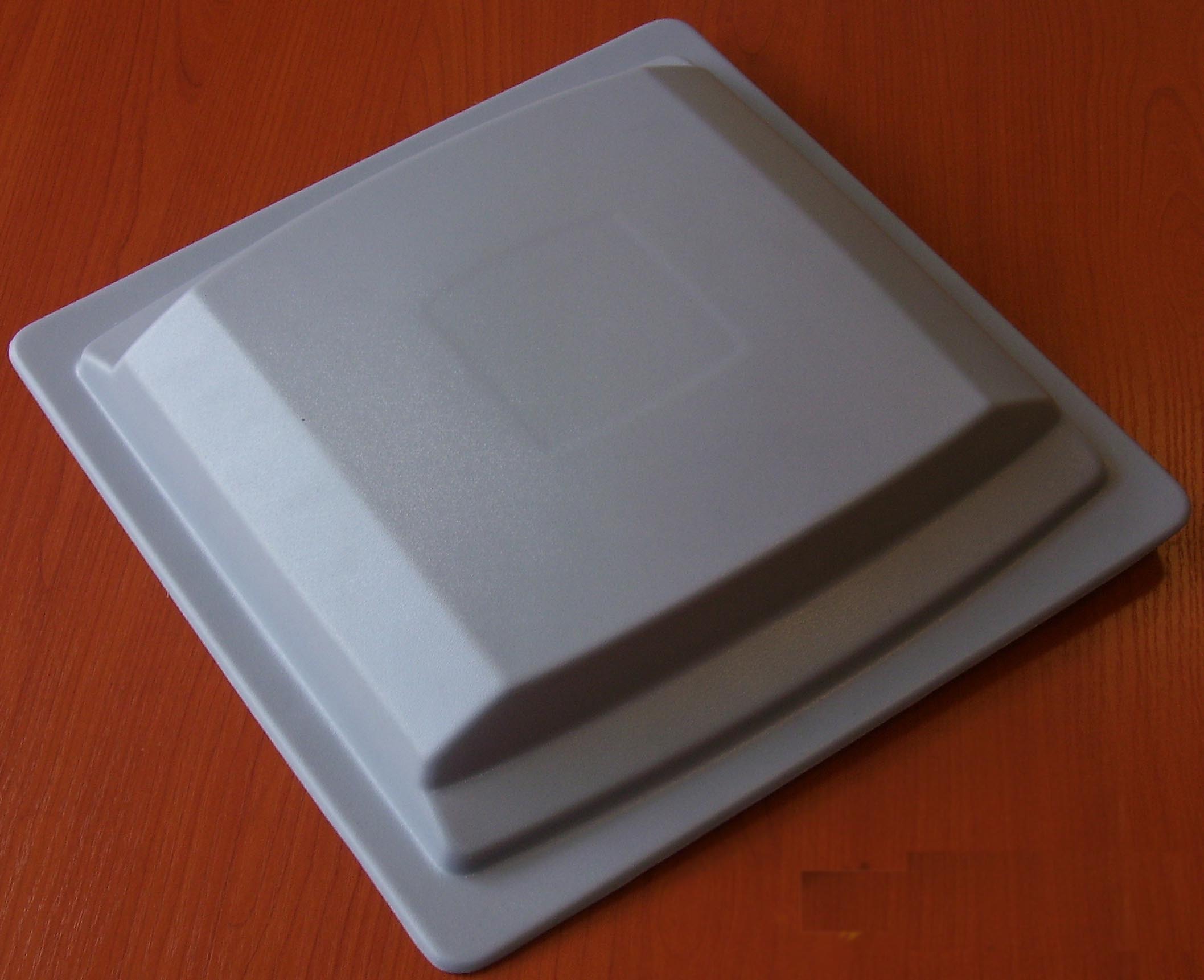
Fixed UHF RFID Reader
At BOM level, fixed UHF RFID readers are the enterprise-grade radios that sit permanently at a dock door, portal, conveyor, overhead zone o...
Explore Fixed UHF RFID Reader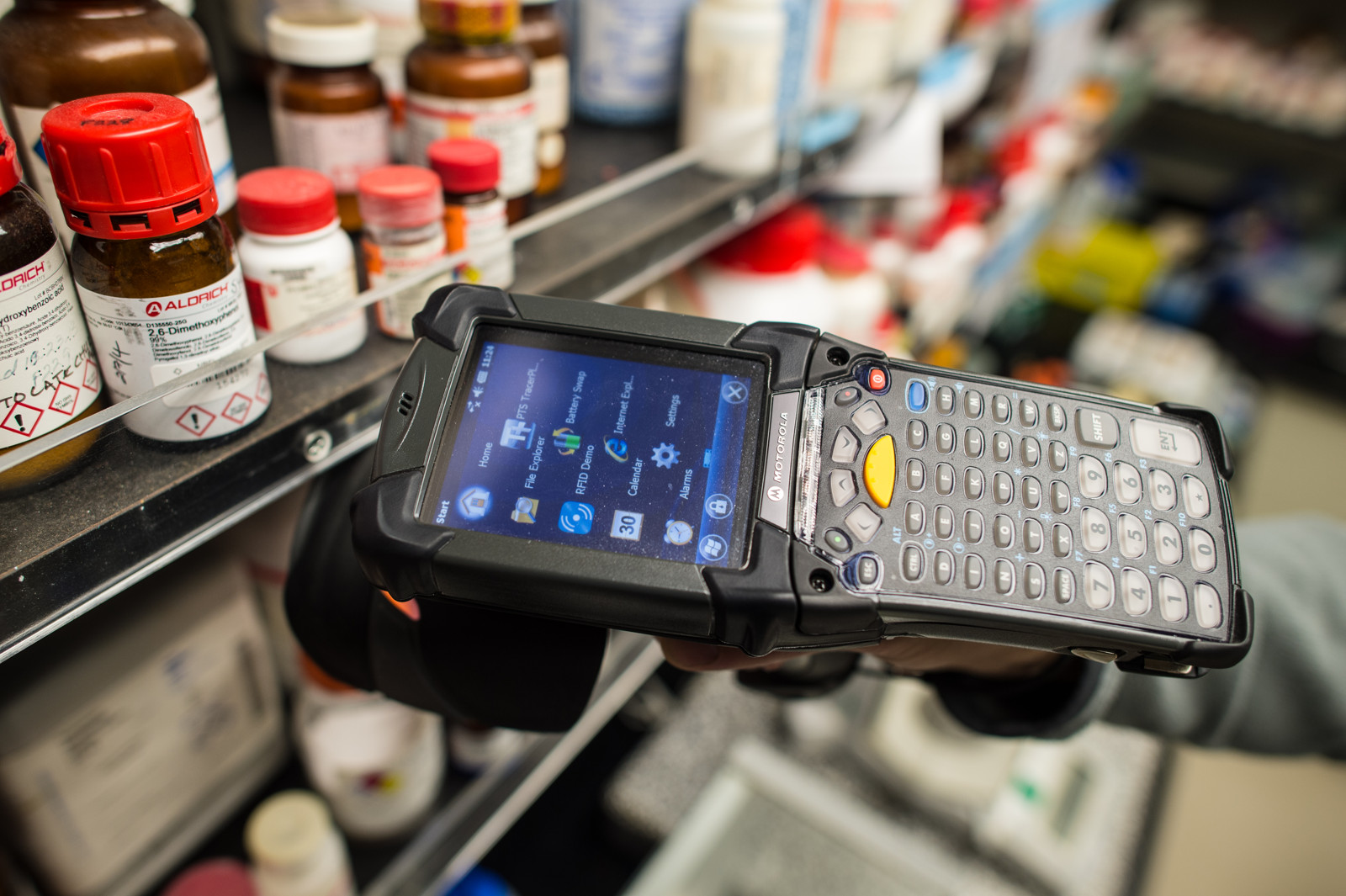
Handheld UHF RFID Reader
Handheld UHF RFID readers are the roaming half of every deployment. The battery-powered, pistol-grip devices that perform warehouse cycle c...
Explore Handheld UHF RFID ReaderAt a glance
Use these short answers to decide whether this page matches the project before moving into the detail.
Key takeaway
Three reader families in one catalogue (fixed UHF portals (Impinj R700 / Zebra FX9600 / Alien F800 class), handheld UHF (Zebra RFD40/RFD90 sled and Chainway C72/C76 integrated class) and desktop NFC/HF encoders (ACR122U / ACR1252U / Omnikey 5022 class)) each with its own antenna, interface and SDK matrix.
What is an RFID reader?
An RFID reader is the active radio that powers passive tags (or talks to active tags) and decodes their replies into structured identifier, memory and sensor data the ho...
Next step
Ready to move forward? Start your inquiry to get specific answers for this project.
Request reader samples & site-survey proposalWhat is an RFID reader?
An RFID reader is the active radio that powers passive tags (or talks to active tags) and decodes their replies into structured identifier, memory and sensor data the host application can use.
A passive UHF RFID reader performs four jobs in one enclosure: it transmits an unmodulated continuous-wave carrier at a legal EIRP (typically +30 to +36 dBm) to harvest energy into nearby tag chips; it modulates that carrier with Gen2 query/ACK commands to address tags and inventory them; it demodulates the tags' backscatter replies (modulated reflections of its own carrier); and it hands the resulting EPC, TID, user-memory and RSSI data up to the host over a transport like LLRP, MQTT, REST or a vendor SDK. A desktop HF/NFC reader does the electrically analogous job at 13.56 MHz in the near field. An oscillator drives a loop antenna, a card modulates the load, the reader demodulates and hands APDU responses up to PC/SC or libnfc.
The reader (not the tag) is the limiting factor in most disappointed deployments. A perfect UCODE 9 tag at -22 dBm sensitivity still needs a reader transmitting at +33 dBm into a 6-9 dBi circularly polarised antenna to reach 8-12 m free-space range; a reader under-specified at +27 dBm into a 2 dBi antenna will miss the same tag at 2 m. Reader selection is therefore at least as decisive as tag selection for deployment KPI (read rate, throughput, miss rate, re-read latency).
- Every reader in this catalogue pairs with the tag families in /products/rfid-tags/, the label families in /products/rfid-labels/, and the card families in /products/rfid-cards/. The reader is the other half of the system.
- A reader family is chosen by (1) frequency band (LF / HF / UHF), (2) form factor (fixed, handheld, desktop), (3) host interface (Ethernet, USB, Bluetooth, Wi-Fi, serial), (4) software stack (LLRP, PC/SC, vendor SDK, REST/MQTT) and (5) regional regulatory certification (FCC, ETSI, SRRC, ARIB, ISED, ANATEL).
- Antennas are a separate specification from the reader radio. Fixed readers commonly ship with 4 or 8 external antenna ports and the integrator selects the antenna per zone; handheld and desktop readers have the antenna built into the enclosure.
- A Proud Tek reader project almost always ends with a site survey (EIRP calibration, antenna pattern mapping and an empirical read-rate test with actual tagged goods in the actual environment) because RF is environment-specific and no datasheet prediction survives first contact with a real warehouse.
Reader form factors — fixed, handheld, desktop
The three form factors solve three different operational jobs. Most real deployments use at least two of them in combination.
- Fixed readers: Impinj R700 / Speedway R420, Zebra FX9600 / FX7500, Alien ALR-F800, Nordic ID HH85 AIR, CAEN R1260, Feig ID ISC.LRU3500. 4- or 8-port antenna configurations, PoE+ or 12-24 V DC power, GigE + Wi-Fi host, LLRP + Octane/ETK SDKs, +33 dBm typical EIRP per port. Operational jobs: dock-door portal, conveyor check-point, overhead zone coverage, retail ceiling array, vehicle drive-through. Installed life 7-10 years. See /products/rfid-readers/fixed-uhf-rfid-reader/.
- Handheld readers: Zebra RFD40 / RFD90 sled snapped onto TC22/TC27/TC52 Android terminals, Chainway C72 / C76 / P80 / CP60 integrated, Alien ALH-9011 / ALH-9001, Technology Solutions TSL 1128 / 2128 Bluetooth sleds, CipherLab RS3500, Bluebird RF500. +30 dBm typical EIRP, integrated antenna, 6-8 hour battery, Bluetooth/USB/Wi-Fi host. Operational jobs: warehouse cycle counting, retail floor audit, asset search-and-find, fixed-asset annual inventory, hospital crash-cart check. See /products/rfid-readers/handheld-uhf-rfid-reader/.
- Desktop NFC / HF encoders. ACS ACR122U / ACR1252U / ACR1281U-C1, Identiv uTrust 3700F / 3720F, HID Omnikey 5022 / 5122 / 5422 / 5022, Digital Logic uFR Classic / uFR Nano, SCM SCL010. PC/SC + CCID + libnfc + NFC Forum tag T1-T5, ISO 14443-A/B and ISO 15693. Operational jobs: card issuance, hotel front-desk encoding, employee badge personalisation, NDEF authoring, bench-top development, NTAG424 DNA SUN message authoring. See /products/rfid-readers/desktop-nfc-reader-encoder/.
- Fixed UHF encoder / printer integrations. Zebra ZT411R / ZT421R, SATO CL4NX-J RFID, Toshiba Tec BA410, Printronix T6000e. Not a separate form factor but worth noting: print-and-encode stations run an embedded reader tuned for 5-10 cm near-field write on a converted inlay during printing. Used by label converters, DC commission stations and in-store RFID-tag printers.
Frequency and air-interface standards
Picking the band is the first decision. Bands do not overlap. A 13.56 MHz reader cannot read a 915 MHz UHF tag, and vice versa.
- LF 125-134.2 kHz (ISO/IEC 18000-2, ISO 11784/11785 FDX-B / HDX) — 0-10 cm near-field inductive. Readers: HID ProxPro II, Elatec TWN4, ZKTeco, glass-capsule animal-ID readers and livestock stick readers (Allflex RS420, Datamars GES3S). Rarely required outside livestock, legacy access and pet ID.
- HF 13.56 MHz (ISO/IEC 14443 Type A/B, ISO/IEC 15693, ISO/IEC 18092 NFC) — 0-50 cm near-field. Readers: ACR122U-class desktop NFC, HID Omnikey 5xxx family, Identiv uTrust 3x00 family, Feig ID CPR44 / CPR74 in libraries, embedded NXP PN532 / NXP CLRC663 in integrated devices. The dominant band for access-control cards, hotel key cards, transit passes, NFC tap-to-phone, libraries and medical instrument tracking.
- UHF 860-960 MHz RAIN (ISO/IEC 18000-63, EPCglobal Gen2 v3, GS1 EPC TDS 2.0) — 1-15 m far-field backscatter. Readers: the fixed and handheld families above. Global band with region sub-bands. FCC 902-928 MHz (US), ETSI 865.6-867.6 MHz (EU), SRRC 920-925 MHz (China), ARIB 916.7-920.9 MHz (Japan), ANATEL 902-907.5 + 915-928 MHz (Brazil), ISED 902-928 MHz (Canada). A reader is regulatory-certified and firmware-locked to its region; importing a US-only reader into EU deployment is an audit violation.
- Active / 2.45 GHz — not part of this cluster. Active RFID, BLE asset tracking and Wi-Fi RTLS are adjacent families served by different hardware. See /compare/rfid-vs-ble-asset-tracking/ for the cross-technology decision.
Host interface and software stack
A reader is only as useful as its integration surface. The SDK and transport decide the engineering cost of the deployment.
- LLRP (ISO/IEC 19762). The Low-Level Reader Protocol, the dominant open standard for fixed UHF readers. Supported by Impinj Octane, Zebra FX series, Alien, CAEN, Nordic ID, Feig. TCP port 5084, binary message framing, RoSpec/AccessSpec/ROReport lifecycle. The safe choice for vendor-neutral integrations.
- Impinj Octane SDK / IoT Device Interface (IoT-DI). Impinj's higher-level wrapper over LLRP for R420, R700 and xArray. REST and MQTT endpoints on R700 firmware 1.11+ let the reader push tag events directly to a Kafka or MQTT broker without a middleware gateway. Recommended for cloud-native deployments.
- Zebra RFID SDK for Android / C / Java / .NET. Zebra's cross-family SDK for FX9600 / FX7500 fixed plus RFD40 / RFD90 handheld sleds. Single API covers both form factors, which is why Zebra-shop deployments tend to stay Zebra end-to-end.
- PC/SC (ISO/IEC 7816-3 + Microsoft WinSCard) and CCID. The desktop NFC standard. ACR122U, Omnikey 5022 / 5122, uTrust 3700F and any Smart Card Alliance-compliant desktop reader all speak PC/SC. Works on Windows, Linux (pcscd) and macOS without vendor drivers for the basic card operations.
- libnfc + libfreefare: open-source NFC stack for Linux/macOS/Windows targeting ACR122U, PN532 devkits, SCL3711, uFR Classic. The lingua franca for research, academic and hobbyist NFC development; also widely used in embedded Linux products with a PN532 bridge.
- NFC Forum tag operations (T1, T2, T3, T4, T5) + NDEF. The higher-layer tap-and-scan behaviour every consumer NFC reader speaks. NDEF authoring (URL, vCard, Wi-Fi credential, launch-app intent) is the primary workflow on desktop encoders after card personalisation.
- MQTT / REST / Kafka telemetry. Modern fixed readers (R700, Zebra ATR7000, CAEN A949EU) push tag events over MQTT or Kafka directly, which collapses the ETL layer needed with older LLRP-only readers. For IoT-grade deployments this is the recommended integration shape in 2026.
Reader-family comparison matrix
A quick cross-reference of the three form factors against the dimensions that drive specification.
| Dimension | Fixed UHF reader | Handheld UHF reader | Desktop NFC / HF encoder |
|---|---|---|---|
| Typical exemplar | Impinj R700 / Zebra FX9600 | Zebra RFD40 / Chainway C72 | ACR122U / Omnikey 5022 |
| Frequency | 860-960 MHz UHF | 860-960 MHz UHF | 13.56 MHz HF / NFC |
| EIRP / RF power | +30 to +36 dBm | +27 to +30 dBm | Near-field only (no EIRP) |
| Read range | 3-15 m | 1-8 m | 0-5 cm |
| Antenna ports | 4 or 8 external | Integrated | Integrated |
| Host interface | GigE / PoE+ / Wi-Fi | Bluetooth / USB / Wi-Fi | USB / PC/SC CCID |
| Primary SDK | LLRP + Octane / Zebra RFID SDK | Zebra RFD SDK / vendor Android SDK | PC/SC + libnfc |
| Typical price (USD) | 900 - 2,500 | 1,200 - 3,500 | 30 - 150 |
| Operational lifetime | 7-10 years | 3-5 years (battery-limited) | 5-8 years |
| Best for | Portal, dock, overhead, conveyor | Audit, search-and-find, cycle count | Issuance, personalisation, bench |
Choosing the right RFID reader
Six questions close 90% of the reader selection cycle before a sample is even shipped.
- 1. Band: LF for livestock and legacy prox, HF/NFC for cards / hotel keys / NDEF-on-phone, UHF for bulk and >1 m range. UHF dominates new industrial and retail projects.
- 2. Form factor: fixed for fixed-location throughput (dock doors, conveyor, zone), handheld for roaming and audit, desktop for issuance and personalisation. Most real projects use two in combination.
- 3. Antenna count and pattern. A portal typically uses 2-4 antennas per lane; a dock door uses 2 per direction; a conveyor needs 1-2 with a linear-polarised antenna tuned to the belt direction. Circularly polarised antennas are the safe default for mixed-orientation goods.
- 4. SDK and transport: LLRP for vendor-neutral integrations, Octane IoT-DI or Zebra ATR SDK for cloud-native MQTT/Kafka, PC/SC for desktop card issuance, Zebra RFD SDK or vendor Android SDK for handhelds.
- 5. Regional certification: a FCC-only reader cannot ship to EU deployments; verify the reader's certification scope matches every country in the deployment footprint. Global SKUs (Impinj R700, Zebra FX9600) ship in regional firmware variants; confirm the firmware image, not just the part number.
- 6. PoE budget and power. A 4-port R700 draws 15-22 W at full EIRP and needs PoE+ (25.5 W at the port). An 8-antenna ATR7000 overhead array draws up to 40 W and needs PoE++ or a 24 V DC brick. Confirm the network closet can deliver the budget before specifying.
Standards & compliance
The standards most often cited in RFID reader specifications and RFP responses.
- ISO/IEC 18000-63:2021 — UHF RAIN air interface (EPC Gen2 v3). The reader-side counterpart to the tag-side standard.
- EPCglobal Gen2 v3 / GS1 EPC TDS 2.0 — command set (Query, ACK, Req_RN, Read, Write, Kill, Lock, BlockWrite, BlockErase) and memory-bank layout (Reserved / EPC / TID / User).
- ISO/IEC 19762 (LLRP). Low-Level Reader Protocol, the open reader-to-host messaging standard.
- ISO/IEC 14443 Parts 1-4 — HF card air interface (Type A and Type B, T=CL transmission).
- ISO/IEC 15693 — HF vicinity card / tag air interface (libraries, ICODE SLIX).
- ISO/IEC 18092 / NFC Forum Digital Protocol. The NFC tap-and-exchange protocol.
- NFC Forum tag type T1-T5 + NDEF Record Type Definition. The NFC tap payload standard.
- PC/SC Workgroup PC/SC specification. Desktop smart-card and NFC reader host API.
- FCC 47 CFR Part 15.247 / Part 15.249 — US UHF RFID equipment authorization (902-928 MHz, +36 dBm EIRP max).
- ETSI EN 302 208 v3.3.1 (2020). European UHF RFID (865.6-867.6 MHz, +33 dBm ERP). A 2021 update extended the upper band to 915-921 MHz for specific deployments. Verify regional firmware.
- SRRC 2019/52 (China), ARIB STD-T106 (Japan), ISED RSS-247 (Canada), ANATEL 506 (Brazil), KS X ISO/IEC (Korea), TELEC (Japan secondary).
Applications by industry
The highest-volume reader deployments Proud Tek supports.
- Logistics & supply chain. Dock-door portals, yard gates, bolt-seal verification, pallet and IBC tracking, returnable container pools.
- Retail & apparel. Ceiling-array and portal for source-to-shelf visibility, store-floor cycle-count handhelds, POS integration readers.
- Data center & IT asset tracking. Server rack, cage, cable and asset audit with fixed readers at cage doors plus quarterly handheld audits.
- Healthcare: instrument tracking, IV-pump asset audit, autoclave cycle recorders, HF surgical-instrument readers.
- Automotive & tire OEM. TPMS pairing station encoders, EU Tire Regulation 2024/1257 readers at finished-tire exit, body-in-white portal.
- Aerospace & aviation MRO. ATA Spec 2000 part-marking reader arrays, tool-crib handhelds, life-limited-part audit.
- Government & defense supply chain. IUID part marking readers, arms-room weapons audit, ammo-bunker gate readers.
- Hospitality and front-desk. HF card encoder benches for room-key issuance, desktop NFC writers for loyalty-card personalisation.
Common pitfalls
- Specifying a reader without a site survey. RF is environment-specific; a reader that reads 8 m in a lab reads 3 m on a dock door flanked by metal racking. Always budget a day of survey before committing to antenna count and position.
- Buying a US-firmware reader and deploying it in EU. The frequency bands do not overlap and the reader will not certify under ETSI EN 302 208. Confirm the firmware image, not just the SKU.
- Under-budgeting PoE: a 4-port R700 at full +33 dBm draws PoE+ (25.5 W); a low-budget PoE switch at 15 W throttles the reader and degrades range without obvious error messages. Specify PoE+ (802.3at) as the minimum.
- Specifying LLRP without confirming vendor compliance. Some readers implement LLRP partially or with vendor-specific custom parameters. Validate the actual ROSpec / ROReport flow with the reader's firmware against the integrator's LLRP library (sllurp, OctaneSDK, LTK) before closing the spec.
- Using a desktop NFC reader for asset-tracking read range. An ACR122U is a 5 cm near-field encoder, not a 5 m read-range device. The wrong form factor for the job is the most common cause of 'RFID didn't work' reports.
Editorial review
This pillar was reviewed in April 2026 by Proud Tek engineering and the ProudTek Editorial Board. All ISO, GS1, EPCglobal, FCC and ETSI references reflect the current state of the standards at the time of publication. LLRP, Octane, Zebra RFID SDK and PC/SC version references are current for firmware releases shipping in Q2 2026.
Useful next pages
Use these linked product, guide and comparison pages to keep the next click specific and practical.
Reader SKU pages
The three reader form-factor product pages in this cluster.
Related guides & comparisons
Decision pages and technical references linked from reader RFPs.
Solution & industry pages
Higher-level application pages where reader specification lives in context.
FAQ
What is the read range of a UHF RFID reader?
A fixed UHF RFID reader (Impinj R700, Zebra FX9600, Alien F800 class) transmitting at +33 dBm EIRP into a 6-9 dBi circularly polarised antenna delivers 8-15 m read range on a modern Impinj M700/M800 or NXP UCODE 9 tag in free space. Real-world range drops to 3-8 m in warehouse, retail or dock-door environments because of metal racking, dense product stacking, liquid inventory and RF interference from adjacent readers. A handheld UHF reader (Zebra RFD40, Chainway C72) transmits at around +27-30 dBm with a smaller antenna and delivers 1-8 m. A desktop NFC reader (ACR122U class) is not a long-range device. It operates in the 13.56 MHz near field with 0-5 cm read distance by design.
What's the difference between a fixed, handheld and desktop RFID reader?
Form factor and job. Fixed readers are installed in a fixed location (dock door, conveyor, portal, overhead array) with external antennas and wired network + PoE, and are optimised for continuous high-throughput tag inventory. Handheld readers are battery-powered, roaming devices with an integrated antenna for cycle counts, audits and search-and-find. Desktop NFC/HF readers are short-range near-field devices for card issuance, personalisation, NDEF authoring and bench-top development. They do not read at range. Most real deployments use a combination: fixed for portals + handheld for audit + desktop for card issuance.
Does an ACR122U read UHF RFID tags?
No. An ACR122U is a 13.56 MHz HF / NFC reader (ISO 14443-A/B, ISO 15693, NFC Forum T1-T5). It reads NTAG21x, NTAG424 DNA, MIFARE Classic / Ultralight / DESFire / Plus, ICODE SLIX and phone-HCE credentials at 0-5 cm. It cannot read UHF RAIN (860-960 MHz) tags like UCODE 9 or Impinj M700 — for UHF you need a UHF reader (fixed or handheld). This confusion is the single most common RFID-reader purchasing mistake.
What SDK do I integrate an RFID reader with?
It depends on form factor and vendor. Fixed UHF: LLRP (ISO/IEC 19762) is the open standard and is supported by Impinj Octane, Zebra FX series, Alien, CAEN, Feig, Nordic ID. Use an LLRP library like LTK, OctaneSDK or sllurp. Impinj R700 additionally offers Octane IoT Device Interface (REST + MQTT) for cloud-native integrations. Zebra fixed + handheld can be driven by Zebra RFID SDK for Android / C / Java / .NET. Handheld: vendor Android SDK (Zebra RFD40 SDK, Chainway UHF SDK) plus Bluetooth SPP. Desktop NFC/HF: PC/SC + CCID (platform-native on Windows/macOS/Linux) or libnfc for the open-source stack. See [/guides/uhf-rfid-reader-api-guide/](/guides/uhf-rfid-reader-api-guide/) for code examples.
How much does an RFID reader cost?
Rough 2026 volume-pricing bands: a fixed UHF reader runs USD 900-2,500 for a 4- to 8-port enterprise SKU (R700, FX9600, Alien F800), plus USD 80-250 per antenna. A handheld UHF reader runs USD 1,200-3,500 for a modern sled-plus-terminal or integrated device (RFD40 + TC27, Chainway C72). A desktop NFC/HF encoder runs USD 30-150 (ACR122U near the entry, Omnikey 5022 / uTrust 3720F toward the top). Printer-encoder combos (Zebra ZT411R, SATO CL4NX-J RFID) run USD 2,000-4,000. Regional certification, spare antennas, PoE+ switches, mounting and site-survey labour are not included and typically add 30-60% to the reader BOM.
Is a regional certification actually enforced on RFID readers?
Yes. In the US the FCC requires Part 15.247 equipment authorization for every UHF RFID reader; in the EU the RED (Radio Equipment Directive) requires CE marking under ETSI EN 302 208 v3.3.1. Shipping a US-firmware R700 to a Frankfurt deployment is not a paperwork issue. The reader's frequency band (902-928 MHz) does not legally operate in the ETSI 865.6-867.6 MHz allocation and the device is subject to seizure on site inspection. Global SKUs from Impinj, Zebra, Alien and others ship in regional firmware images. Confirm the firmware matches the deployment country before shipping.
Can one reader handle LF, HF and UHF tags?
No single-radio reader does all three. The bands require physically different antennas, different RF front-ends and different air-interface protocols. A handful of multi-technology terminals (Identiv uTrust MD, HID Omnikey 5427 CK) combine HF + LF in one enclosure for access-control use cases. Multi-technology UHF + HF readers exist for library applications (Feig ID CPR74) but are the exception. For mixed-band deployments the normal architecture is two separate readers routed through the same host.
How long does an RFID reader last in service?
Fixed UHF readers are specified for 7-10 years of continuous service in indoor environments, assuming clean PoE power, -10 to +55 °C operating temperature and periodic firmware updates. Handheld UHF readers are typically 3-5 years in service before battery degradation and physical drop damage drive replacement. Desktop NFC encoders run 5-8 years. The practical life of a reader fleet is often set by firmware support. Most vendors drop support for a model 5-7 years after end of sale, which constrains security updates and SDK compatibility with newer card chips.
Proud Tek is a Shenzhen-based RFID & NFC manufacturer supplying hotel chains, transit operators, event venues and retail brands worldwide. Every order includes free samples, RF testing and dedicated project support.
Get a Quick Quote
Tell us about your project and we'll respond within one business day. Fields marked (asterisk) are required.