
Label Solution
RFID Asset Tracking Labels (2026)
IT Assets, Lab Equipment, Fleet, Returnable Containers — Impinj M730/M750/M800/M850, NXP UCODE 9, GS1 GIAI-96, ServiceNow ITAM + SAP PM + IBM Maximo Procurement Guide
Quick answer
Procurement-grade RFID asset tracking label guide for enterprise IT asset management (ITAM), enterprise asset management (EAM), lab equipment inventory, fleet vehicle identification, returnable transport item (RTI) tracking, and fixed-asset audits. Maps the chip family decision (NXP UCODE 9 / 9xe / 9xm; Impinj M730 / M750 / M800 / M850; Alien Higgs-9; NXP NTAG 213 for NFC adjacency), the label form factor (paper inlay, anti-metal foam-back, on-metal FR-4, high-temp PPS encapsulation, tamper-evident, write-once), the standards anchor (GS1 EPC TDS 2.0 GIAI-96 for individual asset; EPC Gen2 V3 / ISO/IEC 18000-63:2021 air interface; GS1 EPCIS 2.0 for event exchange), the ITAM / EAM platform integration (ServiceNow ITAM via Discovery + IRE; SAP Plant Maintenance via SAP IoT; IBM Maximo via MAS Manage; Infor EAM; GE Digital APM; Oracle EAM Cloud), and the IT asset disposition (ITAD) compliance stack (NIST SP 800-88 Rev. 1 media sanitisation; R2v3 + e-Stewards responsible recycling; ISO/IEC 27001 A.8 asset management).
- Asset tracking labels live in three environment-tier choices: paper inlay for indoor non-metal assets (~$0.10–0.25 per label); anti-metal foam-back or FR-4 for IT / industrial equipment on metal substrates (~$0.50–2.00); high-temp PPS encapsulation for harsh-environment assets (autoclave, kitchen, industrial; ~$1.00–4.00).
- Pick the chip by read-sensitivity + memory requirement. NXP UCODE 9 is the cost-optimised default; Impinj M800 / M850 for high-read-sensitivity on metal-rich environments; NXP UCODE 9xm for extended memory when EPC + user-data payload is large.
- Standards anchor: GS1 EPC TDS 2.0 GIAI-96 (Global Individual Asset Identifier) is the canonical 96-bit EPC format for non-product assets — IT equipment, fleet vehicles, lab instruments, RTIs. SGTIN-96 is for retail items; GIAI-96 is for unique individual assets.
- ITAM / EAM integration is the half of the project that decides programme success. ServiceNow ITAM via Discovery + Identification & Reconciliation Engine (IRE); SAP Plant Maintenance via SAP IoT; IBM Maximo via Maximo Application Suite (MAS) Manage; Infor EAM, GE Digital APM, Oracle EAM Cloud — each has its own RFID connector + middleware pattern.
- IT asset disposition (ITAD) compliance is the 2026 procurement requirement. NIST SP 800-88 Rev. 1 media sanitisation (Clear / Purge / Destroy), R2v3 + e-Stewards responsible recycling certifications, ISO/IEC 27001 Annex A.8 asset management — RFID labels track the asset through provisioning → use → decommissioning → ITAD with verified chain-of-custody.
Featured Asset-Tracking Labels Products
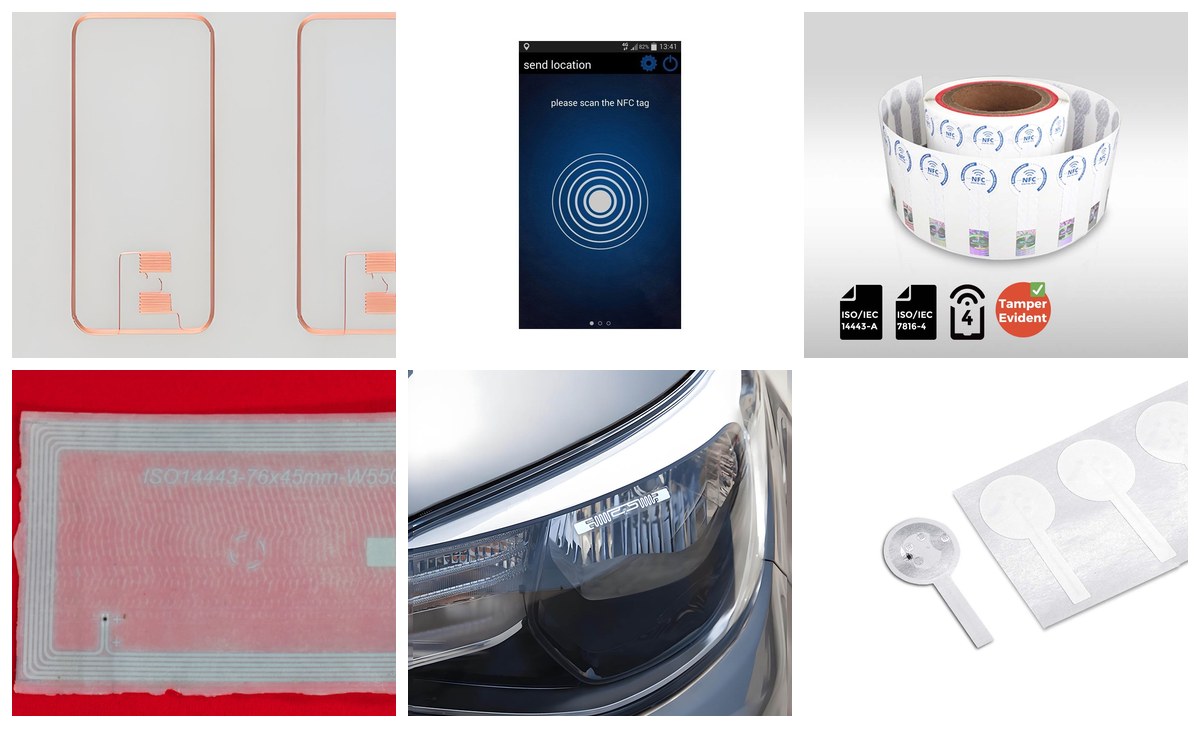
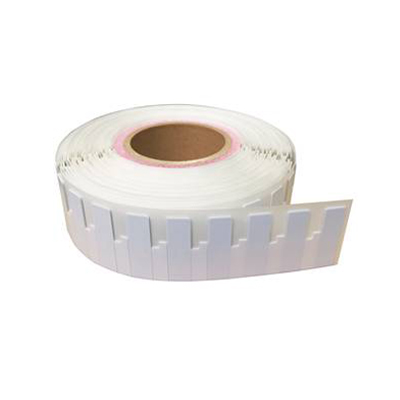
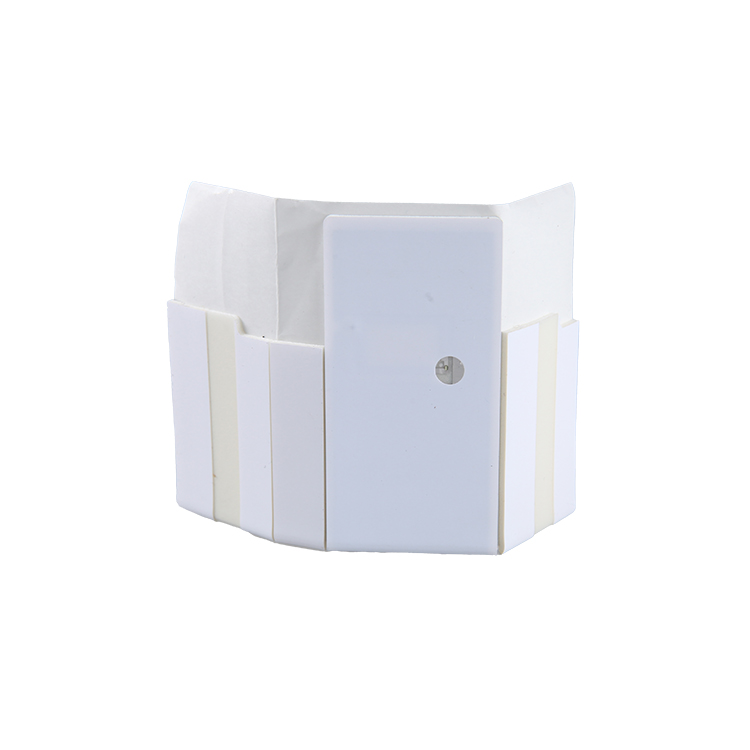
SKUs we typically deploy for asset-tracking labels. Tap a card for specs and samples.
At a glance
Use these short answers to decide whether this page matches the project before moving into the detail.
Audience
Enterprise IT asset management teams running ServiceNow ITAM / SAP / IBM Maximo with RFID asset visibility. EAM operators (manufacturing, utilities, oil & gas, healthcar...
Decision sequence
Asset environment: indoor non-metal (paper inlay), on metal (anti-metal foam-back or FR-4), harsh (high-temp PPS). Chip family: NXP UCODE 9 default; Impinj M800 / M850 f...
Next step
Ready to move forward? Start your inquiry to get specific answers for this project.
Get an asset tracking RFPAsset environment determines label form factor — and 80% of programme cost
RFID asset tracking labels split into three environment tiers. The form-factor choice determines per-unit cost (3–10× variance), durability (1–10 year service life), and read reliability (consistent vs intermittent). Most failed asset-tracking pilots ship the wrong form factor — paper inlays on metal substrates, plain labels in high-heat environments.
- **Indoor non-metal (paper inlay, ~$0.10–0.25)** — office assets like keyboards, monitors-with-plastic-bezels, books, desk fixtures. UHF chip + paper substrate + adhesive backing. Service life 2–5 years.
- **On-metal foam-back label (~$0.50–1.50)** — IT laptops, server-rack equipment, lab instruments, metal cabinets. Foam isolator between chip antenna and metal substrate; sticker form factor. Service life 3–7 years.
- **On-metal FR-4 / ABS hard tag (~$1.00–4.00)** — IT desktops, industrial equipment, fixed-asset audit. PCB-grade substrate with embedded ferrite; rivet-mount or screw-mount; vibration / impact tolerant. Service life 5–10 years.
- **High-temp PPS encapsulation (~$1.50–6.00)** — autoclave-cleared medical instruments, kitchen / oven equipment, foundry tools. PPS hard-shell rated 200 °C continuous; some variants 300 °C short-burst.
- **Tamper-evident (NTAG 213 TagTamper + adhesive) (~$0.40–1.50)** — assets requiring evidence of unauthorised removal / opening. Wire-loop detects removal attempt; chip reports tamper state on next read.
- **Write-once / WORM (UCODE 9 with kill-password set) (~$0.10–0.30)** — assets requiring chain-of-custody where post-installation EPC modification is forbidden. EPC encoded at factory + locked.
- **Outdoor / wet / chemical-resistant (epoxy-potted PCB) (~$2.00–8.00)** — fleet vehicles, outdoor equipment, marine assets. IP67 / IP68 ratings.
Chip selection — UCODE 9, M730/M750/M800/M850, Higgs-9, NTAG 213 NFC adjacency
Asset-tracking UHF chip family is similar to retail warehouse: NXP UCODE 9 + Impinj M-series + Alien Higgs-9. Memory requirements skew larger than retail (asset-data payload includes serial, purchase date, owner, maintenance history) so extended-memory chip variants (UCODE 9xm) are more common.
- **NXP UCODE 9 (SL3S1206)** — current-generation default. 96-bit EPC + 128-bit user memory. Cost: $0.05–0.15 per chip at MOQ 50k+.
- **NXP UCODE 9xe (extended sensitivity)** — better read on metallic / wet / RF-noisy environments. Cost: $0.07–0.18 per chip.
- **NXP UCODE 9xm (extended memory)** — 512-bit user memory; useful when asset-data payload is large or chain-of-custody data is encoded on-chip rather than via server lookup. Cost: $0.10–0.25.
- **Impinj M730 / M750** — entry / mid-tier; cost-optimised for high-volume deployments.
- **Impinj M800 / M850** — high-read-sensitivity for metallic / wet / RF-noisy environments. M850 is current flagship.
- **Alien Higgs-9** — third-supplier alternative; common in cost-optimised deployments + multi-vendor sourcing.
- **NTAG 213 / NTAG 213 TagTamper** — NFC adjacency for hybrid programmes. NFC tap reading (Apple iPhone XS+ background scan; Android NDEF dispatch) gives a service technician a smartphone-tap audit interface. Common pattern: UHF for fixed-portal automated reads + NFC for handheld smartphone audit access.
- **NTAG 424 DNA SUN** — anti-counterfeit-grade NFC for high-value IT assets where authentication matters as much as identification. Premium IT laptops, lab instruments, fleet vehicles.
Standards anchor — GS1 GIAI-96, EPC Gen2 V3, EPCIS 2.0
RFID asset tracking runs on GS1 + ISO/IEC + EPCglobal standards. The most important distinction for procurement: GIAI-96 (Global Individual Asset Identifier) is the canonical EPC format for non-product assets, vs SGTIN-96 for retail items and SSCC-96 for returnable transport items.
- **GS1 EPC TDS 2.0 GIAI-96** — 96-bit EPC encoded with company prefix + individual asset reference. Used for IT equipment, lab instruments, fleet vehicles, fixed assets. Each asset has a unique GIAI; the same GIAI follows the asset across its lifecycle.
- **GS1 EPC TDS 2.0 SGTIN-96** — for serialised retail items; rarely used for asset tracking unless the asset is also an inventory item (e.g., consumable supplies).
- **GS1 EPC TDS 2.0 SSCC-96** — for returnable transport items (RTI) like pallets, totes, racks, cages. SSCC = Serial Shipping Container Code.
- **EPC Gen2 V3 / ISO/IEC 18000-63:2021** — UHF air-interface standard; 860–960 MHz; anti-collision algorithm.
- **GS1 EPCIS 2.0** — Event Capture Information Services standard for asset-event exchange. Required for cross-company asset visibility (manufacturer → 3PL → consumer; or department → service → ITAD).
- **ISO/IEC 27001 Annex A.8 — Asset Management** — requires inventory of all information assets with classification + ownership + acceptable-use policy. RFID labels satisfy the inventory + identification requirement; the ITAM platform handles classification + ownership data.
- **NIST SP 1800-5 — IT Asset Management** — NIST cybersecurity practice guide for ITAM. References RFID as recommended technology for physical asset visibility.
- **Regional spectrum allocation** — UHF spectrum varies by region (Americas 902–928 MHz, Europe 865–868 MHz, Japan 916–921 MHz, China 920–925 MHz). Multi-region asset programmes need regional firmware-tuning.
ITAM / EAM platform integration — ServiceNow, SAP, IBM Maximo, Infor, GE, Oracle
The platform integration is where most asset-tracking programmes deliver or fail. RFID reads need to flow into the ITAM / EAM platform that already manages assets; without this, RFID is just a parallel inventory system that nobody trusts.
- **ServiceNow ITAM** — RFID integration via Discovery + Identification & Reconciliation Engine (IRE). RFID middleware (Impinj ItemSense, Zebra Savanna) sends asset-discovered events to ServiceNow MID Server; IRE reconciles RFID-read EPC with existing CMDB CI records. Discovery best practice — use RFID for physical-location confirmation + CMDB attestation.
- **SAP Plant Maintenance (PM)** — RFID integration via SAP IoT / SAP Asset Performance Management. Functional location + equipment master data ties to EPC; RFID-read events flow as maintenance / inspection records.
- **IBM Maximo (Maximo Application Suite — MAS Manage)** — RFID integration via Maximo Mobile Inspections or Maximo Anywhere with handheld reader integration. Standard pattern for industrial / utility / oil & gas EAM.
- **Infor EAM (formerly Datastream)** — vertical-industry EAM strong in manufacturing + facilities. RFID handheld integration via Infor Mobile Inspections.
- **GE Digital APM (Asset Performance Management)** — focused on industrial / utility / aerospace assets. Predix-based; RFID integration for asset-location confirmation.
- **Oracle EAM Cloud / EBS Enterprise Asset Management** — Oracle's EAM offering; RFID integration via Oracle Integration Cloud Service.
- **Middleware layer** — RFID reads at high volume need filtering before they hit the ITAM/EAM platform. Impinj ItemSense, Zebra Savanna, Tibco Smart Plant Suite are common middleware patterns; filters duplicate reads, applies business logic (e.g., 'asset moved from Zone A to Zone B' = move event), forwards normalised events.
- **REST API integration** — modern ITAM / EAM platforms expose REST APIs for asset-event ingestion. The middleware translates RFID reads to REST calls to the platform; platform-specific adapter typically built for each pairing.
IT asset disposition (ITAD) — NIST SP 800-88, R2v3, e-Stewards, ISO 27001
IT asset disposition is the 2026 compliance hotspot for enterprise IT asset tracking. RFID labels track the asset through provisioning → use → decommissioning → ITAD with verified chain-of-custody; compliance requirements specify the data + the process.
- **NIST SP 800-88 Rev. 1 — Media Sanitization** — defines three sanitisation tiers: Clear (logical erasure), Purge (cryptographic erasure or strong magnetic), Destroy (physical destruction). RFID labels track the asset through the sanitisation workflow; chain-of-custody data attests to which tier was applied.
- **R2v3 — Responsible Recycling** — SERI-administered responsible-recycling standard for electronics recyclers. Recyclers certified to R2v3 must track asset chain-of-custody from intake to refurbishment / recycling / destruction.
- **e-Stewards** — Basel Action Network responsible-recycling certification, stricter than R2v3 on export of e-waste to non-OECD countries.
- **ISO/IEC 27001 Annex A.8 — Asset Management** — requires inventory of all information assets with classification + ownership + acceptable-use policy. ITAD process closes the asset lifecycle.
- **RFID label role in ITAD** — write-once / WORM-encoded EPC ensures the asset identifier cannot be modified post-installation. Tamper-evident variants flag if the label has been removed.
- **Chain-of-custody data** — RFID-read events at provisioning, deployment, audit, decommissioning, sanitisation, disposal all flow to the ITAM platform. The platform exports a chain-of-custody report for audit compliance.
- **Common ITAD vendors** — Iron Mountain Secure ITAD, Sims Recycling Solutions, Atlantix Global Systems, ERI. Each integrates with enterprise ITAM platforms (ServiceNow ITAM is most common).
- **SOC 2 + GDPR adjacent** — for data-bearing assets (laptops, servers with PII), the ITAD process intersects with SOC 2 audit + GDPR Article 17 right-to-erasure + Article 32 security of processing.
Use-case taxonomy — IT, lab, fleet, RTI, fixed assets
Asset-tracking labels span use cases with different read environments + read frequencies + lifecycle stages. The matrix below maps each use case to recommended chip + form factor + EPC encoding.
| Use case | Form factor | Chip | EPC encoding | Notes |
|---|---|---|---|---|
| IT laptop | On-metal foam-back label or FR-4 hard tag | Impinj M800 + ferrite isolator | GIAI-96 | ~$0.50–2.00 per label. |
| IT desktop / server | FR-4 hard tag rivet-mount | Impinj M800 / M850 | GIAI-96 | ~$1.00–3.00 per tag. |
| IT monitor / peripheral | Paper inlay or thin foam-back | NXP UCODE 9 | GIAI-96 | ~$0.15–0.50 per label. |
| Lab instrument (general) | Anti-metal foam-back or FR-4 | Impinj M800 + ferrite | GIAI-96 | ~$0.50–2.00. |
| Lab autoclave instrument | High-temp PPS encapsulation | NXP UCODE 9 + PPS housing | GIAI-96 | ~$2.00–5.00; 134 °C cycle survivable. |
| Fleet vehicle | Outdoor epoxy-potted tag with windshield mount | Impinj M850 + epoxy | GIAI-96 | ~$3.00–10.00; IP67. |
| Returnable transport item (RTI) | ABS hard tag or strap-mount | Impinj M800 | SSCC-96 | ~$1.00–3.00. |
| Fixed building asset (HVAC, etc.) | FR-4 hard tag screw-mount | Impinj M850 + ferrite | GIAI-96 | ~$1.50–4.00. |
| Tools / hand-held equipment | On-metal foam-back or attached carabiner-style | NXP UCODE 9 | GIAI-96 | ~$0.50–1.50. |
| Medical equipment (mobile) | FDA-compliant ABS hard tag | NXP UCODE 9 | GIAI-96 + UDI (Unique Device Identifier) | ~$1.50–4.00; UDI for FDA traceability. |
| Reusable shipping container (cage, pallet, tote) | Strap-mount ABS hard tag | Impinj M800 | SSCC-96 or GIAI-96 | ~$1.00–3.00. |
Reader infrastructure — fixed portals at chokepoints + handhelds for audit
Asset-tracking reader infrastructure differs from retail warehouse in two ways. (1) Asset estate is more distributed (offices + labs + service vehicles) so fixed readers concentrate at chokepoints rather than dock doors. (2) Audit frequency is higher (typically monthly cycle counts) so handheld is the dominant reader class.
- **Fixed portal readers at chokepoints** — building entrances + service entrances + ITAD-shipping dock. Impinj R700 (4-port, AI-on-reader) or Zebra FX9600 (8-port). Reads asset movement events.
- **Handheld readers for audit + cycle counting** — Zebra MC3300xR, Honeywell IH40, Bluebird RFR901. Walked through aisles / rooms during quarterly / annual audit. Reads 100–500 tags/min.
- **RTLS for high-value asset estates** — Impinj xArray overhead infrastructure provides continuous location tracking. Higher CapEx ($25K–100K+ per zone) but enables real-time visibility for asset-loss-critical estates (data centres, lab instruments).
- **Smartphone NFC tap** — pair UHF asset tag with NFC NTAG 213 inlay for service-technician smartphone-tap interface. iPhone XS+ background scan; Android NDEF dispatch.
- **Fixed wall readers in server racks** — for data centre asset tracking, fixed antennas mounted at rack-row entry plus overhead reader provide aisle-level asset visibility.
- **Mobile readers on service vehicles** — for fleet asset tracking, vehicle-mounted UHF reader scans assets in / out of the vehicle automatically.
Workflow patterns — provisioning, deployment, audit, decommissioning, ITAD
RFID transforms the asset lifecycle workflow at every step. Each step has a specific reader interaction + ITAM/EAM event.
- Step 1**Provisioning** — asset received from vendor; RFID label applied (sticker or hard tag); EPC encoded with GIAI-96 in ITAM platform. Asset record created in CMDB / asset register.
- Step 2**Deployment** — asset assigned to user / location; RFID read at building entrance captures deployment event; ITAM platform updates 'assigned to' field.
- Step 3**Periodic audit** — quarterly / annual handheld walk-through reads all tags in scope; ITAM compares read EPC list to expected asset list; flags missing / unexpected assets.
- Step 4**Maintenance / service** — service-technician smartphone tap (NFC NDEF) opens asset's maintenance record in ITAM; technician logs service event.
- Step 5**Move / transfer** — asset moves between users / locations; RFID-read at building entry / exit captures the move; ITAM updates location automatically.
- Step 6**Decommissioning** — asset removed from active use; RFID read at decommission queue triggers ITAM workflow; data sanitisation per NIST SP 800-88 if data-bearing.
- Step 7**ITAD shipment** — asset prepared for disposition; RFID read at shipping dock captures EPC list; ITAD vendor receives manifest; chain-of-custody handoff recorded.
- Step 8**Final disposition** — ITAD vendor reports back with sanitisation tier (Clear / Purge / Destroy) per NIST SP 800-88; ITAM platform records final lifecycle event + closes the asset.
Pricing tiers and MOQ — what to expect on a 2026 RFQ
Asset-tracking label pricing has four drivers: chip, form factor, MOQ volume, and pre-encoding.
- **Pre-encoding** — supplier writes GIAI-96 EPC during inlay manufacture per ITAM-provided EPC list. Adds $0.02–0.05 per label; eliminates a labelling step.
- **Print customisation** — full-colour CMYK printing on label face for human-readable identifier + barcode + logo. $0.05–0.20 incremental cost.
- **Sample lead time** — 5–10 samples in 5–10 working days; harsh-environment samples (PPS, epoxy) take 10–15 days.
- **Reader CapEx** — typical mid-size enterprise (10,000-asset estate): 6–12 fixed readers + 6–10 handhelds = $40K–80K initial CapEx; $20–50K / year operational.
| Configuration | MOQ | Cost / label | Lead time |
|---|---|---|---|
| UCODE 9 paper inlay, plain | 5,000 | $0.10–0.30 | 3 weeks |
| UCODE 9 paper inlay, printed + pre-encoded GIAI-96 | 10,000 | $0.15–0.40 | 4 weeks |
| Impinj M800 anti-metal foam-back label | 2,000 | $0.50–1.50 | 4 weeks |
| Impinj M850 FR-4 hard tag, rivet-mount | 1,000 | $1.50–4.00 | 5 weeks |
| NXP UCODE 9 high-temp PPS encapsulation | 1,000 | $2.00–6.00 | 5–6 weeks |
| NTAG 213 + UCODE 9 dual-frequency tag | 2,000 | $0.40–1.20 | 4 weeks |
| Outdoor / IP67 epoxy-potted tag | 500 | $3.00–10.00 | 5–6 weeks |
| NTAG 213 TagTamper anti-tamper label | 5,000 | $0.40–1.20 | 4 weeks |
Useful next pages
Use these linked product, guide and comparison pages to keep the next click specific and practical.
Asset-tracking label products
Form factors for each environment tier.
Related solutions
Adjacent UHF tracking + warehouse + inventory programmes.
Related editorial
Background reading.
FAQ
Which form factor for IT asset tracking — paper inlay, foam-back, or FR-4 hard tag?
Match form factor to asset substrate + service life. Paper inlay (~$0.10–0.30) for indoor non-metal assets (peripherals, books, plastic-bezel monitors); 2–5 year service life. Foam-back on-metal label (~$0.50–1.50) for IT laptops, server-rack equipment, lab instruments with metal substrate; 3–7 year service life. FR-4 hard tag (~$1.50–4.00) for IT desktops, industrial equipment, fixed-asset audit where vibration / impact tolerance matters; 5–10 year service life. The form factor decision dominates 80% of programme cost over the asset lifecycle.
What is GS1 GIAI-96 and how is it different from SGTIN-96?
GIAI-96 (Global Individual Asset Identifier) is the canonical 96-bit EPC format for unique individual assets — IT equipment, lab instruments, fleet vehicles, fixed assets. Each asset has a unique GIAI that follows it across its lifecycle. SGTIN-96 (Serialised Global Trade Item Number) is for serialised retail items where the EPC encodes GTIN (product class) + serial. SSCC-96 is for returnable transport items (pallets, totes). For enterprise asset tracking, GIAI-96 is the right encoding for IT + lab + fleet + fixed assets; SGTIN-96 is for retail items; SSCC-96 is for RTIs.
How does this integrate with ServiceNow ITAM?
RFID reads flow through Impinj ItemSense / Zebra Savanna middleware to ServiceNow MID Server; ServiceNow Identification & Reconciliation Engine (IRE) reconciles the read EPC with existing CMDB CI records. Discovery best practice: use RFID for physical-location confirmation + CMDB attestation. Asset discovery events (new asset found, asset moved, asset out-of-scope) update ServiceNow's asset register automatically. Plan integration in three phases: (1) middleware → MID Server integration; (2) IRE rules for reconciliation; (3) ServiceNow ITAM workflow integration (assignment, request, decommission).
What is NIST SP 800-88 Rev. 1 and why does it matter for IT asset disposition?
NIST SP 800-88 Revision 1 is the federal media sanitization guideline defining three sanitization tiers: Clear (logical erasure suitable for general-use environments), Purge (cryptographic erasure or strong magnetic suitable for confidential data), Destroy (physical destruction for highest-sensitivity data). RFID labels track the asset through ITAD workflow; the chain-of-custody data attests to which sanitization tier was applied. Federal procurement + most enterprise compliance frameworks (SOC 2, ISO/IEC 27001, FedRAMP) require NIST SP 800-88-aligned ITAD process. R2v3 and e-Stewards certifications layer additional responsible-recycling requirements on top.
Can I use the same RFID label for IT asset tracking and warehouse inventory?
Different EPC encoding patterns: warehouse retail inventory uses SGTIN-96 (serialised retail item); asset tracking uses GIAI-96 (individual asset) or SSCC-96 (returnable container). The chip and air interface are the same (UHF EPC Gen2 V3), but the EPC format differs. If an item exists in both worlds (e.g., a high-value piece of equipment that's both inventory and a tracked asset), you may need both encodings — typically GIAI-96 wins because it follows the asset across its full lifecycle, including post-sale service + decommissioning.
NXP UCODE 9 or Impinj M-series — which chip?
Both are viable. NXP UCODE 9 is the cost-optimised default; Impinj M800 / M850 wins on read sensitivity in metal-rich or RF-noisy environments. For IT asset tracking in offices with metal furniture / metal racks, Impinj M850 + ferrite isolator typically reads more reliably. For lab equipment in plastic-rich environments, NXP UCODE 9 is sufficient. UCODE 9xm (extended memory) makes sense when asset-data payload (e.g., service history, maintenance schedule) is encoded on-chip rather than via server lookup.
How long does an RFID asset label last?
Form-factor dependent. Paper inlay: 2–5 years. Foam-back label: 3–7 years. FR-4 / ABS hard tag: 5–10 years. High-temp PPS encapsulation: 5–7 years through 200 °C cycles. Outdoor / IP67 epoxy: 7–10 years through weather + UV exposure. The chip itself has near-indefinite lifetime; the substrate + adhesive determine actual service life. Plan label replacement cadence into the programme — typically 20–30% of asset estate labels are refreshed annually as labels age, get damaged, or assets are re-issued.
What's the realistic ROI on enterprise IT asset tracking with RFID?
Three measurable ROI dimensions. (1) Audit cycle time — manual fixed-asset audit at 5,000-asset estate runs 80–120 staff hours; RFID handheld walk-through cuts to 8–15 hours. (2) Asset-loss reduction — typical 20–40% reduction in lost / unaccounted assets through continuous visibility. (3) ITAD chain-of-custody — verified disposition reduces compliance risk + audit findings. Combined ROI typically 12–18 month payback for >$500K programmes; longer payback for smaller estates where reader CapEx amortisation matters more. The compliance dimension (NIST SP 800-88, R2v3, ISO 27001 A.8) is often the primary procurement driver rather than pure cost ROI.
Sources & references
Primary standards, OEM datasheets and regulatory documents cited by this article. All URLs were verified on the access date shown below.
- NXP UCODE 9 (SL3S1206) datasheet
Default UHF chip for asset tracking labels.
- NXP UCODE 9xm extended memory variant
512-bit user memory variant for asset-data on-chip storage.
- Impinj M-series chip family
M730 / M750 / M800 / M850 read-sensitivity tiers.
- Alien Higgs-9 chip
Third-supplier alternative.
- GS1 EPC Tag Data Standard 2.0
GIAI-96 / SGTIN-96 / SSCC-96 EPC encoding patterns.
- ISO/IEC 18000-63:2021 — UHF air interface
EPC Gen2 V3 air-interface standard.
- GS1 EPCIS 2.0 — Event Capture Information Services
Cross-company asset-event exchange.
- NIST SP 800-88 Rev. 1 — Media Sanitization
Authoritative ITAD media-sanitisation reference (Clear / Purge / Destroy).
- NIST SP 1800-5 — IT Asset Management practice guide
Cybersecurity practice guide for ITAM with RFID recommendation.
- SERI R2v3 Responsible Recycling standard
Responsible-recycling certification for electronics recyclers.
- e-Stewards certification
Stricter responsible-recycling certification (vs R2v3 on e-waste export).
- ISO/IEC 27001 Annex A.8 — Asset Management
Asset-inventory + classification requirement for ISMS.
- ServiceNow ITAM product page
Authoritative ITAM platform reference.
- ServiceNow Discovery + IRE documentation
Identification & Reconciliation Engine for RFID-CMDB integration.
- SAP Plant Maintenance + Asset Performance Management
RFID + IoT integration for asset visibility.
- IBM Maximo Application Suite (MAS)
Industrial EAM platform with RFID handheld integration.
- Infor EAM
Manufacturing + facilities EAM.
- GE Digital APM (Asset Performance Management)
Industrial / utility / aerospace APM.
- Impinj R700 reader product page
Current fixed-reader flagship.
- Zebra MC3300xR handheld product page
Common asset-audit handheld.
- Iron Mountain Secure ITAD
Enterprise ITAD vendor integrated with ServiceNow ITAM.
Proud Tek is a Shenzhen-based RFID & NFC manufacturer supplying hotel chains, transit operators, event venues and retail brands worldwide. Every order includes free samples, RF testing and dedicated project support.
Get a Quick Quote
Tell us about your project and we'll respond within one business day. Fields marked (asterisk) are required.