
Brand Protection
Brand Protection NFC
Anti-Counterfeit Tags

Quick answer
Brand-protection NFC binds an AES-128 cryptographic identity to each consumer unit so a tap on any iOS 14+ or Android phone returns a server-verified authenticity, tamper-state and provenance answer without an app. ProudTek manufactures the chip layer: NXP NTAG 424 DNA (SUN/CMAC per-tap signing per AN12196), NTAG 424 DNA TagTamper (signed open/closed loop), and MIFARE DESFire EV3 for closed-reader environments; URLs are shaped as GS1 Digital Link (ISO/IEC 18975) so the same tap serves consumer, regulator and enforcement views. OECD/EUIPO estimates global trade in counterfeits at USD 467 billion (2021); programs using SUN-verified tap evidence report 60-80% reductions in cloned-unit takedown latency on Amazon, Alibaba and Tmall and meet the carrier requirements emerging under EU Regulation 2024/1781 (ESPR) Digital Product Passport.
- Cryptographic, not cosmetic. NTAG 424 DNA generates an AES-128 SUN (Secure Unique NFC) message on every tap, so a photograph, a dumped UID, or a static QR clone is mathematically invalid on the verification server.
- Tamper-evident variants. NTAG 424 DNA TT (TagTamper) has a physical loop whose open/closed state is signed in the same SUN message — you can tell "opened" from "unopened" cryptographically, not visually.
- No-app consumer experience. Any iPhone (iOS 14+) or Android phone taps the tag and opens your verification page in the default browser via GS1 Digital Link or a branded domain — the tap-through rate is roughly an order of magnitude above app-gated flows.
Featured Brand Protection Products
Explore our complete range of RFID solutions for brand protection.


At a glance
Use these short answers to decide whether this page matches the project before moving into the detail.
Key takeaway
Cryptographic, not cosmetic. NTAG 424 DNA generates an AES-128 SUN (Secure Unique NFC) message on every tap, so a photograph, a dumped UID, or a static QR clone is mathematically invalid on the verification server.
What a defensible brand-protection tag actually does
A brand-protection tag is only as strong as the cryptography behind it. Static QR codes, holograms and UID-only NFC tags can all be cloned with a photograph or a cheap r...
Next step
Ready to move forward? Start your inquiry to get specific answers for this project.
Request authentication tag samplesWhat a defensible brand-protection tag actually does
A brand-protection tag is only as strong as the cryptography behind it. Static QR codes, holograms and UID-only NFC tags can all be cloned with a photograph or a cheap reader. ProudTek ships three classes of tag that resist cloning because each tap emits a fresh, server-verified message: NTAG 424 DNA (SUN authentication), NTAG 424 DNA TT (SUN + tamper-loop state), and DESFire EV3 (AES-128 mutual authentication where the read environment is controlled).
Which authentication tag actually fits the product
Decision matrix for picking the chip that carries the cryptography, not just the form factor. The "right" answer is rarely NTAG215 — that chip has no per-tap signing and is the main reason counterfeiters got comfortable with cloning NFC authentication tags in the mid-2020s.
| Chip / option | Per-tap signing | Tamper-evidence | Good for | Avoid for |
|---|---|---|---|---|
| NTAG 424 DNA | Yes — SUN (AES-128 CMAC) | No | Sneakers, handbags, cosmetics, spirits, wine | Products that must evidence first-open |
| NTAG 424 DNA TT | Yes — SUN + tamper-loop state | Yes — signed open/closed flag | Warranty seals, pharma secondary packaging, olive oil caps | Ultra-flat labels under 20 × 20 mm |
| DESFire EV3 | Yes — AES-128 mutual auth | Depends on antenna design | Closed ecosystems (authorised reader app, POS, inspection) | Open consumer tap-to-verify — requires reader/app |
| NTAG215 + static URL | No — static NDEF / UID only | No | Low-stakes consumer engagement, digital business cards | Anything that must be defensible in enforcement |
| Static QR code | No | No | Retail SKU lookup, ingredient pages | Authentication, provenance, warranty |
Static QR / hologram vs cryptographic NFC — what changes in practice
The practical difference between a clonable authentication feature and a cryptographic one shows up in three places: copy cost, takedown evidence, and grey-market detection. Here is how those line up.
Static QR, hologram, UID-only NFC
- Copy cost to counterfeiter: a camera phone. Any printed or read artefact can be reproduced in bulk within days of launch.
- Takedown evidence: weak. You have a photo and a marketplace listing — same as the next brand.
- Grey-market detection: none. All tags are identical; you cannot distinguish an authorised unit from a diverted one.
- First-open evidence: none. Refill, resale and warranty-refurb fraud is impossible to prove from the tag alone.
NTAG 424 DNA / 424 DNA TT with SUN authentication
- Copy cost to counterfeiter: the AES-128 key material, which never leaves the chip or the issuance HSM. A cloned tag fails CMAC verification on the first tap.
- Takedown evidence: strong. Tap count, geolocation cluster, SUN-counter gaps, and TT-loop state give enforcement teams evidence that courts and marketplaces accept.
- Grey-market detection: built-in. A product authorised for region A that taps repeatedly in region B is an automatic diversion signal.
- First-open evidence: only the TT variant. A TT tag that has been opened emits a signed "tamper-open" flag on every subsequent tap — permanent and non-reversible.
Form factors by product category
Six common product categories and the ProudTek form factor that pairs with each. All are NTAG 424 DNA or 424 DNA TT unless the cell says otherwise.
Sneakers and sportswear
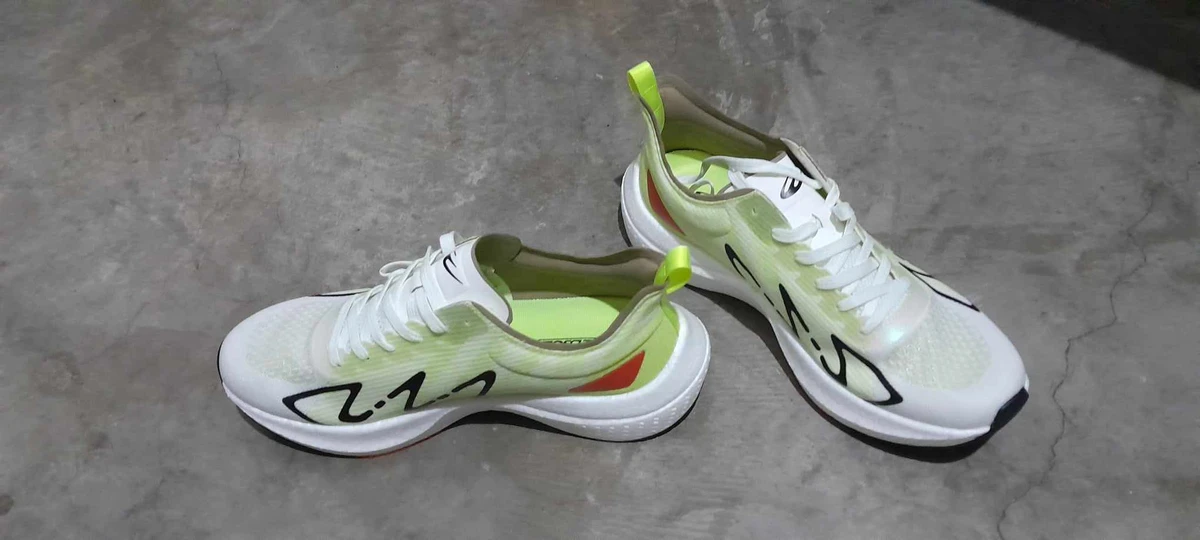
Woven label sewn into tongue or insole, or an insole-embedded soft inlay. Survives domestic wash cycles. See the SKU at /products/rfid-labels/nfc-sneaker-authentication-tag/.
Luxury handbags and leather goods
Sewn-in fabric label or thin leather patch laminated into the hang-tag. Works through a handbag lining without detuning. SKU: /products/rfid-labels/nfc-luxury-handbag-tag/.
Cosmetics and fragrance
Small-format tamper seal (NTAG 424 DNA TT) applied to carton or cap. Opens once; the signed open-state then persists for the life of the tag. SKU: /products/rfid-labels/nfc-cosmetics-authentication-label/.
Wine and spirits
Under-capsule or neck-label tag. The capsule physically breaks the NTAG 424 DNA TT loop at first pour, so the bottle cannot be refilled and re-sold as sealed. SKU: /products/rfid-labels/nfc-wine-bottle-tag/.
Olive oil and extra-virgin
Under-cap tamper seal paired with GS1 Digital Link URL — consumer taps the bottle, sees harvest data, mill lot, and an authentic / tampered / counterfeit answer. SKU: /products/rfid-labels/nfc-olive-oil-authentication-label/.
Electronics warranty seals
Destructible tamper label where the loop severs if the device is opened. Ends "it was open when it arrived" warranty disputes with a signed tamper flag. SKU: /products/rfid-labels/nfc-electronics-warranty-label/.
A staged brand-protection rollout
We typically see brand-protection programmes move through five phases. Skipping phase 2 (key-management) is the mistake that quietly breaks most programmes 18 months in.
- Phase 1 — Pilot SKU and verification page
Pick one SKU, one factory line. Stand up a verification endpoint (Scantrust, Authena, EVRYTHNG / Digimarc, Aura Blockchain, or a self-hosted CMAC verifier). Confirm the consumer experience end-to-end before scaling.
- Phase 2 — Key management and issuance
Decide where AES-128 master keys live (HSM, KMS), how per-tag keys are derived (NXP's diversification method or your own), and who holds the issuance keys. This is the single hardest part of a brand-protection programme and the one auditors actually care about.
- Phase 3 — Production integration
Lock the tag into the production line: who encodes, who verifies encoding, and how tags are paired to serial numbers. Reject-rate at encoding should be under 1% before going wide.
- Phase 4 — Analytics and enforcement
Wire tap events into your analytics: per-SKU tap volume, repeat-taps per tag, geolocation clusters, TT-loop state changes. Build a review queue for your enforcement team.
- Phase 5 — Consumer and DPP layer
Extend the tap from pure authentication to product passport: care instructions, resale eligibility, recycled-content claims, and — in the EU under ESPR 2024/1781 — the regulated Digital Product Passport fields.
Where SUN authentication fits in the ecosystem
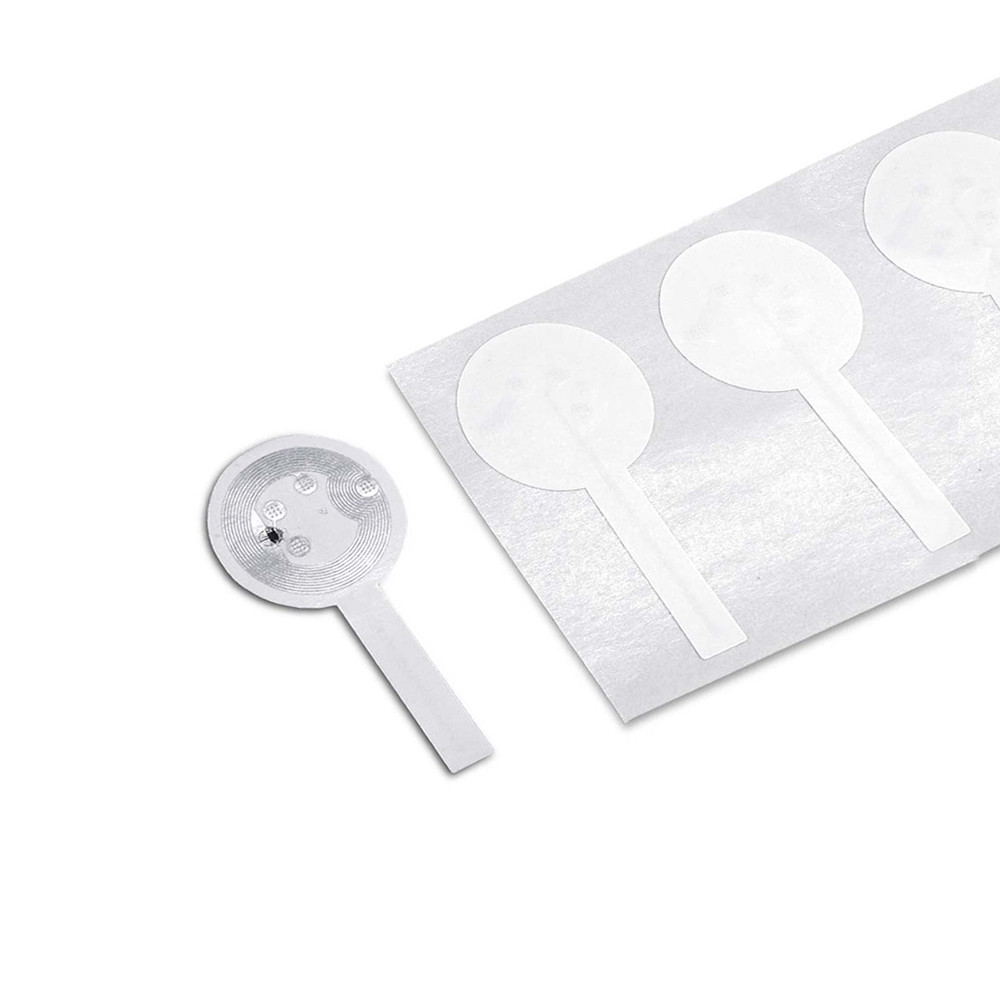
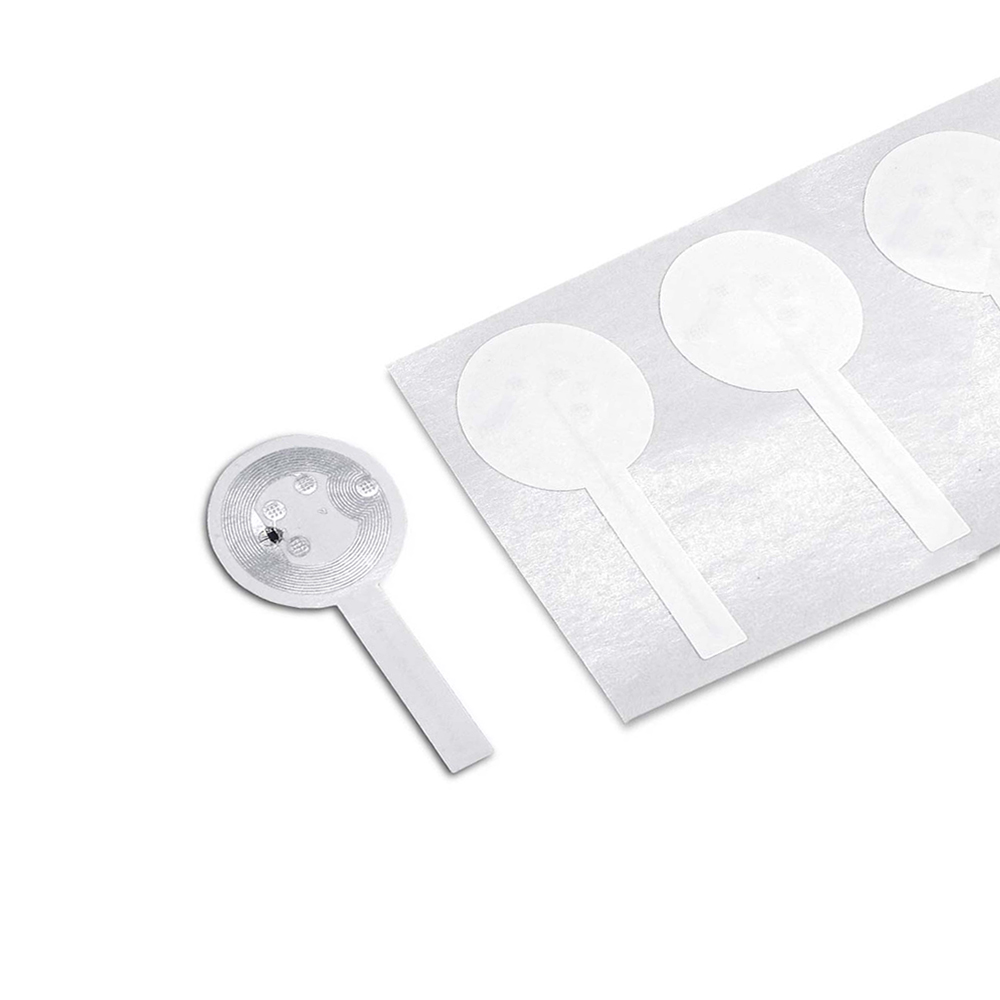
For readers new to NFC authentication: the tag below is an NTAG 424 DNA TamperTag. The orange loop is the tamper evidence — once severed, every subsequent tap emits a signed "open" status that the consumer's phone can decode server-side. No reader, no app, no trust in the packaging supplier required.
Compliance and standards worth knowing before sign-off
A brand-protection programme sits at the intersection of NFC specifications, cryptographic standards, and sector-specific regulation. The items below are what auditors, procurement and legal will ask about.
- NFC Forum Type 4 Tag specification — the baseline that makes NTAG 424 DNA tap-readable on any iPhone or Android phone with no app installed.
- NXP AN12196 — the authoritative application note for NTAG 424 DNA and 424 DNA TagTamper SUN / CMAC flow; your verifier must implement this correctly.
- GS1 Digital Link (ISO/IEC 18975) — the standard URL format that lets one tag resolve to consumer, regulator and enterprise views depending on context.
- ISO 22382:2018 — guideline standard for authentication features on excise stamps; relevant anywhere tobacco, alcohol or pharma are in scope.
- EU ESPR 2024/1781 and the Digital Product Passport — the regulation that turns brand-protection tags into a compliance artefact for products sold in the EU from 2027 onward (product-by-product timing).
- NIST SP 800-38B (CMAC specification) — the underlying message-authentication algorithm behind NTAG 424 DNA SUN; referenced in security audits.
- ISO/IEC 14443 (Parts 1–4) — the HF 13.56 MHz air interface the tags actually run on.
- OECD / EUIPO "Global Trade in Fakes" — the headline market-sizing figures you will cite in your business case.
- Tag chip confirmed: NTAG 424 DNA or 424 DNA TT (not NTAG213/215/216 with a static URL).
- AES-128 master key held in an HSM or cloud KMS; per-tag keys derived, not stored in plaintext.
- Verification server runs on a brand domain with HTTPS; GS1 Digital Link resolver tested on iOS and Android.
- Encoding line reject-rate measured; tags physically matched to product serials before leaving the factory.
- TT-loop behaviour tested on each packaging variant; confirm the loop actually severs at first open on production samples.
- Analytics wired: per-tag tap count, geolocation cluster, repeat-tap outliers, tamper-state change.
- Consumer landing page covers authentic / unauthorised / tampered / unverifiable responses — not just the happy path.
- Enforcement workflow documented: who looks at which report, who issues takedown requests, who escalates to law enforcement.
Useful next pages
Use these linked product, guide and comparison pages to keep the next click specific and practical.
Authentication tag SKUs
Form factors and chip variants that ship from ProudTek for anti-counterfeit and tamper-evidence programmes.
Solutions and programme guides
How brand-protection ties into ProudTek's broader solutions stack and the Digital Product Passport.
Compare & chip families
Decision support for picking between 424 DNA, DESFire and NTAG215 — and between tap-to-verify NFC and older anti-counterfeit layers.
FAQ
Can a counterfeiter clone an NTAG 424 DNA tag?
Not in any practical sense. NTAG 424 DNA holds an AES-128 key inside the chip that never leaves. Every tap emits a fresh SUN message (a CMAC over the URL parameters and a monotonic counter). Copying the UID or static NDEF does nothing — the server rejects any SUN that does not verify against the expected key, and any replay is caught by the counter. What you must protect is the key issuance pipeline, not the tag itself.
Do consumers need to install an app?
No. Any iPhone on iOS 14 or later and any modern Android phone reads NFC Forum Type 4 tags in the default browser. The tag contains a URL with a SUN query parameter; tapping opens that URL in Safari or Chrome. Tap-through rates sit in the 25–50% range, versus single-digit rates for flows that require a brand app install.
What is the difference between NTAG 424 DNA and NTAG 424 DNA TT?
They share the same cryptographic engine (AES-128 SUN). The TT (TagTamper) variant adds a physical conductive loop wired into the chip. When the loop is intact, every SUN carries a "closed" flag; once the loop is severed (by opening the packaging, pouring the bottle, or removing a seal) every subsequent SUN carries an "open" flag. TT is what you want for first-open evidence; plain 424 DNA is what you want when the tag lives inside a product that is never opened.
How does tap-to-verify help against grey-market diversion?
Each tag is unique and each tap is timestamped and geolocated (coarsely, via IP geolocation on the verification server). A tag issued into region A that starts receiving sustained taps from region B is a diversion signal — unauthorised re-export, parallel import, or bulk-listing on a grey-market marketplace. Enforcement teams use the tap pattern as evidence in takedown letters and in conversations with authorised distributors.
What verification backend do we need to run?
You need (1) a key store, ideally an HSM or a cloud KMS that can hold AES-128 keys and perform CMAC verification without releasing the key, and (2) a resolver that accepts the tag URL, verifies the SUN, and returns the consumer-facing response. ProudTek can pre-encode to Scantrust, Authena, EVRYTHNG / Digimarc, Aura Blockchain, or your own CMAC verifier. The chip itself is portable — you are not locked into any one platform.
Does a brand-protection tag double as a Digital Product Passport?
Yes, if the URL is structured as a GS1 Digital Link (ISO/IEC 18975). The same tag can resolve to a consumer view (authentic / tampered), a regulator view (DPP fields required under EU ESPR 2024/1781 — material composition, recycled content, repair manual), and an enterprise view (supplier lot, factory line, QC record). One tap, three audiences, by negotiating content type on the resolver.
Is NFC authentication defensible in court or in a marketplace takedown?
In our experience, yes — and measurably more so than holograms or QR codes. Major marketplaces (Amazon, Alibaba, Tmall, the Luxury / Vestiaire segment) accept SUN-verified tap evidence as part of counterfeit takedown submissions. Customs agencies in the EU, US and China accept cryptographic authentication alongside physical inspection. For litigation, what usually matters is the chain of custody from chip personalisation to product embedding; keep the issuance log.
Can NFC tags be cloned?
Static-UID NFC chips (NTAG213, NTAG215, NTAG216, MIFARE Classic 1K) can be cloned in seconds with a sub-EUR 20 reader because their identifier is fixed and not signed. Cryptographic chips cannot — NTAG 424 DNA, NTAG 424 DNA TT and MIFARE DESFire EV3 each hold an AES-128 secret inside hardware and emit a fresh CMAC (per NIST SP 800-38B) on every tap. The secret never leaves the chip; a clone produced from a photograph of the UID fails server verification on the first tap. The NXP application note AN12196 documents the SUN/CMAC flow; choose 424 DNA or DESFire EV3 for any enforcement-grade program.
What is GS1 Digital Link and why does it matter for anti-counterfeiting?
GS1 Digital Link (ISO/IEC 18975) is the web-resolvable URL standard that lets one identifier (e.g. https://id.gs1.org/01/{GTIN}/21/{serial}) resolve to different content for different audiences — consumer authenticity page, regulator Digital Product Passport, retailer GS1 record. When the SUN parameter from an NTAG 424 DNA tap is appended to a GS1 Digital Link URL, a single chip supports brand-protection, EU ESPR 2024/1781 DPP and retailer SKU lookup with no inlay re-spin. EUIPO Anti-Counterfeiting Technology Guide endorses this pattern. See https://www.gs1.org/standards/gs1-digital-link for the spec.
How big is the global counterfeit market?
OECD and EUIPO estimate global trade in counterfeit and pirated goods at approximately USD 467 billion in 2021, around 2.5% of world trade (Global Trade in Fakes, 2025 edition). Footwear, clothing and leather goods dominate seizures; pharmaceuticals, perfumes, cosmetics, toys and electronics are the high-harm categories. WIPO and ICC BASCAP track parallel figures. EU customs seizure data (DG TAXUD) shows e-commerce parcels carrying counterfeit goods rising year-on-year. These figures are the standard reference for justifying NFC tap-to-verify investment; see https://www.oecd.org/en/publications/global-trade-in-fakes_74c81154-en.html.
Sources & references
Primary standards, OEM datasheets and regulatory documents cited by this article. All URLs were verified on the access date shown below.
- NXP AN12196 — NTAG 424 DNA and NTAG 424 DNA TagTamper features and hints
Authoritative technical reference for SUN / CMAC authentication and TagTamper loop behaviour.
- NXP NTAG 424 DNA product page
Datasheet and feature overview for the chip underpinning most 2026-era brand-protection tap-to-verify deployments.
- NIST SP 800-38B — Recommendation for Block Cipher Modes of Operation: The CMAC Mode for Authentication
Specifies the CMAC algorithm that NTAG 424 DNA SUN messages use; cited in security-audit documentation.
- GS1 Digital Link (ISO/IEC 18975)
Web-resolvable identifier format that lets one tag serve consumer, regulator and enterprise views.
- EU Intellectual Property Office — Anti-counterfeiting Technology Guide
EU reference guide on anti-counterfeiting technologies including NFC tap-to-verify and serialisation.
- OECD / EUIPO — Global Trade in Fakes: A Worldwide Estimate of Counterfeiting and Piracy
Authoritative market-sizing data for the counterfeiting-loss argument supporting brand-protection programmes.
- EU Regulation 2024/1781 — Ecodesign for Sustainable Products Regulation (ESPR) and Digital Product Passport
Regulation mandating the Digital Product Passport; NFC tap-to-verify tags are the dominant physical carrier under discussion in the delegated acts.
- NFC Forum Type 4 Tag specification
Baseline NFC specification for the tap-to-read behaviour that NTAG 424 DNA tags rely on across iOS and Android.
- WIPO — Enforcement of intellectual property rights
International framework for anti-counterfeiting enforcement that brand-protection NFC programs feed evidence into.
- ICC BASCAP — Business Action to Stop Counterfeiting and Piracy
Industry coalition tracking counterfeit economic impact and best-practice authentication technologies.
Proud Tek is a Shenzhen-based RFID & NFC manufacturer supplying hotel chains, transit operators, event venues and retail brands worldwide. Every order includes free samples, RF testing and dedicated project support.
Get a Quick Quote
Tell us about your project and we'll respond within one business day. Fields marked (asterisk) are required.