
Cold Chain RFID
RFID Frozen Food Label
Cryo Adhesive to -40 °C

Quick answer
RFID frozen food labels are passive UHF tags (ISO/IEC 18000-63 EPC Gen2v2) on cryo-grade acrylic adhesive + moisture-barrier PET that hold to corrugated, polypropylene and waxed-board frozen packaging from room-temperature application through -40 °C blast freezing, long-term -25 °C storage and freeze-thaw cycling. They carry the GS1 SGTIN-96 EPC + lot + production date + expiry as the FSMA Section 204 Traceability Lot Code, pair with Sensitech, ELPRO LIBERO, Berlinger, Emerson GO, DeltaTrak, ORBCOMM and Carrier ReeferConnect temperature loggers, and feed Manhattan Active WM, Blue Yonder Luminate, SAP EWM, Oracle WMS Cloud, Körber K.Motion and Lineage Logistics LMS for cold-DC inventory + FEFO picking + recall scoping.
- Cryo-grade acrylic adhesive applied at room temperature, holds through blast-freeze tunnels (-40 °C, 60 min), -25 °C long-term storage and 200+ freeze-thaw cycles per ASTM D3330.
- Moisture-barrier PET laminate prevents ice-crystal formation on the antenna; ≥90% of room-temperature read range retained after 30+ days at -40 °C.
- Pre-encoded with GS1 SGTIN-96 EPC + Traceability Lot Code (FSMA 204 KDE) + GS1 Digital Link 1.3 URI for consumer tap; pairs with Sensitech / ELPRO / Berlinger / Emerson loggers.
Used in these industries
Deployments where this product is referenced on our industry landing pages.

At a glance
Use these short answers to decide whether this page matches the project before moving into the detail.
Adhesive chemistry — why standard PSA fails below -10 °C
Standard rubber-based PSA — Tg around -20 °C; loses tack rapidly below -10 °C, peel drops 70-90% at -25 °C. Standard acrylic PSA — Tg around -40 °C; better cold tack but...
Substrate stack — moisture barrier and antenna protection
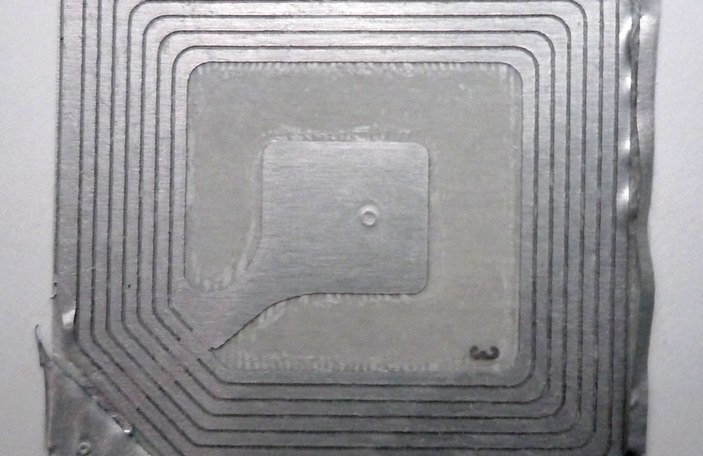
Top face — PET 50 µm with thermal-transfer top-coat for Zebra ZT411 / SATO CL4NX printing. Inlay — passive UHF EPC Gen2v2 chip on Al-etched PET antenna, dry inlay or wet...
Next step
Ready to move forward? Start your inquiry to get specific answers for this project.
Request quote and samples- Chip silicon options
-
- Impinj M730 — read sensitivity -22.7 dBm, Autopilot tuning helps freezer-portal RF; default for cold-DC + retail mix.
- Impinj Monza R6-P — excellent backscatter, proven >5-year cold-storage reliability.
- NXP UCODE 8 — robust + cost-effective for high-volume frozen food retail.
- NXP UCODE 9 — highest UCODE-family sensitivity (-23 dBm), suited for dense-reader freezer portals.
- All four are rated -40 °C to +85 °C silicon operating envelope per chip datasheet.
- Read distance in frozen environments
-
- Handheld reader (Zebra RFD8500 sub-zero, Impinj R420 with cold antennas) — 1.5-4 m on case-level RFID label inside a -25 °C aisle.
- Dock-door portal (Impinj Speedway R700, Zebra FX9600) — 4-7 m on pallet-level label at -25 °C.
- Blast-freezer (-40 °C) — drop reader hardware in IP-65 enclosure (Impinj zWall, Zebra ZR-class) to maintain operating envelope.
- Cycle count of a 10,000-case freezer in <90 min vs 6-8 h manual — single biggest worker-cold-exposure reduction.
- Encoding — what goes on every label
-
- GS1 SGTIN-96 EPC — GTIN-14 + serial number; the FSMA 204 Traceability Lot Code.
- User memory — production date (YYYY-MM-DD), expiry date, lot/batch number, originator GLN.
- GS1 Digital Link 1.3 URI ('https://retailer.com/01/<gtin>/10/<lot>/15/<expiry>') — same code drives consumer-tap PDP + EU 1169/2011 durability date.
- AFI byte / lock bits — enabled per customer cold-chain protocol.
- FSMA Section 204 — Critical Tracking Events for frozen FTL items
-
- 21 CFR Part 1 Subpart S effective compliance date 20 Jan 2026 (extended from 2026 deadline by FDA Mar 2025 final rule).
- Food Traceability List (FTL) frozen-scope: shell eggs, soft cheeses (frozen distribution), leafy greens, melons, fresh-cut fruits/veg (frozen versions), ready-to-eat deli salads, finfish (frozen at sea + retail), smoked finfish, crustaceans, molluscan bivalves.
- Critical Tracking Events: Harvesting, Cooling, Initial Packing, First Land-Based Receiver, Shipping, Receiving, Transformation.
- Key Data Elements: Traceability Lot Code, source / destination, date received, quantity, unit of measure, traceability product description.
- EU food law alignment
-
- Reg (EC) 178/2002 Article 18 — 'one up, one down' traceability; minimum 5-year retention.
- Reg (EC) 852/2004 + (EC) 853/2004 — hygiene + animal-origin product hygiene including frozen processing.
- Reg (EC) 2073/2005 — microbiological criteria; cold-chain temperature evidence is the primary defence.
- EU 1169/2011 — food information to consumers, frozen-food durability date and 'best before' messaging on label.
- Temperature logger pairing
-
- Sensitech TempTale 4 / 4B / Ultra USB — pallet-level USB logger, downloaded at receiving.
- ELPRO LIBERO Gx / Cx / Hx — real-time GSM + LoRa + Wi-Fi, cloud-streaming.
- Berlinger Q-tag CLm doc / SmartView — pharma + food cold-chain.
- Emerson GO Real-Time + GO Reusable — global GSM + Bluetooth.
- DeltaTrak FlashLink + In-Transit Logger — USB + Bluetooth.
- Onset HOBO MX, Vaisala viewLinc, Dickson — zone monitoring for cold storage rooms.
- Carrier Naviator + Container Refrigeration, Thermo King ReeferConnect, Maersk RCM, ORBCOMM, Frigo-Trans — reefer-container telematics.
- Pairing: RFID label EPC + logger serial associated at loading; cold-chain platform reconciles excursions against the EPC + lot.
- Cold-chain management platforms
-
- Sensitech SensiWatch — pharma + food cold-chain.
- Emerson ProAct — multi-site cold-chain analytics.
- ELPRO LIBERO cloud — real-time excursion alerting.
- Controlant — Pfizer mRNA vaccine distribution proof-of-scale, applied to food cold-chain.
- Ambrosus, Carrier Lynx Fleet, Lineage Logistics IMS — DC + last-mile.
- Cold-DC WMS integration
-
- Manhattan Active WM (cold-chain module), Blue Yonder Luminate Logistics, SAP EWM (Extended Warehouse Management).
- Oracle WMS Cloud, Körber K.Motion WMS, Softeon WMS, LogiWa (cloud-native).
- Lineage Logistics' proprietary LMS — largest US cold-storage 3PL.
- Inbound dock portal → WMS put-away → cycle-count handheld → FEFO pick confirmation → outbound reefer portal + reefer-temperature association.
- Procurement and ROI
-
- MOQ 1,000 pieces / SKU; lead time 12-18 business days for chip variant + cryo-adhesive.
- Unit price USD 0.20-0.65 ex-works depending on chip + antenna + face print + cryo-adhesive grade.
- Pre-encoded EPC + lot + date + Digital Link URI; encoding service included for orders ≥10,000 pcs.
- Typical payback 6-12 months — labour savings (cycle count) + shrink reduction (FEFO compliance) + recall-scope reduction.
- What this product is NOT
-
- Not a temperature sensor — pair with a Sensitech / ELPRO / Berlinger / Emerson logger.
- Not a chip-level cryogenic specimen label — for laboratory LN2 (-196 °C) use the dedicated cryogenic specimen label.
- Not a HF NFC consumer-tap label — UHF for inventory; pair with NTAG21x consumer-tap label on the front face if needed.
- Not a primary-package food-contact label — substrate is food-safe per FDA 21 CFR 175.105 + EU 10/2011 (indirect contact only).
Why standard RFID labels fail in frozen — and what the upgrade actually requires
- Standard rubber PSA Tg ≈ -20 °C — peels off corrugated cases at -25 °C within hours.
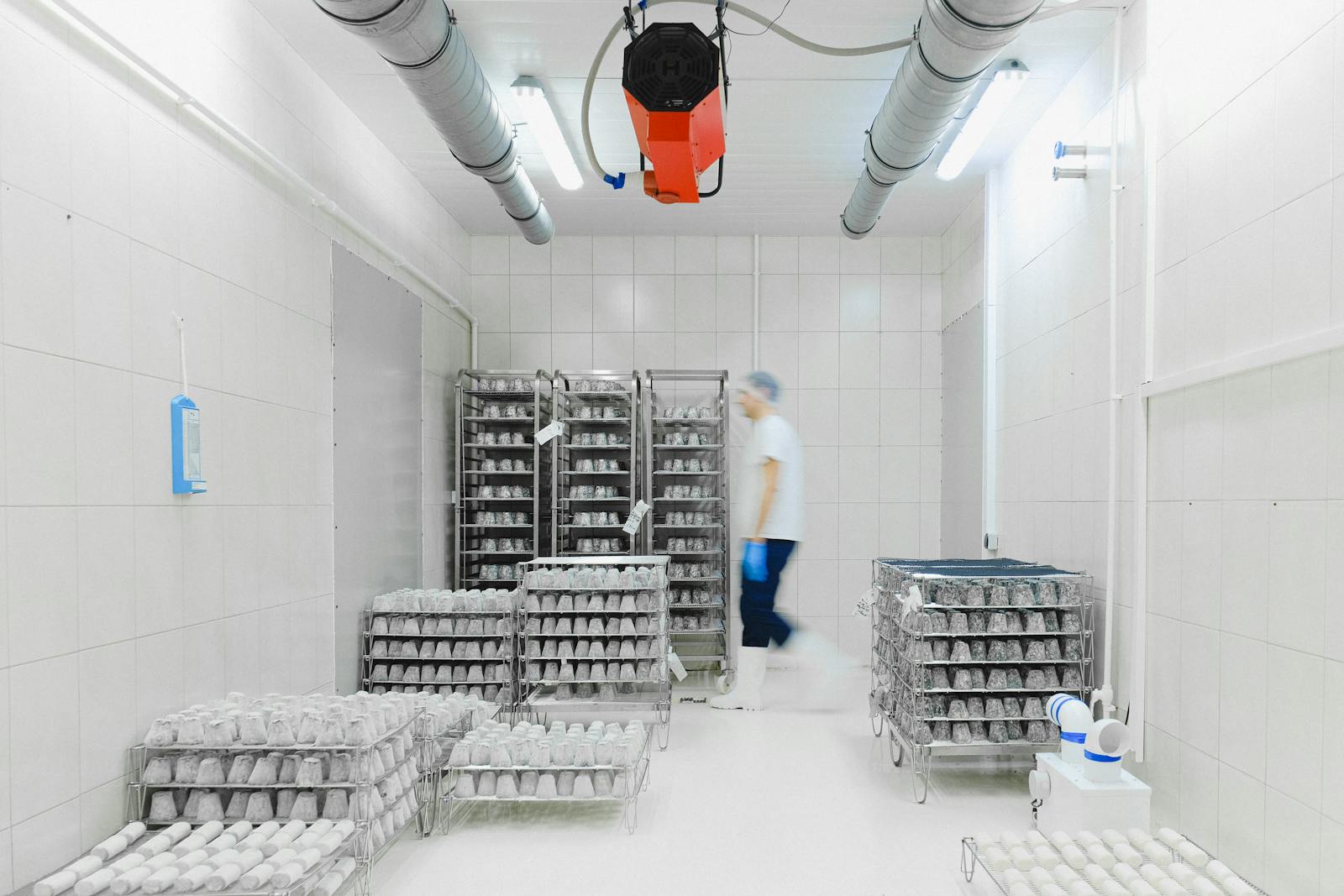
- Paper face stock absorbs moisture and delaminates at the freezer-aisle dewing band (entry / exit).
- Ice crystal formation directly on Al antenna shifts impedance and drops read range 50-80% — moisture-barrier PET laminate is the fix.
Manual cycle count + paper traceability vs FSMA-204-ready RFID
Manual barcode + paper traceability
- Workers in heavy gloves read frost-covered expiry dates → 8-12% missed-date discard.
- Manual cycle count = 6-8 h in a -25 °C room → OSHA cold-room limits cap practical thoroughness.
- Recall scope = entire production run; cost 5-10× the targeted recall.
- Reefer-truck temperature excursion not provably tied to specific cases until physical inspection.
- Lot-Code on paper docs; reconcile by hand at WMS receiving.
RFID frozen food label (cryo-grade + FSMA-encoded)
- EPC + expiry encoded on every case; FEFO pick instructions delivered to the handheld.
- Handheld reader cycle-counts 10,000 cases in <90 min, single worker visit.
- Recall scope = exact pallets that exceeded the CCP threshold; cost 5-10× lower.
- Reefer logger ↔ EPC association: excursion auto-flagged against specific cases.
- Traceability Lot Code on chip + GS1 Digital Link consumer URI; WMS auto-receives.
- Cold-chain failures are the most common FSMA recall trigger for frozen — temperature-abuse events affect 3-5% of frozen shipments.
- RFID-paired logger evidence is the FSMA inspector's preferred CCP documentation form.
- Cold-DC WMS modules from Manhattan / Blue Yonder / SAP / Oracle / Körber / Lineage all natively consume EPC + Digital Link URI.
FSMA Section 204 + EU 178/2002 — the regulatory architecture this label is designed for
- FSMA 204 + EU 178/2002 + EU 1169/2011 + EU 2073/2005 — single GS1 Digital Link URI satisfies all four document trails.
- Reefer-temperature logger excursion + RFID EPC association = HACCP CCP evidence the FDA inspector accepts.
- Recall scope drops from 'entire production run' to 'specific pallets that exceeded -18 °C threshold'.
Cold-DC operational stack — where the label earns the 6-12 month payback
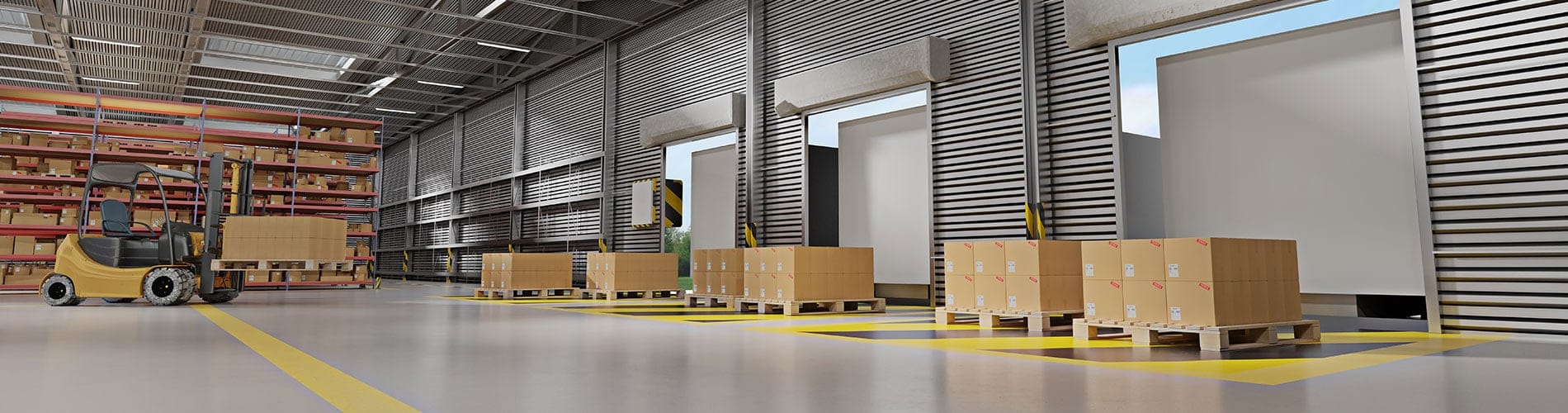
- Inbound dock — Impinj R700 / Zebra FX9600 portal reads pallet + case labels + reefer-trailer sticker on arrival.
- Put-away — WMS (Manhattan / Blue Yonder / SAP EWM / Oracle / Körber / Lineage LMS) auto-assigns freezer zone based on lot age.
- Cycle count — handheld (Zebra RFD8500 sub-zero, Impinj R420 cold-spec) sweeps 10,000 cases in <90 min, single worker visit.
- FEFO pick — handheld ranks pick list by earliest expiry from EPC user memory; pick confirmation reads case-level EPC.
- Outbound — dock-door portal verifies loaded SKUs vs shipment manifest + reefer logger serial associated at loading.
- Reefer-in-transit — Carrier ReeferConnect / Thermo King / Maersk RCM streams temperature; cold-chain platform reconciles to specific EPCs.
- Receiving DC — destination dock portal reads same EPCs, auto-reconciles to FSMA 204 Receiving CTE.
- Recall — RFID-encoded EPCs allow exact pallet/case identification within minutes vs 'entire production run' paper-only.
From HACCP to FSMA 204 — milestones that shaped frozen-food traceability
- 1969
Codex Alimentarius CAC/RCP 1-1969 — HACCP General Principles published; cold-chain temperature established as a Critical Control Point for frozen foods globally.
- 1996
USDA FSIS 9 CFR Part 417 — HACCP mandatory for meat + poultry processing in the US, including frozen distribution.
- 2002
EU Reg (EC) 178/2002 — General Food Law + Article 18 'one up, one down' traceability; 5-year retention requirement establishes the EU paper-trail baseline.
- 2011
FDA Food Safety Modernization Act (FSMA) signed; Section 204 calls for additional traceability records for high-risk foods.
- 2015
GS1 Tag Data Standard 1.9 + EPC SGTIN-96 stabilises; cold-chain logger vendors (Sensitech, ELPRO, Berlinger, Emerson) begin RFID-pair APIs.
- 2022
FDA publishes FSMA 204 final rule (21 CFR Part 1 Subpart S); compliance date set for 20 Jan 2026.
- 2024
EU Digital Product Passport (ESPR Reg 2024/1781) extends machine-readable traceability to non-food categories; food cold-chain pattern proves the architecture.
- 2026 — Today
Cross-buyer reference experience on cold-storage-3pl, retail-grocery-frozen-aisle, foodservice-distributor-frozen, frozen-seafood-processor, ice-cream-manufacturer-cold-dc and ready-meal-cold-chain programmes shows.
Useful next pages
Use these linked product, guide and comparison pages to keep the next click specific and practical.
Related RFID label products
Other RFID labeling solutions for cold chain and food tracking.
Chip-level technical reference
Deep-dive specifications and chip-family comparisons relevant to this SKU.
Industry applications
Industry deep-dives where this SKU is commonly specified.
FAQ
Does the label stay on in a -40 °C blast freezer?
Yes. The cryo-grade acrylic adhesive (Tg ≤-50 °C, cross-linked promoter, peel ≥18 N/25 mm at -25 °C) is applied at room temperature (15-25 °C) for initial tack, then maintains permanent adhesion through blast freezing (-40 °C, 60 min), long-term -25 °C cold storage and 200+ freeze-thaw cycles per ASTM D3330. The moisture-barrier PET laminate over the inlay prevents condensation-driven delamination at the freezer-aisle dewing band. We test every adhesive batch per ASTM D3330 + ASTM D903 at -40 °C and supply COA on request.
Does frost or ice buildup affect RFID read performance?
Standard PET-faced inlays without a moisture barrier lose 50-80% of read range when ice crystals form on the antenna. Our moisture-barrier PET laminate construction prevents direct ice formation on the Al antenna; in 30+ day continuous -40 °C storage tests, labels retain ≥90% of room-temperature read range. In practice handheld readers achieve 1.5-4 m read range on case-level labels in -25 °C aisles, dock-door portals achieve 4-7 m on pallet-level labels, and blast-freezer (-40 °C) operation is supported with reader hardware in IP-65 enclosures (Impinj zWall, Zebra ZR-class) to maintain the reader's operating envelope.
Can the label be applied to already-frozen packages?
For best adhesive performance, labels should be applied at room temperature (15-25 °C) before the product enters the freezer — production-line printer-applicators (Zebra ZE511, Datamax-O'Neil A-Class Mark II) typically print, encode and apply in one pass. If application to already-frozen packages is required, we offer a specialised instant-tack cryo adhesive formulated for -10 to -20 °C bonding, but the recommended workflow is room-temperature application before blast-freeze. Labels applied at sub-zero temperatures need 24-48 h to reach full bond strength — we document the cold-application protocol per customer specification.
How does the label integrate with temperature-logging devices for end-to-end cold-chain compliance under FSMA 204 and EU food law?
The RFID frozen food label carries identity (EPC + lot + date + expiry) but is not itself a temperature sensor. End-to-end cold-chain compliance pairs the label with a temperature-logging device at the appropriate aggregation level — pallet logger (Sensitech TempTale 4B, ELPRO LIBERO Gx, Emerson GO Real-Time, Berlinger Q-tag, DeltaTrak FlashLink), zone logger (Onset HOBO, Vaisala, Dickson for cold-storage room monitoring), or reefer-container logger (Carrier Naviator, Thermo King ReeferConnect, Maersk RCM, ORBCOMM, Frigo-Trans). The label's EPC is associated with the logger serial at loading; the logger's time-temperature trace is pulled into the cold-chain management platform (Sensitech SensiWatch, Emerson ProAct, ELPRO LIBERO cloud, Controlant, Ambrosus, Carrier Lynx Fleet, Lineage Logistics IMS); excursions against the HACCP CCP threshold (typically -18 °C for frozen) are flagged against the specific pallet/case/unit. This satisfies FSMA 204 Critical Tracking Event documentation + EU Reg 178/2002 Art 18 'one up, one down' + Reg (EC) 2073/2005 microbiological-criteria evidence.
What chip should I choose for frozen-food applications, and does it survive long-term freezer exposure without performance degradation?
The primary chip choices for frozen-food UHF RFID are: (1) Impinj M730 — read sensitivity -22.7 dBm, Autopilot tuning compensates for environment shifts, default for cold-DC + retail mix; (2) Impinj Monza R6-P — excellent backscatter, proven >5-year cold-storage reliability; (3) NXP UCODE 8 — robust + cost-effective for high-volume frozen retail; (4) NXP UCODE 9 — highest UCODE-family sensitivity (-23 dBm), suited for dense-reader freezer portals with challenging RF environments. All four are rated -40 °C to +85 °C silicon operating envelope per the chip datasheet, with documented >5-year cold-storage reliability in real frozen-food deployments. The actual performance constraint is the antenna / substrate / adhesive stack, not the chip — our frozen-food label design addresses all three. Default for mid-volume frozen-food retail is UCODE 8; for high-performance cold-DC freezer portals we recommend M730 or UCODE 9.
Sources & references
Primary standards, OEM datasheets and regulatory documents cited by this article. All URLs were verified on the access date shown below.
- Codex Alimentarius — HACCP General Principles of Food Hygiene (CAC/RCP 1-1969 Rev 4-2003)
Establishes cold-chain temperature as the universal Critical Control Point for frozen foods; basis for FDA, USDA FSIS, EU Regs (EC) 852/2004 + 853/2004.
- FDA FSMA Section 204 — 21 CFR Part 1 Subpart S, Requirements for Additional Traceability Records for Certain Foods
Federal Register Vol 88, No 220 — Critical Tracking Events + Key Data Elements + Food Traceability List with frozen-scope items; compliance date 20 Jan 2026.
- Regulation (EC) 178/2002 — General principles and requirements of food law (Article 18 traceability)
Article 17-19: 'one up, one down' traceability with 5-year retention; the EU baseline that the RFID label's EPC + lot encoding satisfies.
- Regulation (EC) 2073/2005 — Microbiological criteria for foodstuffs
Microbiological-criteria framework where cold-chain temperature evidence (RFID + logger pairing) is the primary defence in inspection.
- FDA 21 CFR 175.105 — Adhesives for indirect food contact
Defines the food-safe scope for label adhesives; cryo-grade acrylic used here is compliant for indirect contact (label on outer pack, not in direct food contact).
- Regulation (EU) 10/2011 — Plastic materials and articles intended to come into contact with food
EU food-contact-plastic regulation; PET face stock + adhesive stack used here meets indirect-contact requirements.
- Impinj M700 series RAIN RFID tag chips datasheet
Read sensitivity -22.7 dBm, Autopilot tuning, -40 °C to +85 °C operating envelope; the default chip for cold-DC + retail mix frozen-food deployments.
- NXP Semiconductors — UCODE 8 / UCODE 9 UHF RFID ICs datasheet
UCODE 9 sensitivity -23 dBm — highest in the UCODE family; cold-storage operating envelope -40 °C to +85 °C verified by manufacturer.
- GS1 — Digital Link Standard Release 1.3 + Sunrise 2027 Programme
Digital Link 1.3 URI syntax used for the consumer-tap + FSMA-204 + EU 1169/2011 multi-jurisdiction routing from a single physical label.
- Sensitech — TempTale 4 / 4B / Ultra USB Cold-Chain Logger datasheet + Cold-Chain Reference Architecture
Pallet-level cold-chain logger paired with RFID label EPC at loading; SensiWatch cloud platform reconciles excursions to specific cases.
Proud Tek is a Shenzhen-based RFID & NFC manufacturer supplying hotel chains, transit operators, event venues and retail brands worldwide. Every order includes free samples, RF testing and dedicated project support.
Get a Quick Quote
Tell us about your project and we'll respond within one business day. Fields marked (asterisk) are required.