
RFID Parking Solutions
RFID Parking Management
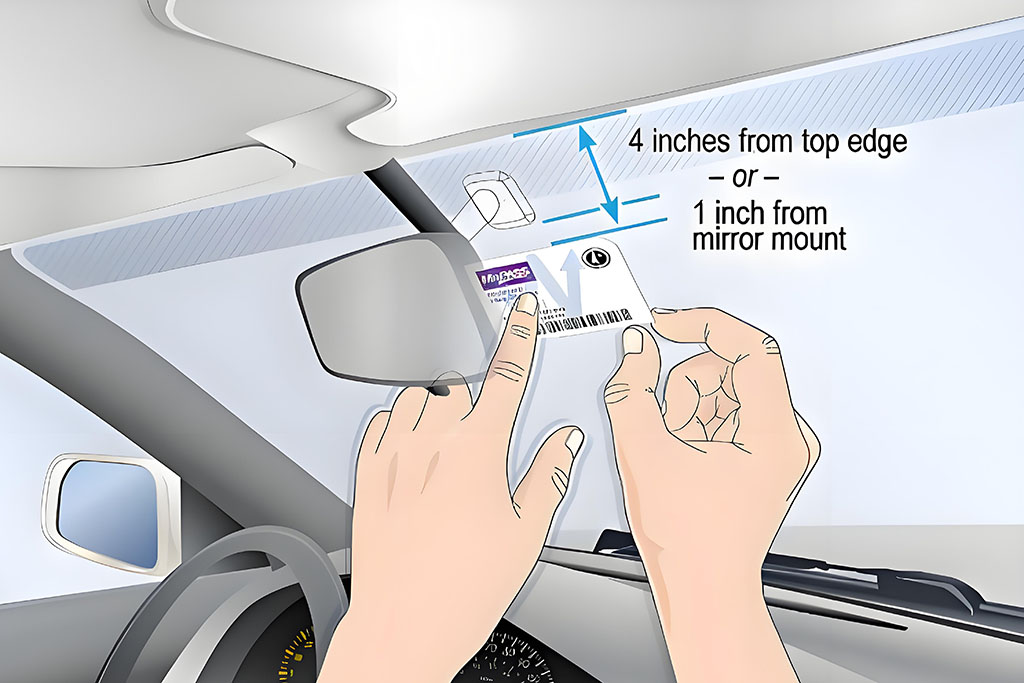
UHF Windshield Tags

Quick answer
RFID parking management uses UHF windshield tags + RFID parking cards + LF tokens + long-range readers (5-12 m) to automate vehicle identification at gated community + corporate campus + hospital + university + stadium + mall + municipal parking. Hands-free barrier opening, automated billing, real-time occupancy, ALPR-RFID hybrid lane, EV-charging tier, valet management. Integrates with Skidata access.tower, Amano McGann + Cincinnati, Designa, T2 Systems Iris + Liberty, ParkPass + Flowbird (Parkeon), Hub Parking, ParkMobile + ParkWhiz + SpotHero, Bosch Mobility Solutions, Conduent + Kapsch TrafficCom for tier-1 parking deployments at hospital + university + corporate campus + stadium + mall + airport + transportation hub.
- Hands-free entry — UHF windshield 5-12 m read; vehicle clears barrier at 10-20 km/h without stopping.
- Skidata + Amano + Designa + T2 Systems + ParkPass + Flowbird + Bosch Mobility platform integration.
- ALPR-RFID hybrid lane — 99%+ RFID first-read for credentialed + ALPR exception-handling for visitor + revenue-protection.
Featured Parking Management Products
SKUs we typically deploy for parking management. Tap a card for specs and samples.
At a glance
Use these short answers to decide whether this page matches the project before moving into the detail.
Application matrix
Gated community + residential — resident vehicle + visitor + delivery. Corporate campus — employee + visitor + EV-charging + executive tier.
Credential format library
UHF windshield label — adhered to interior glass; standard 5-8 m read range. Long-range UHF windshield sticker — 8-12 m for high-throughput.
Next step
Ready to move forward? Start your inquiry to get specific answers for this project.
Get parking RFID tag quote- Parking platform vendors
-
- Skidata access.tower + access.gate — global stadium + parking.
- Amano McGann + Amano Cincinnati — North American parking lot.
- Designa — EU + APAC parking systems.
- T2 Systems Iris + Liberty — North American university + municipal.
- ParkPass + Flowbird (formerly Parkeon) — EU + global pay-on-foot.
- Hub Parking + Pay & Display — independent + pay-on-foot.
- Bosch Mobility Solutions — automotive OEM-aligned.
- ParkMobile + ParkWhiz + SpotHero — mobile-app integration.
- Conduent + Kapsch TrafficCom + TransCore — system integrator.
- Reader hardware
-
- Impinj Speedway R700 + R420 — 4-port fixed; tier-1 parking.
- Zebra FX9600 + FX7500 — IP-65 rated for outdoor.
- TransCore Encompass + IT2000 — tolling-grade.
- RFID Inc + GAO RFID + Atlasrfidstore — parking-specialised.
- Times-7 A5010 + MTI MT-261021 RHCP antennas — goalposts pattern.
- ALPR camera — Bosch + Genetec + Milestone XProtect for hybrid lane.
- Barrier hardware — Magnetic Autocontrol + FAAC + BFT + Came + Ditec.
- ALPR + RFID hybrid lane economics
-
- ALPR (Automatic License Plate Recognition) — 80-95% accuracy in good conditions.
- RFID — 99%+ at properly tuned portal; weather-immune.
- Hybrid — RFID for credentialed + ALPR for exceptions + revenue-protection.
- ALPR camera + processing USD 8-25K / lane vs RFID portal USD 5-15K / lane.
- Combined USD 15-30K / lane budget; 24/7 unstaffed operation.
- Privacy — RFID UID-only by design; ALPR retains unfiltered images.
- Athermic + tinted windshield workaround
-
- Athermic (heat-rejecting metallised) windshield — 8-15 dB UHF attenuation.
- Tinted (3M Crystalline + Llumar + Suntek + V-Kool) — similar attenuation.
- Dot-matrix wiper area placement — clear of metallised film.
- Heated-windshield variant — separate clear zone for tag.
- Headlight or bumper mount — alternative for severely-attenuated.
- License-plate-mounted — for fleet rental + cross-borrow.
- Vehicle access tier + zone management
-
- Employee + tenant — long-term access; badge-bound credential.
- Visitor + delivery — temporary credential at kiosk.
- VIP + executive + concierge — NTAG 424 DNA + cryptographic.
- EV-charging tier — separate zone + occupancy limit.
- Reserved + handicapped — enforcement at gate.
- Time-limited — per-day or per-event access.
- Pay-as-you-park — barrier + payment integration.
- Real-time occupancy + analytics
-
- Entry / exit counter — minute-by-minute zone occupancy.
- Capacity management — block at threshold + redirect.
- Historical analytics — peak day / hour / event.
- Revenue forecasting — per-zone + per-tier.
- Event-day surge handling — capacity ladder.
- Digital signage integration — 'lot full' + spot-available.
- Cashless payment integration
-
- ParkMobile + PayByPhone + ParkWhiz + SpotHero mobile app.
- Apple Wallet + Google Wallet + Apple Pay tap.
- Credit card + ACH + closed-loop pre-paid.
- Tier-based pricing — daily + event + season + monthly.
- Validation + voucher + parking discount.
- PCI DSS 4.0 compliant transaction handling.
- Operational ROI
-
- Entry / exit time — 15-30 sec manual → <1 sec RFID.
- Gate-attendant cost — eliminated for 24/7 unstaffed.
- Cash-handling cost — reduced via cashless payment.
- Occupancy accuracy — paper estimate → minute-by-minute real-time.
- Event-day surge throughput — 50-80% capacity-utilisation lift.
- Programme payback — 6-18 months at portal-level deployment.
- Privacy + compliance
-
- RFID UID-only encoding — anonymised by default.
- GDPR (EU 2016/679) — explicit consent for personal-data binding.
- ePrivacy Directive 2002/58/EC — cookie + tracking consent.
- CCPA (California Consumer Privacy Act) — US event compliance.
- PCI DSS 4.0 — payment-data handling.
- ADA Standards 2010 — reach-range + accessibility at kiosk + reader.
- What parking RFID is NOT
-
- Not a substitute for license plate — coexists with ALPR for hybrid lane.
- Not a GPS / cellular tracker — pair with telematics for active monitoring.
- Not a payment-card replacement — closed-loop pre-paid or open-loop EMV.
- Not standalone — full ROI requires parking platform + payment + ALPR integration.
Why RFID parking — hands-free + 24/7 unstaffed + ALPR hybrid
Every driver knows the choreography at a manual gate: roll up to the booth, drop the window in the rain, dig for the ticket that slid under the seat, and hold up the whole line while you do it. Hands-free RFID parking exists to delete that scene. The windshield credential is read while the car is still rolling toward the barrier, the arm lifts before the driver thinks to brake, and the booth — along with the queue it created — quietly goes away. Everything below is about doing that without giving up a cent of revenue or a clause of privacy compliance.
- Skidata + Amano + Designa + T2 Systems + ParkPass + Flowbird + Bosch Mobility platform integration native.
- ALPR-RFID hybrid lane = 99%+ first-read for credentialed + exception-handling for visitor + revenue-protection.
- Athermic + tinted windshield workaround — dot-matrix wiper area + headlight + license-plate-mounted alternatives.
Manual badge / barcode vs UHF RFID + parking platform
Manual badge / barcode + paper logbook
- 15-30 sec entry / exit; queue at peak; gate-attendant cost.
- ALPR 80-95% accuracy; weather-sensitive.
- Paper visitor log; manual reconciliation overhead.
- Cash + receipt at exit; counting overhead + theft risk.
- Occupancy estimate by paper or visual count.
UHF RFID + parking platform integration
- <1 sec RFID tap; queue eliminated; 24/7 unstaffed.
- RFID 99%+ regardless of lighting + weather.
- Visitor kiosk + RFID token + automatic timer.
- Cashless via Skidata / Amano / Designa + Apple Wallet + Google Wallet.
- Real-time minute-by-minute zone occupancy + digital signage.
- Combined ALPR + RFID at hybrid lane = revenue-protection + privacy-friendly + 24/7 operation.
- EPC ↔ VIN + plate + driver ID + tenant ID pairing flows through parking platform.
- Long-range windshield sticker (8-12 m) is the upgrade path for high-throughput stadium + corporate campus.
Skidata + Amano + Designa + T2 Systems + ParkPass — the architecture
- Stadium + arena + ski resort = the volume-driving Skidata reference deployment.
- University + municipal = the T2 Systems Iris + Liberty volume.
- Corporate campus + hospital + medical = the Amano McGann + Designa volume.
Where RFID parking earns its margin — the application inventory
The hardware barely changes from one line of this list to the next; the expectations do. A gated community wants residents to glide through and strangers to be noticed. A hospital wants its emergency lane to never sit behind a visitor hunting for the ticket machine. A stadium wants a full lot's worth of cars in before kickoff and none of them honking. It is the same windshield credential and the same reader on a pole — the work that earns the margin is in the rules stacked on top of them.
- Gated community + residential — resident vehicle + visitor + delivery.
- Corporate campus — employee + visitor + EV-charging + executive tier.
- Hospital + medical — staff + patient + visitor + emergency.
- University + K-12 — student + faculty + visitor + service vehicle.
- Stadium + arena — event-day + season-pass + suite-tier.
- Mall + retail — shopper + employee + delivery + season parking.
- Municipal + airport + transportation hub.
- EV-charging + valet + reserved-spot enforcement.
- Healthcare campus — separate zone for patient + visitor + emergency.
- Drive-through retail — McDonald's + Starbucks + Tim Hortons license-plate-bound loyalty.
From 1990 access-card to 2024 ALPR-RFID hybrid — milestones that shaped parking RFID
- 1990
First widespread parking access-card systems (HID Prox, MIFARE Classic) — gated community + corporate campus.
- 2007
EPC Gen2v1 + ISO/IEC 18000-6C ratified — universal UHF air-interface enables long-range parking + tolling.
- 2010
Skidata access.tower + Amano McGann + Designa + T2 Systems platform consolidation across stadium + parking + university.
- 2015
ParkMobile + PayByPhone + ParkWhiz + SpotHero mobile-app integration; cashless payment at parking.
- 2018
ALPR-RFID hybrid lane mainstream; Bosch + Genetec + Milestone XProtect ALPR pairs with RFID for revenue-protection.
- 2020
Long-range UHF windshield sticker (8-12 m) becomes mainstream for high-throughput stadium + corporate campus.
- 2022
Apple Wallet + Google Wallet parking-pass + tap-to-pay at gate; mobile credential displaces physical card at premium properties.
- 2024
EU Regulation 2024/1781 (ESPR) + GDPR enforcement extends to parking-data privacy compliance; UID-only encoding becomes EU default.
- 2026 — Today
Operating notes from gated-community-resident-access, corporate-campus-employee-parking, hospital-multi-gate, university-shuttle, stadium-event-day-surge, mall-retail-employee, ev-charging-tier and municipal-airport-transportation-hub programmes.
Real-time occupancy + dynamic pricing + curb management
Nobody has ever enjoyed circling a packed garage, reading brake lights for a hint that someone is about to leave. Real-time occupancy is the unglamorous cure: count what drives in, count what drives out, and put the number on a sign before the driver commits to the wrong level. Dynamic pricing is the same count pointed at the wallet instead of the windshield.
- Occupancy sensing — RFID gate-count + stall-by-stall sensor (Streetline, ParkSight, IPS Group, Smart Parking) provides real-time stall availability data. Mall + hospital + airport + downtown deployments.
- Variable Message Signs (VMS) — entry-lane LED display + digital signage shows available stalls per zone + 'Full' indicators; reduces driver-search time + air pollution from circling.
- Mobile app integration — Live availability on ParkMobile, PayByPhone, SpotHero, ParkWhiz, BestParking, Parkopedia + native city/operator apps. Pre-booking + reservation + payment.
- Dynamic pricing — surge pricing during peak hours / events / weather; Skidata + Amano + T2 Systems support API-driven price changes. Downtown SFpark + LA ExpressPark are reference deployments. Pricing changes drive demand smoothing + revenue lift 15-30%.
- Curb management — short-stay loading zone + rideshare pickup-drop-off + delivery dwell-time enforcement. CurbIQ + Coord + Populus + Lyft + Uber zone management partnerships. RFID + ALPR + camera-based dwell-detection.
- City + municipal — SFMTA, DDOT Washington DC, NYCDOT, Boston BTD, Portland PBOT, Los Angeles LADOT all run curb + parking management programmes increasingly with RFID + ALPR + mobile app.
- Stadium event-day surge — temporary RFID zone activation paired with online ticketing (Ticketmaster, SeatGeek, AXS, StubHub) for parking-with-ticket bundles + arrival time slotting.
- Hospital + medical campus — visitor + patient + staff + emergency vehicle separation with multi-zone RFID + occupancy display. Cleveland Clinic, Cedars-Sinai, Mass General Brigham, Mayo Clinic published deployments.
- Airport + transportation hub — short-term / long-term / cell phone lot / employee tier separation with UHF RFID at entry/exit + occupancy display. DFW, ORD, LAX, JFK published deployments.
- Revenue uplift — combination of dynamic pricing + reservation + occupancy guidance typically 15-30% revenue increase over static-pricing baseline at downtown + airport + hospital + stadium deployments.
- Data sources for occupancy ML — RFID gate counts + camera-vision (ParkPlus, ParkWhiz) + ground sensor (Streetline) + payment-meter activity + smartphone app data; fused into operator dashboard.
Programme economics + payback by venue size + use case
- Per-stall capex — entry/exit lane equipment $25K-$80K per lane (barrier + RFID reader + ALPR camera + intercom + payment terminal + controls + cabling + installation); typical 200-stall facility 2-4 lanes = $100K-$320K equipment.
- Per-stall opex — operations + maintenance $40-$150 per stall per year + cloud platform fee $15-$60 per stall per year + RFID credential issuance $5-$30 per active user per year.
- Credential unit cost — UHF windshield label $0.30-$0.80 at 5K+ qty; long-range UHF windshield sticker $0.80-$2.00; MIFARE Classic parking card $1.20-$2.50; MIFARE DESFire EV3 card $3-$6; dual-frequency LF+HF card $1.80-$3.50; visitor token reusable $0.30-$0.80.
- Mid-market facility (200 stalls, single property) — Year-1 capex $150K-$400K, opex $20-$50K/year; revenue from monthly parking $200-$600/stall/month average → $480K-$1.4M revenue; payback typically 12-24 months on shared parking; faster on premium downtown + hospital.
- Enterprise multi-site (5,000+ stalls across 10+ properties) — Year-1 capex $1.5M-$5M, opex $300K-$800K/year; centralised platform contract $50K-$300K/year; revenue uplift from dynamic pricing + occupancy guidance 15-30% over baseline.
- Gated community (200-2,000 residents) — Year-1 capex $40K-$200K, opex $15-$40K/year; cost typically rolled into HOA dues + property-management fee. Payback measured in resident satisfaction + property-value uplift + reduced violations rather than direct revenue.
- Corporate campus (1K-50K employees) — Year-1 capex $200K-$1.5M, opex $50K-$300K/year; cost as employee benefit + facility management overhead; payback measured in employee throughput + commute friction reduction + RTO compliance.
- Hospital (300-2K beds, 5K-20K daily traffic) — Year-1 capex $500K-$3M, opex $100K-$500K/year; revenue from visitor parking $5-$25/visit × 1K-5K daily = $1.5M-$25M annual; payback 18-36 months at typical visitor volumes.
- Stadium / arena (5K-100K event capacity) — Event-day surge tier $30K-$200K capex per event in mobile equipment + temporary signage + staff; revenue $10-$50 per parker × 1K-30K event-day parkers = $10K-$1.5M per event; revenue model integrated with ticketing.
- Airport (small regional to international) — Year-1 capex $5M-$50M depending on volume; revenue from parking concession typically the 2nd or 3rd largest non-aero revenue category for airport authority; RFID + ALPR + mobile app drives 10-25% revenue lift on baseline.
- Procurement leverage — multi-year platform contract (3-5 year) yields 10-20% discount; cross-property roll-up (5+ properties) another 10-15%; bundled hardware + platform + integrator services yields 10-20% vs separate procurement.
- Hidden Year-2+ savings — reduced gate-attendant staffing (overnight + weekend automation); reduced enforcement cost (automated violation detection + chargeback); reduced cash-handling overhead (cashless 95%+ of transactions); reduced infrastructure (fewer physical permits + decals + paper).
Privacy + compliance — GDPR / CCPA / surveillance-camera + ALPR + state privacy
- RFID privacy posture — UID-only encoding is the default; the UID alone does not identify a person without the platform-side mapping table. EU GDPR Article 4(5) recognises this as pseudonymisation; CCPA accepts similar framework.
- Cardholder data — platform-side mapping table contains name, vehicle plate, VIN, payment instrument, billing address. Triggers full data-protection obligations.
- GDPR — Article 6 lawful basis (contract + legitimate interest typical for parking); Article 13 + 14 disclosure to data subject; Article 28 controller-processor framework with platform vendor; Article 32 security of processing; Article 35 DPIA for high-risk processing (ALPR + biometric).
- CCPA / CPRA — California consumer-privacy regulation; consumer right to know + delete + opt-out of sale; applies to parking-platform attendee data; 2023 CPRA expanded employee data into scope.
- Other state privacy laws — Virginia VCDPA, Colorado CPA, Connecticut CTDPA, Utah UCPA, Texas TDPSA — all expanded 2023-2025; parking-platform vendors must support multi-state compliance.
- ALPR-specific concerns — Vigilant Solutions / Motorola LEARN / Flock Safety + similar networks have triggered multi-state legislation restricting ALPR data retention + sharing (e.g., California SB 34 2015, Maine LD 1198 2021, Vermont 23 V.S.A. § 1607).
- Surveillance camera regulation — IL Biometric Information Privacy Act (BIPA) extended into face-recognition; multiple US cities (San Francisco, Boston, Portland, Oakland) ban or restrict municipal face recognition in public spaces; private parking lot use less restricted but trending.
- EU AI Act 2024 — real-time biometric ALPR classified as high-risk under Annex III; conformity assessment + fundamental-rights impact assessment + worker / public transparency required from 2026.
- Data residency — EU + UK data must remain in-region; major parking platforms (Skidata, Designa, Flowbird) operate EU-resident cloud regions; US vendors (T2, Amano McGann, ParkPass) increasingly add regional residency for EU + UK clients.
- Retention — RFID gate-event logs typical 12-24 months for revenue + dispute resolution; longer (5-7 years) at airport + government deployments for security investigations; minimised + anonymised after retention period.
- PCI DSS 4.0 (March 2025) — applies to credit-card payment terminal + cloud platform handling parking payment. Platform vendor + acquirer share responsibility per Master Services Agreement.
- Consumer-facing transparency — privacy notice at entry kiosk + on mobile app + in tenant lease; right-to-access portal for cardholder to view + delete personal data.
Useful next pages
Use these linked product, guide and comparison pages to keep the next click specific and practical.
Parking RFID products
Tags + cards + tokens for parking management systems.
Adjacent solutions
Cross-vertical reading for parking procurement.
FAQ
What range do UHF windshield tags provide for parking barrier control?
Standard UHF windshield labels provide 5-8 m read range with a typical long-range UHF reader and directional antenna at 30 dBm ERP. Extended-range (long-range UHF windshield sticker) versions reach 8-12 m. This is sufficient for the vehicle to be identified while approaching the barrier at normal speed (10-20 km/h) without needing to stop, with the barrier opening before the vehicle arrives. For high-throughput stadium + corporate campus + tier-1 yard / drayage applications the long-range variant is the recommended upgrade. The reader hardware (Impinj Speedway R700 + R420 + Zebra FX9600 + TransCore Encompass + IT2000) and antenna (Times-7 A5010 + MTI MT-261021 RHCP in goalposts pattern over the lane) are matched to the credential format.
Will the UHF windshield tag work on metalised or tinted windshields?
Metalised tint coatings on windshields (3M Crystalline + Llumar + Suntek + V-Kool athermic / heat-rejecting films) attenuate UHF signals 8-15 dB and significantly reduce read range. For vehicles with metalised windshield tint, we recommend: (1) placement at the dot-matrix wiper area, where the metallised film is interrupted; (2) heated-windshield variant with a separate clear zone for the tag; (3) headlight-mount tag or bumper-mount tag; (4) license-plate-mounted variant for fleet rental + cross-borrow scenarios. We supply both windshield and alternative-mount tag options for mixed vehicle fleets — specify the windshield type per vehicle (factory tint vs after-market film) and we route the matching format. ALPR-RFID hybrid lane is the alternative deployment when significant fleet variability rules out a single tag format.
Can RFID parking work alongside license plate recognition (ALPR)?
Yes — ALPR-RFID hybrid lane is the dominant 2024-2026 deployment pattern. RFID provides 99%+ first-read accuracy at properly tuned portal regardless of lighting + weather; ALPR provides 80-95% accuracy in good conditions and degrades in rain + snow + dust + glare + dirty plates. The two technologies complement: RFID for credentialed vehicles (employee + tenant + season-pass + fleet) at <1 sec entry; ALPR for exception-handling (visitor + missing-tag-fallback + enforcement). Combined cost USD 15-30K / lane vs USD 5-15K RFID-only. The hybrid approach eliminates 24/7 staffing while preserving revenue-protection at lots that would otherwise lose 5-15% to non-paying visitors. Privacy-friendly RFID UID-only encoding contrasts with ALPR's unfiltered image retention; combined deployment in EU GDPR jurisdiction typically requires explicit consent + data-retention policy for ALPR images.
How does RFID parking integrate with major platforms — Skidata + Amano + Designa + T2 Systems + ParkPass?
Skidata access.tower (global stadium + ski + parking, Kudelski Group) + Amano McGann + Amano Cincinnati (North American parking specialist) + Designa (EU + APAC) + T2 Systems Iris + Liberty (North American university + municipal — 200+ universities + cities) + ParkPass + Flowbird (formerly Parkeon, EU + global pay-on-foot + ParkMobile mobile app) + Hub Parking + Pay & Display + Bosch Mobility Solutions + Conduent + Kapsch TrafficCom + TransCore all natively consume RFID-discovered EPC events via REST + OAuth 2.0 + GraphQL + EPCIS 2.0 (ISO/IEC 19987:2021) Commission + ObjectEvent. Mobile-app integration via ParkMobile + PayByPhone + ParkWhiz + SpotHero + Apple Wallet + Google Wallet provides cashless payment. The integration pattern is well-established; tier-1 deployment typically completes in 6-12 weeks per parking facility after equipment installation.
What chip silicon should I specify for parking RFID?
For UHF windshield label + long-range sticker specify NXP UCODE 9 (best-in-class -23.5 dBm sensitivity) for premium 5-12 m read range + dense-reader stadium / corporate-campus deployments, or Impinj M730 / M770 (-22.7 dBm) + Monza R6-P for cost-optimised mid-volume parking. For RFID parking card specify MIFARE Plus SE or MIFARE DESFire EV2/EV3 for AES-128 secure credential at premium tenant + corporate access; legacy MIFARE Classic 1K is acceptable only for non-security-relevant short-stay token applications. For dual-frequency card (UHF parking + HF building) specify the combined chipset on a single PVC card body. For NTAG 424 DNA SUN cryptographic per-tap verification specify only for VIP / classified / high-revenue tolling tier where the cryptographic premium pays back. Tell us your parking platform vendor + facility type + throughput tier and we route the matching chip silicon + encoding template + sample-test on your reader hardware.
How does multi-tier zone management work — visitor / employee / VIP / EV?
Each tier has its own credential + permission set + time-of-day rule managed in the parking platform. Visitor: short-stay kiosk-issued token + ALPR + paid at exit. Employee: MIFARE Plus / DESFire EV3 card or UHF windshield label with weekday-only commuter hours. Tenant / resident: UHF label with community-wide zone access integrated with property-management (RealPage, Yardi, AppFolio, Entrata). VIP / executive: reserved-stall + closer-to-entrance with NTAG 424 DNA SUN cryptographic verification. Fleet: chassis-mounted RFID with VIN + plate + driver-pairing. EV charging: dedicated EV-stall tier with idle-time penalty + reservation, integrated with ChargePoint + Tesla + EVgo + Electrify America networks. Car-share: RFID label + member-vehicle pairing app (Zipcar, Getaround). Disabled / ADA: DMV permit cross-reference. Anti-passback prevents single tag entering twice without exiting; per-zone analytics export to BI tools for facility planning.
Can RFID parking drive revenue uplift, or is it a cost play?
Both. Direct cost savings: gate-attendant staffing reduction (overnight + weekend automation), reduced enforcement cost, eliminated cash-handling overhead, reduced infrastructure (fewer physical permits + decals + paper). Revenue uplift: dynamic pricing during peak hours / events / weather lifts 15-30% over static baseline; reservation + pre-booking captures additional revenue from would-be turn-away parkers; mobile app integration with ParkMobile / PayByPhone / SpotHero / ParkWhiz adds 20-40% of transaction volume; event-day surge tier integration with Ticketmaster / SeatGeek / AXS for parking-with-ticket bundles. Reference deployments: SFpark (San Francisco) reported significant occupancy + revenue lift; LA ExpressPark similar; downtown Seattle SDOT, Boston BTD, Portland PBOT all report measurable revenue gains. Combined cost reduction + revenue uplift typically yields 12-24 month payback on shared parking, faster at downtown + hospital + airport.
What's the privacy posture for RFID + ALPR parking under GDPR / CCPA?
RFID UID-only encoding is privacy-friendly by default — the UID alone cannot identify a person without the platform-side mapping table; EU GDPR Article 4(5) recognises this as pseudonymisation. ALPR captures unfiltered images with potential incidental personal information; requires GDPR Article 35 DPIA (Data Protection Impact Assessment) before deployment in EU. Common compliance pattern: RFID for credentialed vehicles (no PII collected at gate), ALPR for exception-handling (limited retention + access). Major US state privacy laws (CCPA / CPRA + Virginia + Colorado + Connecticut + Utah + Texas + others 2023-2025) require disclosure + consumer right-to-know + right-to-delete. EU AI Act 2024 classifies real-time biometric ALPR as high-risk under Annex III, requiring conformity assessment from 2026. Practical approach: signpost at every entry kiosk + mobile app + tenant lease describes data collection; honour right-to-erasure requests; retain RFID logs 12-24 months, ALPR images shorter (90 days typical) with rapid deletion.
Sources & references
Primary standards, OEM datasheets and regulatory documents cited by this article. All URLs were verified on the access date shown below.
- ISO/IEC 18000-63:2015 — RAIN RFID EPC Gen2v2 air-interface (UHF 860-960 MHz)
International ISO standard for UHF Gen2v2 air-interface used for long-range parking + tolling reads at 5-12 m.
- ISO/IEC 14443 — Proximity Cards (HF 13.56 MHz)
HF air interface for parking cards (MIFARE Classic + Plus + DESFire) at short-range gate readers + visitor kiosks.
- Skidata — access.tower + access.gate Documentation
Global stadium + parking + ski resort access platform; the dominant tier-1 deployment for FIFA + UEFA + Vail Resorts + Aspen Snowmass + airport parking.
- Amano McGann + Amano Cincinnati Parking Documentation
North American parking lot specialist; the dominant Amano deployment for corporate + medical + university + commercial.
- T2 Systems — Iris + Liberty Parking Platform (200+ universities + municipalities)
North American university + municipal parking platform; the dominant deployment for higher-education + city parking.
- Flowbird (formerly Parkeon) — Pay-on-Foot + ParkMobile Mobile-App Integration
EU + global pay-on-foot parking + cashless mobile-app integration platform.
- FCC Part 15.247 — 902-928 MHz Unlicensed UHF for Parking-Gate Readers
FCC rules governing 902-928 MHz radiation limits for UHF parking-gate readers.
- ETSI EN 302 208 V3.3.0 — 865-868 MHz European UHF RFID Parking-Gate Readers
European regulatory baseline for UHF RFID parking-gate readers.
- International Parking & Mobility Institute (IPMI) — Industry Reference + Best Practice
Industry body for parking-management best practice including RFID + AVI + ALPR + cashless payment.
- Impinj — Monza R6-P + M700 Series UHF Tag Chip Family
Common UHF chip silicon inside windshield + hangtag RFID parking-management tags; M730 + M770 + Monza R6-P proven 5+ year parking installed base.
- NXP UCODE 9 — premium UHF chip silicon
Best-in-class UHF chip with -23.5 dBm sensitivity; common in premium long-range windshield labels for stadium + corporate-campus parking.
- ParkMobile + PayByPhone — mobile parking-payment platforms
Dominant US + Canada + EU mobile parking-payment platforms with deep API integration to Skidata + Amano + T2 + Designa + Flowbird parking platforms.
- Designa — EU + APAC parking automation platform
German EU + APAC parking automation vendor; common in EU airport + downtown + hospital + corporate deployments.
- California SFpark + LA ExpressPark — municipal dynamic-pricing reference
Reference municipal deployments of dynamic-pricing + occupancy guidance + RFID + meter parking integration; cited for revenue + occupancy uplift benchmarks.
- California SB 34 — Automated License Plate Recognition limitations
California law restricting ALPR data retention + sharing; reference for ALPR + RFID hybrid parking lane privacy posture.
- EU AI Act (Regulation 2024/1689) — real-time biometric in public spaces
Classifies real-time biometric ALPR in public spaces as high-risk under Annex III; conformity assessment + fundamental-rights impact assessment required from 2026.
- RealPage + Yardi + AppFolio + Entrata — property-management platforms
Dominant US multifamily + commercial property-management platforms with RFID gate + amenity access integration for resident parking + community access.
- ChargePoint + Tesla Supercharger + EVgo + Electrify America — EV charging networks
Major North American + EU EV charging networks with RFID-gated stall access + idle-time penalty + reservation integration.
- GS1 EPCIS 2.0 (ISO/IEC 19987:2021) — parking event-sharing standard
Event-data standard for sharing parking RFID gate-events across multi-property operators + integrated mobility platforms.
Proud Tek is a Shenzhen-based RFID & NFC manufacturer supplying hotel chains, transit operators, event venues and retail brands worldwide. Every order includes free samples, RF testing and dedicated project support.
Get a Quick Quote
Tell us about your project and we'll respond within one business day. Fields marked (asterisk) are required.