
Higgs-9 Large-User-Memory Inlay
Alien Higgs-9 UHF Inlay
688-bit User Memory

Quick answer
The Alien long-range UHF chip UHF inlays embed Alien Technology's Higgs-9 chip with 128-bit EPC, 96-bit factory-serialised TID, and 688-bit (≥64 byte) user memory — the largest user memory in the volume RAIN RFID chip tier. They are the chip choice when on-tag data storage matters more than read-range floor: returnable transit item (RTI) tracking with trip-specific data, industrial asset records that work offline, field-service maintenance logs in mines / oil rigs / utility plants where network connectivity is unreliable, and multi-party GS1 Application Identifier data exchange. It serves as the chip / user-memory / on-tag-data-pattern / Higgs-9-vs-M700-vs-UCODE-9 selection reference for supply-chain, logistics, industrial asset, and offline-RFID deployments.
- 688-bit (≥64 byte) user memory — largest in volume RAIN RFID category, the structural advantage that makes Higgs-9 the default for returnable transit item (RTI) trip data, industrial asset records that work offline, and field-service maintenance logs in mines / oil rigs / utility plants where network connectivity is unreliable.
- Extended power management with -23.2 dBm read sensitivity (~0.5 dB more sensitive than M700-series) delivers 10-15 m read range with standard 6 dBic antennas at 4 W EIRP. Real-world: 8-12 m logistics dock door, 5-9 m warehouse portal. Dense-reader mode (DRM) ensures reliable operation across overlapping reader zones.
- Multi-party GS1 Application Identifier data exchange — write AI (01) GTIN + AI (10) lot + AI (17) expiry + AI (21) serial directly to user memory in AFI format per GS1 EPC TDS, enabling each supply-chain party to read standardised fields without custom integration. EPC Gen2v2 / ISO/IEC 18000-63:2015 compliant; works with every standards-compliant reader.
Used in these industries
Deployments where this product is referenced on our industry landing pages.



At a glance
Use these short answers to decide whether this page matches the project before moving into the detail.
Chip silicon and lineage
Alien Technology Higgs-9 — fourth-generation Alien RAIN RFID silicon, successor to Higgs-3 / Higgs-4 / Higgs-EC family. Manufactured at production volume since 2018; wid...
Memory architecture
128-bit EPC — supports SGTIN-96 / SGTIN-198 / SSCC-96 / GIAI-96 encoding per GS1 Tag Data Standard 2.0. 96-bit factory-serialised TID — globally unique immutable identif...
Next step
Ready to move forward? Start your inquiry to get specific answers for this project.
Request quote and samples- Sensitivity and read range
-
- Read sensitivity -23.2 dBm typical (Alien Higgs-9 datasheet) — ~0.5 dB more sensitive than Impinj M770 (-22.7 dBm).
- Free-air bench: 10-15 m read range with standard 6 dBic antenna at 4 W EIRP.
- Real-world: 8-12 m logistics dock door, 5-9 m warehouse portal, 4-7 m retail apparel, 2-4 m on-metal / on-liquid with appropriate antenna.
- Dense-reader mode (DRM) support ensures reliable operation in environments with multiple overlapping reader zones.
- Air interface and standards
-
- ISO/IEC 18000-63:2015 + EPC Gen2v2 air interface (basic feature set; AUTHENTICATE not implemented).
- GS1 EPC Tag Data Standard (TDS) 2.0 SGTIN-96 / SGTIN-198 / SSCC / GIAI / Application Identifier encoding.
- EPCIS 2.0 supply-chain event data standard for RTI / pharma traceability integration.
- Frequency: 860-960 MHz across FCC + ETSI + Japan + China sub-bands.
- On-tag data storage patterns — when user memory earns its premium
-
- RTI trip data on pallets and roll cages: origin, destination, consignee, weight, gross/tare, trip number, timestamp — typically 32-48 bytes fits comfortably in Higgs-9 user memory.
- Field-service and utility asset records: last service date, next service date, serial, calibration status, technician ID — written by handheld readers in the field, works offline in tunnels / mines / remote utility plants.
- Closed-loop pharma and medical-device traceability: lot code, manufacture date, expiry date, sterilisation cycle counter — on-tag writable fields enable compliance audits even when cloud serialisation is unreachable.
- GS1 Application Identifiers for multi-party data exchange: AI (01) GTIN, AI (10) lot, AI (17) expiry, AI (21) serial written directly to user memory in AFI format per GS1 EPC TDS.
- Anti-patterns to avoid: don't write customer PII (no auth floor — anyone with reader reads it); don't use user memory as primary identifier (use TID); don't rely on user memory for authentication (no crypto on Gen2 basic chips).
- Higgs-9 vs Impinj M700 vs UCODE 9 — when each one wins
-
- Higgs-9: when user memory is the deciding factor. 688-bit (vs M700's 32-bit, UCODE 9's 32-224-bit configurable) is the largest in the volume RAIN tier — default for RTI / industrial asset / offline-write applications.
- Impinj M700 (M730 / M750 / M770): when small-antenna read range is the deciding factor. -22.1 to -22.7 dBm sensitivity is competitive on miniaturised antennas; jewellery / pharma vials / small-item retail.
- NXP UCODE 9: when unit-cost at very high volume is the deciding factor. Typically 10-15% below Higgs-9 per chip at >100M units; volume choice for pure EPC-only retail apparel without user memory.
- All three share ISO/IEC 18000-63:2015 Gen2v2 air interface — swap decisions driven by antenna design, user memory, sensitivity floor, per-unit pricing — not reader-fleet compatibility.
- Cryptographic authentication is not a shipping feature on Higgs-9, M700, M800 (M830 / M850), or UCODE 9 — programmes requiring per-tap cryptographic authentication today specify HF chips such as NXP NTAG 424 DNA or UCODE DNA, not UHF.
- Industrial asset tracking
-
- Mines, oil rigs, construction sites, remote agriculture — environments lacking reliable network connectivity.
- On-tag data storage allows handheld readers to write and read application data locally without server communication.
- Maintenance scheduling, calibration tracking, safety-inspection logs all live on the chip; backend sync occurs when connectivity returns.
- Returnable transit items (RTI) and logistics
-
- Pallets, containers, roll cages, IBCs — RTI tagging requires trip-specific data (origin, destination, contents, weight) that changes every cycle.
- Higgs-9's large user memory accommodates this dynamic data without cloud dependency.
- Multi-tenant logistics environments where tags transit between organisations need standardised data fields each party can read and write — GS1 AI format on user memory.
- Antenna designs available
-
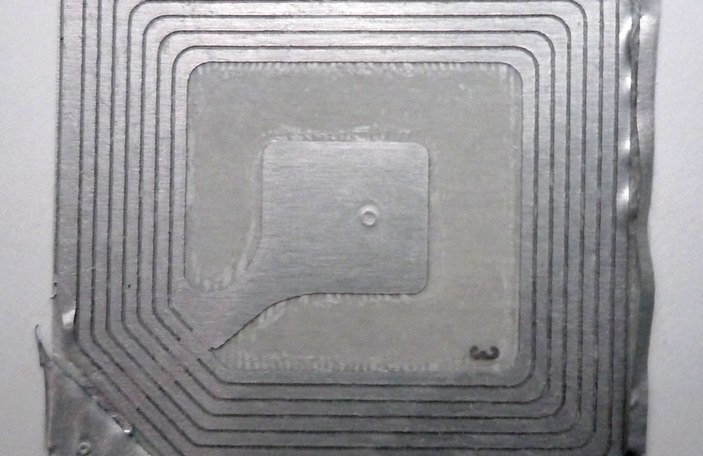
- 12+ standard antenna configurations: general-purpose far-field (20 × 20 to 100 × 20 mm), compact retail, on-metal industrial, flexible / wearable, ultra-long-range logistics.
- Custom antenna engineering 4-8 weeks for specialised applications.
- ARC Master List spec category certified across multiple antenna designs.
- Form factors — dry, wet, converted-label
-
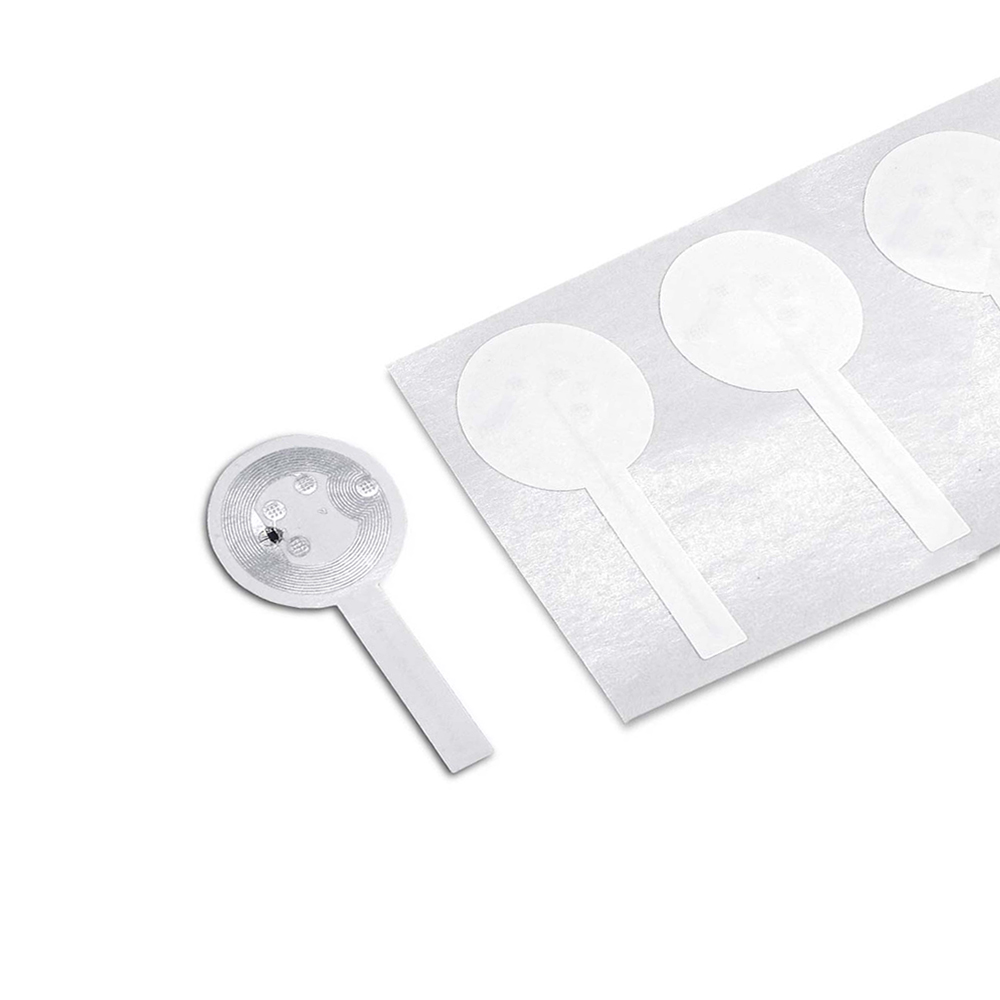
- Dry inlay: bare antenna + chip on carrier substrate, no adhesive — for label converters laminating into their own construction.
- Wet inlay: pressure-sensitive adhesive on release liner, ready to apply directly.
- Converted label: printed face stock + adhesive + inlay = finished branded label.
- Hard-tag housings: weatherproof / impact-resistant industrial housings for RTI / asset programmes.
- Procurement and lead times
-
- Prototype quantities 100+ pieces; production volume 50M+ units annually.
- Lead time 20-30 business days for standard antenna on 5-10M unit orders; 45-60 days during chip-supply constraint or volumes >20M.
- Blanket PO with call-off quantities recommended for programmes >10M / year — locks allocation, enables pitch / antenna fine-tuning.
- Compliance posture
-
- EPC Gen2v2 (ISO/IEC 18000-63:2015) air-interface compliance.
- GS1 TDS 2.0 SGTIN / SSCC / GIAI / Application Identifier encoding.
- Reader-side regulatory: FCC 47 CFR Part 15.247 (US 902-928 MHz), ETSI EN 302 208 (EU 865-868 MHz), ARIB STD-T106 (Japan).
- Auburn University RFID Lab ARC Master List certification for retail-grade performance benchmarks where applicable.
Why Higgs-9 — when on-tag data storage matters
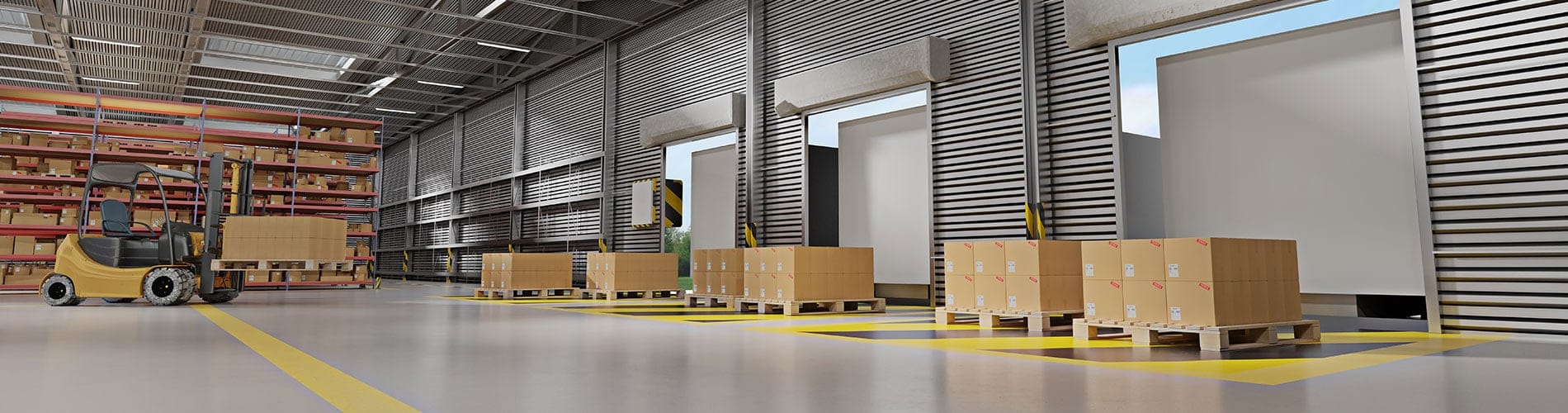
- Logistics + supply chain operations with large dock doors, high ceilings, fast-moving conveyors need consistent reads at 8-15 m — Higgs-9 sensitivity + DRM maintain >99% read rates in dense-tag environments.
- Industrial environments (mines, oil rigs, construction, remote agriculture) often lack reliable network connectivity; on-tag data storage lets handhelds work offline without server round-trip.
- RTI tracking for pallets / containers / roll cages requires trip-specific data (origin, destination, contents, weight) that changes every cycle — large user memory accommodates this dynamic data without cloud dependency.
Higgs-9 vs M700 vs UCODE 9 — chip-family decision
M700 (M730 / M750 / M770) — small-antenna sensitivity / UCODE 9 — high-volume cost
- M700: -22.1 to -22.7 dBm sensitivity, 0-32 bit user memory; small-antenna applications win
- UCODE 9: 32-224 bit configurable user, lowest unit cost at 100M+ volumes; pure-EPC retail
- Both lack the 688-bit user memory tier
- M700 silicon ASP slightly lower than Higgs-9; UCODE 9 lowest at scale
- Programmes without user-memory dependency: M700 or UCODE 9 typically win
Higgs-9 (this page) — large user memory + offline data
- Higgs-9: 688-bit (≥64 byte) user memory, expandable to 256 bytes on some variants
- Use cases: RTI trip data, industrial asset offline records, field-service logs, GS1 AI multi-party
- Sensitivity -23.2 dBm typical — ~0.5 dB above M770's -22.7 dBm
- Per-chip cost slightly above M700 / UCODE 9; offset by absence of user-memory cost on alternatives
- Dense-reader mode (DRM) for overlapping reader zones
From Higgs-3 2007 to Higgs-9 as RTI / industrial-asset default
- 2004
EPC Gen2 v1 standardised through EPCglobal; ISO/IEC 18000-63 Type C ratified subsequently. Alien Technology emerges as one of three dominant RAIN RFID silicon vendors alongside Impinj and NXP.
- 2007
Alien Higgs-3 (ALN-9640) launches with 512-bit user memory (800-bit total NVM across EPC + user + TID + reserve banks per Higgs-3 datasheet) establishing Alien's positioning as the large-user-memory choice in the UHF chip ecosystem.
- 2012-2014
Walmart Phase 1 RFID pilot drives apparel item-level adoption; supply-chain RTI programmes scale on Higgs-3 / Higgs-4 silicon — large user memory establishes operational pattern for RTI trip-data storage.
- 2015
ISO/IEC 18000-63:2015 publishes; Higgs family migrates forward through Higgs-EC and Higgs-4 generations maintaining the large-user-memory positioning.
- 2018
Alien Higgs-9 launches with 688-bit user memory + -23.2 dBm read sensitivity + DRM — the current-generation chip behind RTI / industrial / field-service deployments.
- 2020-2024
Walmart RFID source-tag mandate scales across categories; Higgs-9 captures the user-memory-dependent supply-chain segment while Impinj M700 / NXP UCODE 9 dominate pure-EPC retail. Auburn ARC Master List certifications validate Higgs-9 across multiple antenna designs.
- 2026 Today
Cross-buyer reference experience on aerospace-part-traceability, DPP-textile-EU-ESPR, automotive-component-RFID, healthcare-instrument, and multi-application-on-tag programmes shows converge on Higgs-9 silicon + ARC-certified antenna + on-tag user-memory data pattern (GS1 AI / RTI trip data / field-service log) + EPC Gen2v2 reader fleet as the operator-side template. M700 / UCODE 9 run as alternatives on user-memory-light retail; programmes requiring per-tap cryptographic authentication move off UHF entirely to HF (NTAG 424 DNA / UCODE DNA).
Useful next pages
Use these linked product, guide and comparison pages to keep the next click specific and practical.
Related UHF RFID inlay products
Other UHF inlay and label solutions in the chip-family hierarchy.
Chip-level technical reference
Deep-dive specifications and chip-family comparisons relevant to this SKU.
Industry applications
Industry deep-dives where Higgs-9 large-user-memory is specified.
FAQ
What is the difference between Alien Higgs-9 and Impinj M700?
Both are high-performance RAIN RFID chips. Higgs-9 offers significantly larger user memory (688 bits / 64+ bytes vs M700's 0-32 bits) and slightly higher sensitivity (-23.2 dBm typical vs M770's -22.7 dBm) — better for applications needing on-tag data storage and longer raw read range. M700 (M730 / M750 / M770) offers smaller silicon footprint advantages on miniaturised antennas — better for small-antenna applications (jewellery, pharma vials, small-item retail). Choose by whether on-tag user memory dominates the use case (Higgs-9) or whether small-antenna read range matters more (M700).
Can I store custom application data on the Higgs-9 chip?
Yes — 688-bit (≥64-byte) user memory bank is fully read/write accessible. Store custom data fields: asset ID, maintenance date, calibration status, trip origin/destination, weight, temperature log summary, sterilisation cycle counter, GS1 Application Identifier multi-party fields. Data persists without power and reads on any standards-compliant UHF RFID reader. Authentication: standard 32-bit access password required for write access on locked memory blocks; not cryptographically secure (anyone with reader and the access password can read/write) — see anti-pattern guidance in the brief section.
What antenna designs are available for the Higgs-9?
12+ standard antenna designs: general-purpose far-field (20 × 20 mm to 100 × 20 mm), compact retail, on-metal industrial, flexible / wearable, windshield, ultra-long-range logistics. Custom antenna designs available with 4-8 week development timelines. ARC Master List spec category certifications across multiple antenna designs for retail-grade performance benchmarks.
Does the Higgs-9 support per-tap cryptographic authentication?
No — Higgs-9 implements the ISO/IEC 18000-63 Gen2v2 base command set (including standard access / kill passwords) but does NOT implement cryptographic mutual authentication. This isn't a Higgs-9-specific gap: per-tap cryptographic authentication is not a shipping feature on any mainstream UHF RAIN RFID chip today (Higgs-9, M700, M800 / M830 / M850, UCODE 9). Programmes requiring it (pharmaceutical serialisation per DSCSA / EU FMD, luxury anti-counterfeit, high-value spare-parts authentication) specify HF chips such as NXP NTAG 424 DNA or UCODE DNA on a separate frequency band — typically alongside, not instead of, a UHF inventory tag. Higgs-9 remains appropriate for supply-chain, logistics, industrial asset tracking, and RTI applications where the threat model doesn't require per-tap cryptographic authentication.
What is the lead time for a 5-10 million unit Higgs-9 order?
Production lead time typically 20-30 business days for standard antenna designs on 5-10M unit orders, allocated against Alien's chip-supply release schedule. Higher volumes (>20M) or chip-supply constraint periods: quote-to-ship can extend to 45-60 business days. Recommendation: blanket PO with call-off quantities rather than single spot buy for programmes >10M units / year — locks allocation, enables pitch / antenna fine-tuning during allocation window. For urgent needs, NXP UCODE 9 or Impinj M730 / M750 inlays on the same antenna design substitute with 2-4 week re-tune qualification.
How do I encode GS1 Application Identifiers on Higgs-9 user memory?
Use the AFI (Application Family Identifier) format per GS1 EPC TDS 2.0. Common pattern: write AI (01) GTIN-14 in first user-memory block, AI (10) lot in second, AI (17) expiry in third, AI (21) serial in fourth. Each AI tagged with its 2-4 character identifier prefix per GS1 General Specifications. Multi-party supply-chain participants read standardised fields without custom integration; each party knows AI (01) is GTIN regardless of who wrote it. EPCIS 2.0 event submission completes the digital twin loop for participants with backend connectivity.
Sources & references
Primary standards, OEM datasheets and regulatory documents cited by this article. All URLs were verified on the access date shown below.
- Alien Technology — Higgs-9 RAIN RFID tag chip product page and data sheet
Authoritative chip-level reference for Higgs-9 read sensitivity (-23.2 dBm typical), 688-bit user memory, and GS1 Application Identifier encoding support.
- ISO/IEC 18000-63:2015 — RFID Type C (EPC Gen2v2 spec)
UHF RFID air-interface standard for Higgs-9 + every modern RAIN RFID deployment.
- GS1 EPC Tag Data Standard (TDS) 2.0 — EPC encoding + Application Identifiers for Gen2 UHF
EPC encoding standard governing SGTIN-96 / SGTIN-198 / SSCC / GIAI / Application Identifier encoding on Higgs-9 user memory.
- GS1 EPCIS 2.0 — event data standard for supply-chain visibility
Event-data standard for RTI / pharma traceability integration; complements Higgs-9 on-tag user memory with backend digital-twin events.
- RAIN RFID Alliance — technology overview, reader/tag interoperability
Industry consortium promoting UHF Gen2v2 interoperability and adoption; certification framework for Higgs-9 deployments.
- FCC 47 CFR Part 15.247 — operation in 902-928 MHz (US UHF RFID)
Reader-side regulatory baseline for UHF RFID in North America — 36 dBm EIRP cap.
- ETSI EN 302 208 — RFID equipment 865-868 MHz (EU UHF RFID)
Reader-side regulatory baseline for UHF RFID in EU/UK — 33 dBm ERP with LBT.
- Auburn University RFID Lab — ARC performance classification programme
Procurement-reference benchmark for retail-grade UHF inlay performance; Higgs-9 antenna designs ARC-certified across multiple spec categories.
- ATA Spec 2000 Chapter 9-5 — RFID for aerospace parts traceability
Aerospace MRO reference standard — Higgs-9 large user memory supports on-tag part-history payloads where backend connectivity is unreliable.
- EU Regulation 2024/1781 — Ecodesign for Sustainable Products Regulation (Digital Product Passport)
EU DPP mandate framework — Higgs-9's 688-bit user memory accommodates full DPP URL + serial + sustainability fields on-tag.
Proud Tek is a Shenzhen-based RFID & NFC manufacturer supplying hotel chains, transit operators, event venues and retail brands worldwide. Every order includes free samples, RF testing and dedicated project support.
Get a Quick Quote
Tell us about your project and we'll respond within one business day. Fields marked (asterisk) are required.