
Smart Warranty Cards
NFC Warranty Cards
Tap-to-Register Activation

Quick answer
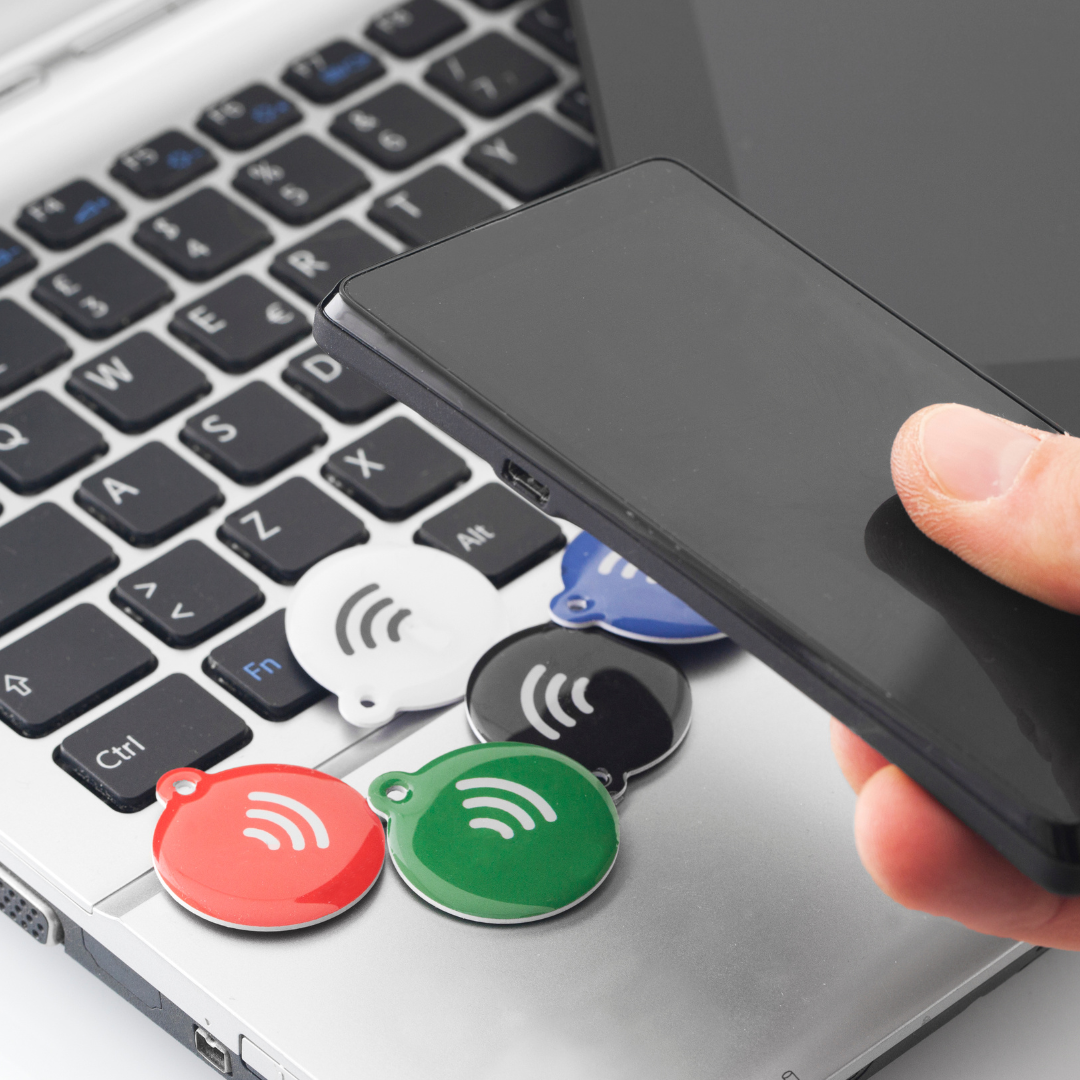
NFC warranty cards replace traditional paper warranty cards with a tap-to-register experience. Include the NFC card in your product packaging. The customer taps with their phone, lands on a branded registration page, and their warranty is activated in seconds. Increases registration rates from under 10% (paper cards) to 30-50% (NFC).
- Tap-to-register: customer taps the card with their phone, warranty registration page opens instantly.
- Registration rates jump from under 10% (paper) to 30-50% (NFC). Capturing customer data you are currently losing.
- Premium brand impression: a physical NFC card in the box signals product quality and innovation.
Used in these industries
Deployments where this product is referenced on our industry landing pages.
At a glance
Use these short answers to decide whether this page matches the project before moving into the detail.
Card body and form factor
ISO/IEC 7810 ID-1 PVC (85.60 × 53.98 × 0.76 mm) card sits in the product-unboxing tray or welcome-kit envelope. Recycled-PET and FSC-paper-core variants for sustainabili...
Chip selection — baseline vs anti-counterfeit tier
NTAG213 (144 B) — URL-based registration landing page; the cheapest credible baseline for warranty-register cards. NTAG216 (888 B) — room for the registration URL plus f...
Next step
Ready to move forward? Start your inquiry to get specific answers for this project.
Request NFC warranty card quote- NDEF payload — tap-to-register URL
-
- NFC Forum NDEF 1.0 URI Record pointing to `https://brand.example.com/register?serial={serial}&sku={sku}`.
- Serial-specific pre-encoding means the registration page auto-populates model + serial; the customer enters only name / email.
- Anti-counterfeit with NTAG424 DNA SUN
-
- NTAG424 DNA generates a dynamic cryptogram in the URL on every tap; server-side verification detects clones.
- Turns the warranty card into a credible anti-counterfeit credential — tampering, cloning and URL-replay are all detectable.
- Registration-flow UX — why NFC beats paper / URL
-
- Paper warranty card return rate: routinely < 10 %; the customer has to find a stamp and envelope.
- Typed-URL registration: routinely < 15 %; the URL must be typed in the phone browser, serial number transcribed.
- NFC tap-to-register: 30–50 % reliably; two taps and two fields collapse the journey to < 30 seconds.
- Phone compatibility matrix
-
- iPhone XS (2018) and later read NDEF URIs in the background without app install (iOS 12 Background Tag Reading).
- Android phones with NFC open a URL prompt on tap; Chrome / default browser handles the registration page.
- Post-registration redirect patterns
-
- After registration, redirect to product setup guide, how-to video, accessory upsell or loyalty enrolment.
- Turns the warranty tap into a commercial engagement touchpoint with measurable attach-revenue per registered unit.
- Regulatory — consumer warranty law
-
- EU Directive 2019/771 (Sale of Goods) — 2-year legal guarantee for consumer goods; registration-gating of the commercial warranty cannot shorten this statutory floor.
- U.S. Magnuson-Moss Warranty Act (15 U.S.C. § 2301 et seq.) — 'tie-in' prohibition means registration cannot be mandatory for the written warranty to apply.
- Digital Product Passport (EU ESPR) tie-in
-
- EU Ecodesign for Sustainable Products Regulation (EU) 2024/1781 (ESPR) introduces the Digital Product Passport; NFC warranty cards can carry the DPP URL on the same chip.
- Launch products (batteries, textiles, electronics, toys) are phased in 2026–2030; warranty card is the natural consumer-facing DPP anchor.
- Finishing and brand-impression stack
-
- Soft-touch lamination, spot-UV, hot-foil stamping and embossing lift the in-box card from disposable insert to branded welcome-artifact.
- Reported 60 %+ keep-rate for premium NFC cards inside product boxes versus near-zero keep-rate for paper inserts.
- Serial-level pre-encoding and order workflow
-
- Serial manifest delivered as CSV; cards pre-encoded with serial-specific URL; card-to-serial map shipped with production batch.
- Enables item-level warranty tracking, recall precision, fraud detection and per-unit attach-revenue measurement.
- Production and lead time
-
- Artwork → proof → offset / UV digital print → lamination → punch → NTAG213 or NTAG424 DNA encoding per serial → match-report → packing.
- MOQ 1,000 cards; lead time 10–15 business days from serial-manifest lock; free samples after artwork sign-off.
Problems consumer brands face with traditional warranty registration programs
- Paper warranty card return rates are consistently below 10%. Most buyers throw the card away or never find a stamp and envelope, leaving brands with no customer contact data for 90%+ of their sold units.
- Online registration forms linked from a URL printed in the manual require the customer to type the full address into a browser, navigate a multi-step form and remember their purchase date. Each extra step reduces completion by 20–30%, explaining why even digital registration remains under 15% for most brands.
- Without registered customers, brands cannot execute targeted recall notifications, accessory upsell campaigns or product feedback surveys. The post-purchase customer relationship is essentially nonexistent.
- Paper warranty cards in the product box signal a dated, low-tech brand experience. For electronics, appliance and premium goods brands, a paper card in a $200+ product creates a credibility gap that undercuts the overall unboxing impression.
- Warranty fraud (submitting claims without purchase proof) costs consumer electronics brands an estimated 3–5% of warranty program budgets. Without a verified digital registration linked to a unique product serial, fraudulent claims are difficult to detect.
Warranty-card programme at a glance
NFC tap-to-register vs paper card vs printed URL / QR
NFC warranty card (NTAG213 baseline, NTAG424 DNA for anti-counterfeit)
- Tap-to-register opens the registration page pre-populated with serial and SKU; two fields to complete.
- Registration rate reliably lands in the 30–50 % band; order-of-magnitude improvement over paper.
- Authenticated tap (NTAG424 DNA) detects clones and replay; credible anti-counterfeit signal.
- Physical card is a branded keepsake; 60 %+ reported keep-rate; brand impression is lifted, not undercut.
- Unit cost USD 0.30–2.00 depending on chip and finishing; pays for itself on one post-registration attach sale per 100 cards.
vs traditional paper warranty card and printed URL / QR code
- Paper warranty card: < 10 % return; customer has to find a stamp and envelope.
- Printed URL / QR in the manual: < 15 % completion; typing and transcription are the friction.
- Neither offers anti-counterfeit cryptographic authentication; serial number alone is trivially copied.
- Paper / QR is throwaway; keep-rate is near-zero and brand impression is flat or negative.
- Both remain cheaper per-unit than NFC but carry a much weaker customer-data and brand-impression story.
Why NFC lifts the register-rate — the unboxing moment
How Proud Tek NFC Warranty Cards transform post-purchase customer acquisition
- Tap-to-register opens a branded registration page pre-populated with product model and serial number. The consumer enters only their name and email, completing registration in under 30 seconds with zero typing of URLs or product codes.
- NFC works through phone cases and requires no app download. Compatible with iPhone XS and newer (background NFC) and virtually all NFC-equipped Android phones, covering 95%+ of current smartphone users.
- Each card is pre-encoded with a product-specific or serial-specific URL, enabling item-level warranty tracking, fraud detection and product recall precision. The same card that registers the product creates a verifiable purchase record.
- Post-registration redirect configurable to product setup guide, accessory recommendations or loyalty program enrollment. Turning a warranty tap into a commercial engagement touchpoint.
- Premium card finishes (soft-touch lamination, foil stamping, spot UV) signal product quality inside the box. NFC cards have a reported 60%+ keep rate by consumers versus near-zero for paper inserts.
Results clients achieve with NFC Warranty Cards
- A consumer electronics brand increased warranty registration rates from 8% (paper cards) to 41% (NFC cards) across a 50,000-unit product launch. Capturing 16,500 new customer records that fed directly into CRM for accessory campaigns.
- A premium kitchen appliance brand reduced fraudulent warranty claims by 38% after linking NFC registration to unique serial numbers, eliminating the ability to file claims without a verified unit identity.
- A personal care device company drove $280,000 in accessory attachment revenue in Q1 by triggering a post-registration email sequence to NFC-registered customers. A campaign that was impossible before NFC registration because no customer contact data existed.
- A product recall affecting 12,000 units was communicated to 89% of affected buyers within 48 hours via NFC registration email data. Avoiding the cost of broad media recall notices and demonstrating proactive safety management to regulators.
Why NFC warranty cards
- Paper warranty card registration rates are typically under 10%. Most customers never fill them out and mail them back.
- NFC eliminates all friction: no forms to fill, no stamps, no websites to type. Tap and register in under 30 seconds.
- Captured registrations give you: customer contact for support, verified purchase data for warranty claims, product usage insights, and a direct marketing channel for accessories and upgrades.
- The physical NFC card in the box serves as a tangible brand touchpoint that customers keep (unlike paper cards that get thrown away).
Registration flow
- Step 1: Customer opens the product box and finds the NFC warranty card.
- Step 2: Customer taps the card with their smartphone (works through phone cases).
- Step 3: Phone opens a branded registration page pre-populated with the product model and serial number.
- Step 4: Customer enters their name and email (or signs in with Google/Apple).
- Step 5: Warranty is activated. Customer receives a confirmation email with warranty details.
- Optional: After registration, redirect to product setup guide, how-to video, or accessory recommendations.
Milestones in product-registration programmes
- 1975 — Magnuson-Moss Warranty Act
U.S. federal framework for consumer-product warranties; registration cannot be a condition of the written warranty ('tie-in' prohibition).
- 1999 — EU Directive 1999/44/EC
First EU consumer-sale-of-goods directive; 2-year legal guarantee floor established.
- 2005 — Paper warranty cards industry baseline < 10 %
Benchmark registration rate stabilises across CE / appliance / premium goods industries — the problem NFC later solves.
- 2013 — NTAG213 mass production
NXP NTAG213 commoditises the 144-byte NFC-Forum tap-card; tap-to-register URL becomes economically viable at consumer-electronics scale.
- 2018 — iOS 12 Background Tag Reading
iPhone XS / 11 read NDEF URIs without app install; NFC tap-to-register reaches the 95 %+ installed base on smartphones.
- 2019 — EU Directive 2019/771
Sale of Goods Directive refreshes the 2-year consumer guarantee floor; warranty registration stays commercial, not legal.
- 2024 — EU ESPR / Digital Product Passport
Regulation (EU) 2024/1781 introduces the Digital Product Passport; warranty cards gain a second, regulatory role as DPP anchors.
- 2026 — Today
Proud Tek ships NFC warranty cards with serial-level encoding, NTAG424 DNA anti-counterfeit tier, and DPP-ready URL routing in a single purchase order. How experienced teams run consumer-electronics-launch, appliance-warranty, luxury-certificate-of-authenticity, medical-device-UDI-registration and DPP-pilot warranty-card programmes.
Card design
- Front: brand logo, product name, 'Tap to register your warranty' call-to-action with NFC icon.
- Back: brief warranty terms summary, QR code backup, customer support contact.
- Premium finishes: soft-touch lamination, spot UV, foil stamping, embossing.
- Eco-friendly options: recycled PET card stock, soy-based inks, FSC-certified paper envelope.
- Variable data: unique serial number or QR code per card for product-level tracking.
Industries and products
- Consumer electronics: phones, tablets, headphones, smart home devices.
- Home appliances: kitchen appliances, power tools, HVAC, water heaters.
- Automotive accessories: dash cams, chargers, seat covers, custom parts.
- Sporting goods: bikes, fitness equipment, outdoor gear.
- Luxury goods: watches, jewelry, leather goods (also serves as certificate of authenticity).
- Medical devices: patient-facing devices with UDI registration requirements.
Useful next pages
Use these linked product, guide and comparison pages to keep the next click specific and practical.
Related NFC card products
Other NFC card solutions.
FAQ
What information can we capture during registration?
Whatever your registration form collects: name, email, phone, purchase date, purchase location, product serial number. The NFC card can pre-populate the product model and serial number in the URL, reducing what the customer needs to enter. You can also capture opt-in for marketing communications, product feedback and accessory interest.
Does the customer need an app?
No. The NFC tap opens a web page in the phone's default browser. No app download required. Works on iPhone XS and newer (background NFC reading) and virtually all NFC-equipped Android phones. For older iPhones (7, 8, X), the user can scan from Control Center.
Can each card link to a different product serial number?
Yes. We can encode each card with a unique URL containing the product serial number (e.g., yourdomain.com/register?serial=ABC123). This requires providing a list of serial numbers or a sequential numbering scheme. The registration form then auto-populates with the correct product information. This is recommended for warranty tracking and counterfeit prevention.
Sources & references
Primary standards, OEM datasheets and regulatory documents cited by this article. All URLs were verified on the access date shown below.
- ISO/IEC 7810:2019 — Identification cards — Physical characteristics
ID-1 form factor (85.60 × 53.98 × 0.76 mm) that every in-box NFC warranty card ships in.
- ISO/IEC 14443-1:2018 — Proximity cards at 13.56 MHz
Operating frequency and anti-collision protocol for NFC warranty-card chips.
- NXP NTAG 213/215/216 product data sheet
Baseline chip family (144 / 504 / 888 B) for URL-based warranty-register cards.
- NXP NTAG424 DNA product data sheet
SUN (Secure Unique NFC) message with AES-128 cryptographic signature — the authenticated-tap anti-counterfeit tier.
- NFC Forum — NDEF 1.0 and URI Record Type Definition
URI record framework for tap-to-register registration-page deep links.
- U.S. Magnuson-Moss Warranty Act (15 U.S.C. § 2301 et seq.)
U.S. consumer-product warranty law including the anti-tying prohibition that limits registration-as-condition.
- EU Directive 2019/771 — Sale of Goods Directive
EU 2-year legal-guarantee floor for consumer goods — the floor the commercial warranty sits above.
- EU Regulation (EU) 2024/1781 — Ecodesign for Sustainable Products (ESPR)
Introduces the Digital Product Passport; warranty card becomes a natural consumer-facing DPP anchor.
- GS1 Digital Link URI standard
Structured-URL framework that lets a single tap serve warranty, product-info and DPP endpoints.
- Apple Developer — Core NFC and Background Tag Reading
iOS 12+ Background Tag Reading — the feature that makes NFC warranty cards work without any app install on iPhone XS+.
Proud Tek is a Shenzhen-based RFID & NFC manufacturer supplying hotel chains, transit operators, event venues and retail brands worldwide. Every order includes free samples, RF testing and dedicated project support.
Get a Quick Quote
Tell us about your project and we'll respond within one business day. Fields marked (asterisk) are required.