
Review Card Solution
Google Review NFC Cards
Tap-to-Review Programme

Quick answer
Procurement-grade Google review NFC card guide that leads with policy compliance — the dimension most SERP competitors quietly ignore. Covers Google's April 2026 Business Profile policy update banning staff review quotas and employee-name solicitation, the FTC Consumer Reviews and Testimonials Rule effective October 2024 with $51,744 per-violation civil penalties (Fashion Nova's $4.2M settlement is the cautionary tale), Yelp's "Don't Ask" policy that disqualifies Yelp from tap-card programmes, Trustpilot's on-premise solicitation rules, the canonical Google review-write URL `https://search.google.com/local/writereview?placeid={PLACE_ID}`, NTAG213 (144B / 50K scans / sufficient for any writereview URL) vs NTAG215 (504B / 200K scans / unnecessary for review-only programmes) chip selection, vertical placement playbooks for restaurants / dental / salons / hotels / fitness / retail / auto dealerships / contractors, compliant verbal-ask script library, multi-location chain architecture, NFC + QR hybrid for iPhone 7-X / older Android compatibility, and the conversion data linking review volume to revenue (Harvard / Luca: 5–9% revenue lift per 1-star Yelp rating; BrightLocal: 34 reviews needed before trust).
- Lead with compliance, not conversion. Google's April 2026 Business Profile update explicitly bans staff review quotas and employee-name solicitation; the FTC Consumer Reviews and Testimonials Rule (effective October 21, 2024) carries $51,744-per-violation civil penalties. Fashion Nova paid $4.2M for review manipulation in 2022. SERP competitors mostly glide over this — it's the #1 procurement differentiator.
- Review gating is the #1 policy violation. Asking customers to rate you first, then routing happy ones to Google and unhappy ones to private feedback, violates both Google policy and 16 CFR Part 465. An NFC tap-card programme should open the Google writereview URL for every customer; no sentiment filter.
- The canonical URL is `https://search.google.com/local/writereview?placeid={PLACE_ID}`. Use Google's Place ID Finder tool to get the correct ID per location. Multi-location chains need one Place ID per location, never a single corporate link.
- NTAG213 (144 bytes, 50K-scan endurance) is sufficient for every review-card programme. NTAG215 is overkill; the Google review-write URL fits in <140 characters. Save the chip premium for material upgrade (PVC vs wood vs metal).
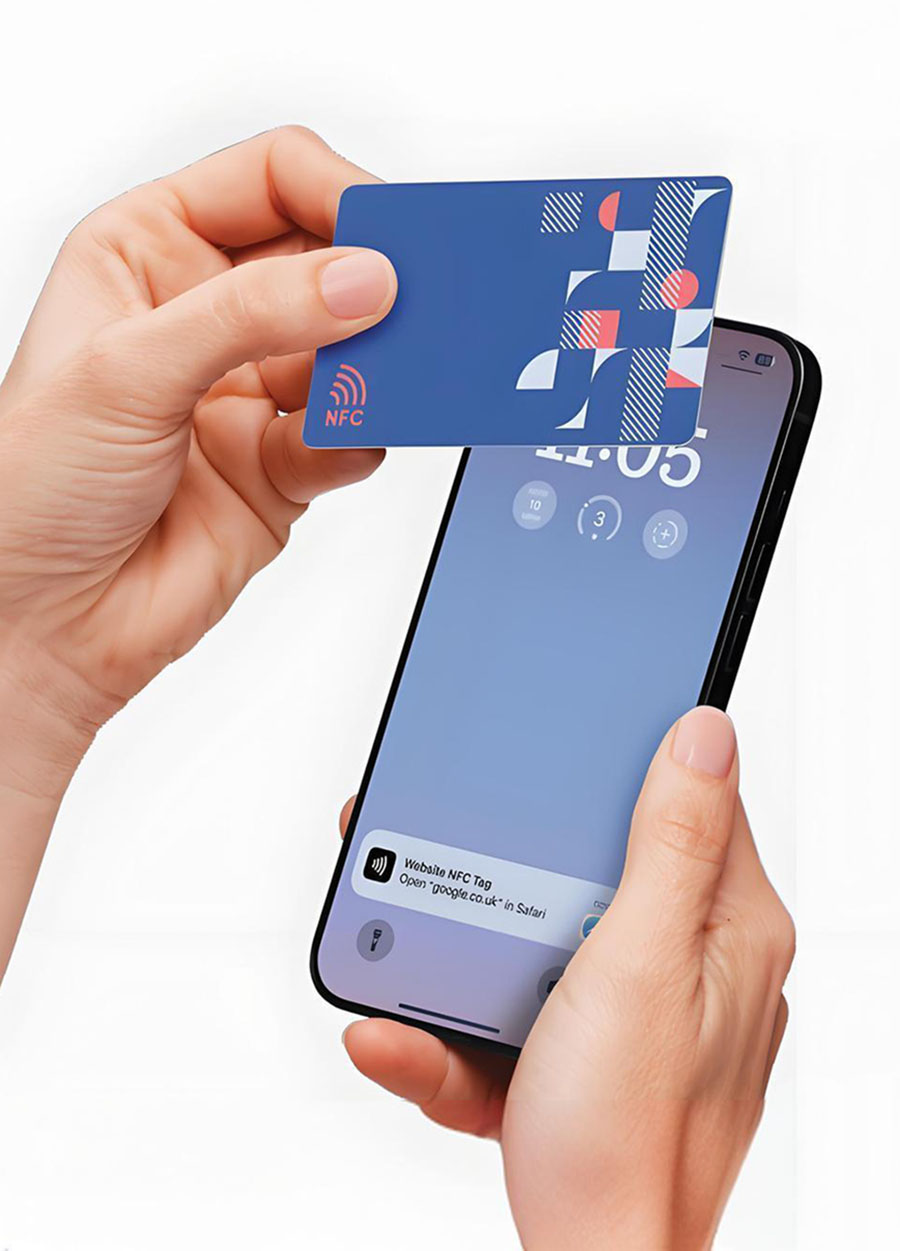
- Pair NFC with a QR fallback. iPhone XS+ (Sept 2018+) reads NFC tags in the background; iPhone 7 / 8 / X require Control Center. A 47-business hybrid study found 68% completion when counter displays carried both NFC and QR codes.
Featured Google Review NFC Cards Products
SKUs we typically deploy for google review nfc cards. Tap a card for specs and samples.
At a glance
Use these short answers to decide whether this page matches the project before moving into the detail.
Audience
Local-business owners (restaurants, dental, salons, fitness, hotels, retail, auto dealerships, contractors) running Google Business Profile. Multi-location chain operati...
Decision sequence
Confirm Google policy compliance (no review gating, no incentivised reviews, no staff quotas, no employee-name solicitation per April 2026 update, no kiosk-style on-prem...
Next step
Ready to move forward? Start your inquiry to get specific answers for this project.
Request custom review cardWhy most Google review NFC card programmes are running afoul of policy in 2026
Picture the review card that does everything right — heavy stock, crisp logo, a satisfying tap — and is also, quietly, a compliance violation waiting for its warning letter. That is a more common outcome than anyone selling these cards likes to admit. Most SERP competitors selling Google review NFC cards quietly ignore the compliance layer. Three converging policy developments in 2024–2026 make this the dominant procurement risk for any business deploying review cards at scale. A buyer evaluating an NFC review card programme should understand all three before signing the supplier contract.
**1. FTC Consumer Reviews and Testimonials Rule (16 CFR Part 465).** The FTC's final rule took effect October 21, 2024, with civil penalties of $51,744 per violation (adjusted annually for inflation). The rule prohibits fake reviews, AI-generated fake reviews, reviews from non-customers, suppression of negative reviews, undisclosed material connections between reviewer and business, and review gating. Fashion Nova paid $4.2M to settle FTC charges in 2022 for blocking 4-star-and-below reviews from being posted. The FTC issued warning letters to retailers in January 2026 reminding them of the rule's enforcement.
**2. Google Business Profile policy update (April 2026).** Google tightened review-solicitation policy in April 2026 to explicitly ban staff review quotas (requiring employees to solicit a fixed number of reviews per shift) and employee-name solicitation ("Please mention [employee name] in your review"). Reviews mentioning staff names by name disproportionately remained pre-2026, but the practice now risks review removal and Google Business Profile suspension. Many SERP competitor pages still recommend the "mention your stylist by name" pattern as best practice — flag this as actively dangerous advice.
**3. Review gating is the dominant violation.** Asking customers "How was your experience?" and routing 4-5-star responses to Google while routing 1-3-star responses to a private feedback form is **review gating** and is explicitly prohibited by both Google's Business Profile review policy and the FTC's 16 CFR Part 465 rule. An NFC tap-card that opens the Google writereview URL for every customer — regardless of sentiment — is compliant by design. A review-management SaaS that pre-screens customer sentiment before routing to Google is not.
The procurement-narrative consequence: an NFC review card programme is structurally safer than most review-management SaaS programmes because the card cannot pre-screen sentiment. The card opens the Google writereview URL for every tap; sentiment filtering would require an intermediate landing page, which then becomes the policy violation.
The canonical Google review URL — Place ID + writereview endpoint
The Google Business Profile review-write URL has a documented canonical form. Using the correct URL is the difference between a tap that lands the customer on the review-compose pane (single tap → write review) versus a tap that drops them on the Google Maps search results for the business (multiple taps needed before they can write a review).
- **Canonical URL form** — `https://search.google.com/local/writereview?placeid={PLACE_ID}`. The `{PLACE_ID}` parameter is the unique Google identifier for that business location. The URL opens the Google review-compose pane directly on iOS Safari, Chrome on Android and Chrome on desktop.
- **Place ID lookup** — use Google's official Place ID Finder tool at `developers.google.com/maps/documentation/javascript/examples/places-placeid-finder` or BrightLocal's free `Google ID and Review Link Generator`. Search by business name + address; copy the alphanumeric Place ID string.
- **Per-location requirement** — every physical location has its own Place ID, even for chains. A multi-location chain rolling out review cards needs one Place ID per location. A single corporate link routing to a head-office profile is operationally wrong (reviews land on the wrong business profile and the location-specific review programme fails).
- **Place ID lifecycle** — Google occasionally rebuilds a business profile (mergers, relocations, claim disputes). The Place ID can change. For long-term programmes, encode a stable redirect URL on the company's own domain (`https://yourbrand.com/review/location-123`) that the company's web server redirects to the current Google writereview URL. If Google changes the Place ID, the company updates the server redirect rule; the printed card never needs reprinting.
- **Stable redirect URL pattern** — `https://yourbrand.com/review/{location-slug}` → server-side 302 redirect → `https://search.google.com/local/writereview?placeid={PLACE_ID}`. Server-side analytics on the redirect endpoint give per-card tap counts without third-party tracking.
- **Short link option** — some businesses use `g.co/kgs/{KGS_ID}` Knowledge Graph short links, but the writereview URL is the canonical procurement choice because it's specifically the review-compose pane.
Chip choice — NTAG213 is sufficient; NTAG215 is overkill
Almost every SERP competitor either understates this ("NTAG215 for premium performance") or overstates it ("NTAG216 needed for review programmes"). The procurement reality: the Google writereview URL fits comfortably in NTAG213's 144-byte capacity.
- **NTAG213 (NXP MF0ICU2)** — 144 bytes user memory, 50,000 scan endurance, 13.56 MHz ISO/IEC 14443 Type A. The Google writereview URL is ~120 characters; fits with room to spare. Endurance of 50K scans is far beyond any review programme need (typical card runs 50–500 taps per location lifetime). Chip cost: $0.05–0.10 at OEM volume. **The default chip for review-card programmes.**
- **NTAG215 (NXP MF0ICU2 504B variant)** — 504 bytes memory, 200,000 scan endurance. Useful when the card needs to carry a longer URL (rare) or store additional NDEF records (rarer). Chip cost: $0.10–0.20. **Overkill for review-card programmes; spend the premium on material instead.**
- **NTAG216 (888 bytes)** — full-size NTAG variant. Never needed for review-only programmes.
- **Read distance** — ~8–10 cm on PVC, ~5–6 cm on metal with ferrite isolator. iPhone XS+ reads in the background (iOS 13+). iPhone 7/8/X requires Control Center → NFC Tag Reader.
- **Stable URL strategy on rewritable chips** — NTAG213 is rewritable; the URL can be re-programmed after the card ships. Use this for the per-location stable-redirect-URL pattern: ship cards with `https://yourbrand.com/review/{slug}` rather than the Place ID URL directly; if Place IDs change, update the server redirect — never the card.
Material choice — PVC, wood, bamboo, metal, paper
Material is the brand-tier and tactile signal for the customer interaction. PVC works everywhere; wood / bamboo / metal communicate premium positioning. Match material to the business's brand tier and the placement environment.
- **Tap-distance reality** — metal cards halve read distance because of antenna detuning. With a ferrite isolator behind the chip the metal card works reliably; without it, the chip won't read. Metal review cards are luxury-positioning hardware, not the default.
- **Counter display + card combo** — a $5–25 acrylic countertop holder containing 3–5 NFC review cards is the most common deployment pattern at restaurants and retail. Customers self-serve at exit; staff escalate with a verbal prompt when there's time.
- **FSC sustainability stack** — chain hospitality and premium brands increasingly require FSC chain-of-custody certification for wood / bamboo material. Cite FSC-STD-40-004 in supplier documentation, not just "sustainably sourced".
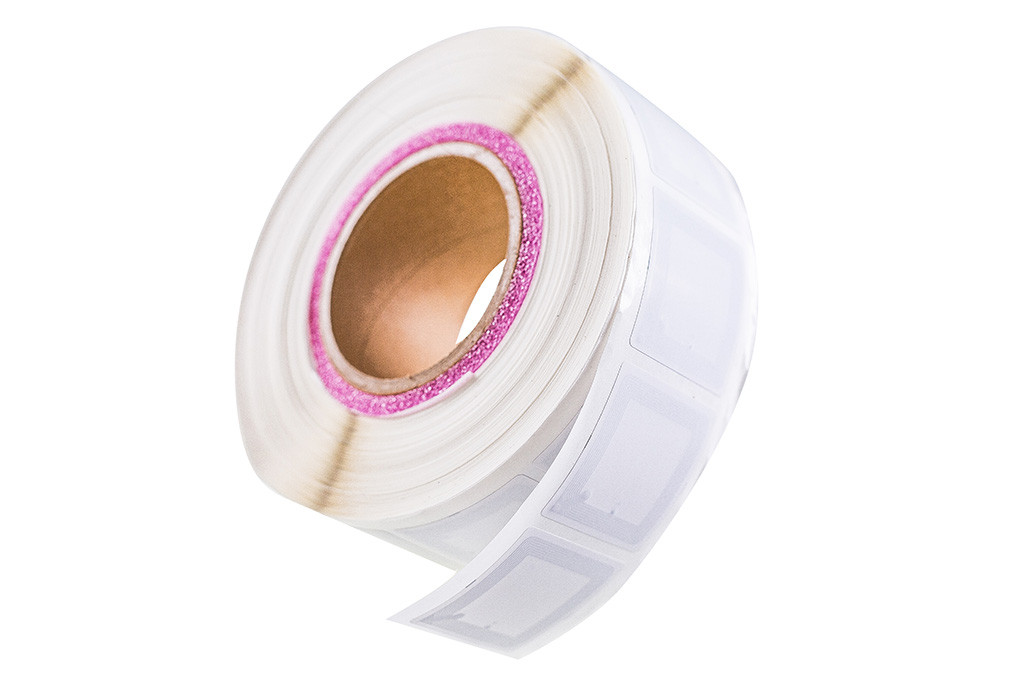
- **Sticker form factor** — NFC stickers stuck to existing surfaces (check presenter, counter edge, table tent) are the lowest-cost rollout for properties that already have established display fixtures.
| Material | Tap distance vs PVC | Cost / card (MOQ 100) | Best for |
|---|---|---|---|
| Standard PVC (ISO/IEC 7810 ID-1) | 100% baseline | $1.50–3.00 | Default; restaurants / salons / fitness / dental / retail |
| Recycled PVC (GRS ≥50%) | 98% | $2.00–3.50 | Sustainability-focused brands |
| FSC bamboo | 85–95% | $3.50–6.00 | Premium hospitality, eco brands, spa / wellness |
| FSC wood (birch / walnut) | 85–95% | $4.00–7.50 | Luxury hospitality, fine dining, premium real estate, executive contractors |
| Brushed metal + ferrite isolator | 50% | $10–25 | Luxury / high-touch brands, premium auto dealerships, jewelry |
| Coated paper + NTAG213 inlay | 95% | $0.50–1.50 | Events, conferences, hand-out cards, short-lived programmes |
| Acrylic countertop display | 95% | $5–25 (display unit) | Permanent fixture at checkout / front desk |
| Adhesive NFC sticker | 95% | $0.30–1.00 | Affixed to existing surface (counter, table, door frame) |
Vertical placement playbook — where each business type wins
The right placement matters more than the right card. The same NTAG213 card on a wooden body wins differently in a restaurant vs a dental practice vs a salon. The playbook below is the verified vertical pattern for each business type.
| Vertical | Primary placement | Secondary placement | Conversion driver |
|---|---|---|---|
| Restaurants (full-service) | Check presenter (tap when settling check) | Table tent (during meal, before staff visit) | Customer is in 'settle up' mindset; staff prompt as bill is dropped. |
| Restaurants (quick-service) | Counter display at exit | Drive-thru window hand-out | Customer is leaving; placement at exit captures intent. |
| Dental / orthodontic practices | Front-desk checkout (post-treatment) | Treatment-room exit | Hand-off moment after treatment is over; high-trust window. |
| Salons / spas / wellness | Chair-side after service complete | Reception checkout | Hairstylist / therapist hands card at end of service — relationship-driven. |
| Hotels (boutique / mid-market) | Checkout counter (not in-room iPad — Trustpilot violation) | Concierge / front-desk staff prompt at departure | Departure transition is the best capture window. |
| Fitness studios / gyms | Locker-room exit / front desk | Class-end prompt by instructor | Endorphin-high post-workout is the high-conversion moment. |
| Retail stores | Checkout counter (NOT exit door — too rushed) | Bagging surface adjacent to register | Customer waiting for receipt is captive audience. |
| Auto dealerships | Delivery / handover desk (new car) | Service-bay pickup desk | Vehicle delivery is the high-emotion moment for new car; service pickup for repeat. |
| Contractors / trades | Truck cab dashboard + invoice card | Hand-off to customer at job completion | Mobile placement — customer interaction is at job site, not office. |
| Veterinary practices | Checkout counter | Treatment-room exit | Same shape as dental — high-trust hand-off. |
| Real estate agents | Closing-table card | Listing handout | Closing is the celebratory moment; capture review there. |
Staff prompt scripts — what to say (and what NOT to say) in 2026
The verbal ask is the conversion lever. The right phrasing complies with Google's April 2026 policy update; the wrong phrasing risks Google Business Profile suspension or FTC penalty. Compliant scripts also outperform incentive-based asks on conversion 3–5x because they don't trigger customer scepticism.
- **Compliant ask (default)** — "Would you mind tapping this for us? It helps us a lot." Neutral; no sentiment filter; no incentive. Works across every vertical.
- **Compliant ask (relationship-driven)** — "If you have a moment, we'd really appreciate you sharing your experience. Just tap here." Personal but no name-solicitation.
- **Compliant ask (transactional)** — "If you're happy with your service, we'd love to hear about it on Google. Tap here." The "if you're happy" framing is fine because it's a conditional self-selection, not a sentiment pre-screen that routes elsewhere.
- **NON-compliant — sentiment routing** — "How was your experience today?" → if positive, hand them the card; if negative, hand them a private feedback form. This is review gating; explicit Google + FTC violation.
- **NON-compliant — employee-name solicitation** — "Please mention [Sarah / John / etc.] in your review." Banned by Google's April 2026 update; risks review removal + profile suspension.
- **NON-compliant — staff quota** — "Each employee needs to bring in 3 reviews per shift." Banned by Google's April 2026 update.
- **NON-compliant — incentive tied to review** — "Get a free dessert / $10 off / loyalty points for leaving a 5-star review." Incentivised reviews are FTC 16 CFR Part 465 violation. Note: incentives for leaving *any* review (regardless of star rating) are also problematic if they're not disclosed; the safest pattern is no incentive at all.
- **Disclosure pattern (if incentive is offered)** — if a business does offer an incentive for any review (positive or negative, disclosed as such), the review itself must disclose the incentive ("I received [item] for posting this review"). This is the FTC Endorsement Guides requirement under 16 CFR Part 255. The simplest compliant approach is to skip incentives entirely.
Multi-location chain architecture
A chain operating 10+ locations needs an architecture that scales: per-location Place IDs, per-location cards, central programme oversight, consistent staff training. Two patterns dominate.
- **Pattern 1 — Per-location card** — each location's card encodes the canonical Google writereview URL with its specific Place ID. Operationally simple; each location's card is independent. Limitation: if Google changes a Place ID (rare but possible), the entire location's card stock needs reprinting.
- **Pattern 2 — Stable redirect on chain domain** — each location's card encodes `https://yourchain.com/review/location-{slug}` which redirects server-side to the current Google writereview URL. Pattern survives Place ID changes; analytics on the redirect endpoint give per-card-tap metrics without third-party tracking. Recommended for chains of 20+ locations.
- **Central programme oversight** — track per-location tap counts via the redirect-endpoint analytics; correlate with per-location Google review counts and ratings. Use the data to identify high-conversion location patterns (vertical placement, staff training) and propagate across the chain.
- **Consistent verbal training** — train staff in the compliant ask script ("Mind tapping this?") and the explicit policy violations (no sentiment routing, no employee-name solicitation, no incentives). Document the compliant scripts in the chain's training material.
- **Yelp / Trustpilot separation** — chain programmes wanting to address Yelp / Trustpilot reviews need a different operational model because Yelp prohibits soliciting reviews and Trustpilot prohibits on-premise solicitation. The NFC tap-card programme should be Google-only; Yelp/Trustpilot review programmes operate via email or in-app review request flows, not in-person hardware.
NFC vs QR — when to pair them on the same card
iPhone XS+ (released September 2018, iOS 13+) reads NFC tags in the background. iPhone 7 / 8 / X have NFC hardware but require the user to open Control Center → NFC Tag Reader. Older iPhones (pre-7) and some older Android phones do not read NFC tags reliably. The pragmatic solution: pair NFC with a printed QR fallback on every card.
- **iPhone XS+ behaviour** — system-level background tag reading. Customer taps phone to card; iOS shows the URL preview at the lock screen or banner. No app required. ~80% of iPhone install base in 2026 is XS or newer.
- **iPhone 7 / 8 / X behaviour** — NFC hardware present; requires Control Center → tap NFC Tag Reader → scan. Materially worse UX. Recommend the QR fallback for these users.
- **Android behaviour** — every Android phone with NFC (universal since Android 4.0, 2011) reads tags via OS-level NDEF dispatch. Modern Android (Q+) just shows the URL. Older Android phones may not have NFC at all — QR fallback covers them.
- **Hybrid completion rate** — a 47-business study of counter-display review programmes found 68% review completion when the display carried both NFC and QR (vs lower completion for NFC-only or QR-only). The redundancy captures users who don't recognise NFC + users whose phones don't support background tag reading.
- **Card design** — print the QR code on the back or side of the card; keep the NFC tap area unobstructed for the main face. The QR code should encode the same URL as the NFC chip.
- **Cost impact** — adding a printed QR code is functionally zero incremental cost. No reason not to pair them.
Conversion data + ROI — what review volume actually does
Review programmes are funded out of the marketing budget but they're measured against revenue — which is exactly the kind of gap that makes a CFO suspicious. The published research on review-volume-to-revenue conversion gives the procurement business case, and for once the marketing maths survives the scepticism.
- **Harvard Business Review / Michael Luca (2011)** — a 1-star increase in a restaurant's Yelp rating produces a 5–9% increase in revenue. The 1-star → revenue relationship is consistent across business types; review rating is a leading indicator of customer acquisition.
- **BrightLocal Local Consumer Review Survey 2026** — consumers expect to see at least 34 reviews on a Google Business Profile before they trust the business. Below 34, the absence of reviews is itself a negative signal.
- **Volume vs recency** — Google's local search ranking weighs recent reviews more heavily than old reviews. A business with 200 reviews from 5 years ago and 5 reviews in the past year ranks worse than a business with 50 reviews all from the past 12 months. A sustained review programme (1–3 reviews / week / location) outperforms one-time review-bombing.
- **Conversion lift from review cards** — typical 5–10x increase in review volume per location after deploying an NFC review card programme, based on case studies in restaurants, dental practices, salons. The lift is driven by removing the steps between intent and action — from "open Google → search business → tap reviews → tap write review" to "tap card → review-compose pane opens".
- **Per-card economics** — at $1.50–3.00 per PVC card and 50+ taps per card lifetime, cost per review tap is ~$0.03–0.06. Cost per review (assuming 30–50% tap-to-completion conversion) is ~$0.06–0.20. Compare against paid search CPC ($1–10+ per click) to see why review programmes are dramatically cheaper customer-acquisition leverage.
- **TCO over 12 months** — typical small business deploying 5 review cards across counter / table tent / check presenter positions: ~$15 hardware + $30 acrylic display unit + staff training time. Generates 30–80 incremental reviews / year. Cost per incremental review: $0.40–1.50. Compare to review-management SaaS ($199–599 / month / location) for an order-of-magnitude lower cost per acquired review.
Pricing, MOQ and lead time — what to expect on a 2026 RFQ
Review card pricing has three drivers: chip, material, and order volume. Custom artwork (full-colour CMYK printing) is typically included at standard pricing; embossing / foil stamping / debossing add a premium. After all the policy citations and chip datasheets, the card itself stays refreshingly cheap; the expensive part of a review programme was never the hardware, it was reading the rules before the print run, not after.
- **Pre-encoding** — supplier writes the Place ID URL during card manufacture. Adds 5–10% to cost; eliminates the staff step of programming each card. Standard for chain rollouts of 50+ locations.
- **Sample lead time** — most suppliers ship 1–10 sample cards in 5–7 working days; premium materials (metal, hardwood) take 10–14 days.
- **Multi-location bulk** — chains ordering 1,000+ cards across 50+ locations typically negotiate per-card prices 30–50% below the 100-card MOQ pricing.
- **Re-order cadence** — most businesses re-order review cards annually as cards wear, get lost, or location-specific Place IDs change. Plan re-order into the marketing budget.
| Configuration | MOQ | Cost / card | Lead time |
|---|---|---|---|
| PVC + NTAG213, plain stock | 100 | $1.00–2.00 | 2 weeks |
| PVC + NTAG213, full-colour CMYK | 100 | $1.50–3.00 | 2 weeks |
| Recycled PVC (GRS) + NTAG213 | 200 | $2.00–3.50 | 2–3 weeks |
| FSC bamboo + NTAG213, laser-etched | 100 | $3.50–6.00 | 3 weeks |
| FSC wood (birch/walnut) + NTAG213 | 100 | $4.00–7.50 | 3 weeks |
| Brushed metal + ferrite + NTAG213 | 50 | $10–25 | 4–5 weeks |
| Paper card + NTAG213, event handout | 500 | $0.50–1.50 | 2 weeks |
| Adhesive NFC sticker + NTAG213, printed | 200 | $0.30–1.00 | 2 weeks |
| Acrylic countertop display (no card) | 10 | $5–25 | 1 week |
Useful next pages
Use these linked product, guide and comparison pages to keep the next click specific and practical.
Review card products
Starting points for the material + chip combination identified above.
Placement + script guides
Verticalised playbooks for design / placement / staff scripts.
Vertical guides
Per-industry playbooks: restaurants, dental, salons, hotels, fitness, auto dealerships.
Related editorial
Background reading on review programmes and NFC mechanics.
FAQ
Is using an NFC card to ask for Google reviews against Google's policy?
No — when the card opens the Google review-write URL directly for every customer. Google's review policy allows businesses to ask all customers (positive or negative) to leave a review. The card is just a frictionless way to deliver that ask. What IS against policy: review gating (asking customers to rate first, then routing happy ones to Google and unhappy ones to private feedback), staff review quotas (banned April 2026), employee-name solicitation (banned April 2026), incentivising reviews ($10 off for a 5-star review violates FTC 16 CFR Part 465), and on-premise iPad / kiosk solicitation (Trustpilot specifically forbids). An NFC card programme that opens the writereview URL for everyone, supported by a neutral verbal ask, is compliant by design.
What is review gating and why is it the #1 violation?
Review gating is asking customers "How was your experience?" before sending them to Google — then routing 4–5-star responses to write a Google review and routing 1–3-star responses to a private feedback form that never becomes public. Both Google's Business Profile policy and the FTC Consumer Reviews and Testimonials Rule (16 CFR Part 465, effective Oct 2024) explicitly prohibit review gating. Fashion Nova paid $4.2M to settle FTC charges in 2022 for review manipulation that included review-suppression patterns. NFC tap-cards that open the Google writereview URL for every customer cannot perform review gating; that's why they're structurally safer than review-management SaaS programmes that include sentiment-pre-screening features.
What changed in Google's April 2026 Business Profile policy update?
Google explicitly banned two practices: (1) staff review quotas — requiring employees to solicit a specific number of reviews per shift or per period; and (2) employee-name solicitation — asking customers to mention specific staff members by name in their review ("Please mention [stylist name] in your review"). Both practices remained widespread before April 2026; many SERP competitor pages still recommend the employee-name pattern as best practice. After April 2026, reviews mentioning staff names by name risk removal and the business profile risks suspension. Compliant verbal asks should be neutral ("Mind tapping this for us?") rather than name-soliciting.
Can I incentivise staff per review they bring in?
Risky. Google's April 2026 update bans review quotas, which captures the staff-incentive case where the metric is reviews delivered. Performance-based compensation tied to review counts also risks triggering the FTC's review-suppression and incentivised-review prohibitions. The safer pattern: train staff in the compliant verbal ask script ("Mind tapping this for us?") and measure conversion at the location level (per-card tap counts, per-location review volume) rather than per-employee. Make the customer experience the staff's metric — high CSAT correlates with high review volume without needing per-review staff incentive.
Do I need a separate NFC card per location for a multi-location business?
Yes — each physical location has its own Google Place ID, and the card needs to open the writereview URL for that specific location. A single corporate card routing to a head-office profile is operationally wrong. Two patterns work: (1) per-location card encoded with that location's Place ID directly; (2) per-location card encoded with a stable redirect URL on the company's domain (`https://yourbrand.com/review/{location-slug}`) that the server redirects to the current Place ID writereview URL. Pattern 2 is recommended for chains of 20+ locations because it survives Place ID changes without reprinting cards.
How do I find my Google Place ID?
Use Google's official Place ID Finder tool at `developers.google.com/maps/documentation/javascript/examples/places-placeid-finder` (search by business name + address, copy the alphanumeric Place ID string). BrightLocal also offers a free Google ID and Review Link Generator at `brightlocal.com/free-local-seo-tools/google-id-and-review-link-generator/` that combines Place ID lookup with the writereview URL construction. The canonical writereview URL is `https://search.google.com/local/writereview?placeid={PLACE_ID}` where `{PLACE_ID}` is the alphanumeric Place ID string.
Should the card work on Yelp or Trustpilot too?
No — both platforms specifically forbid NFC tap-card programmes that solicit reviews. Yelp's "Don't Ask for Reviews" policy disqualifies any active solicitation including in-person hardware. Trustpilot's guidelines prohibit on-premise solicitation using company equipment (iPads, kiosks; cards are an edge case but Trustpilot's framing assumes off-property solicitation). NFC review cards should target Google only. Email-based review-request flows work for Yelp and Trustpilot but are managed via SaaS (Birdeye, Podium, SOCi) rather than physical hardware.
Which NFC chip should I use — NTAG213 or NTAG215?
NTAG213 (144 byte memory, 50,000 scan endurance) is sufficient for every Google review card programme. The Google writereview URL is ~120 characters and fits comfortably in NTAG213's capacity. NTAG215 (504 bytes, 200K scans) is overkill for review-only cards; spend the chip-premium budget on better material (wood, bamboo) instead. The only reason to choose NTAG215+ over NTAG213 is if the same card is doubling as a vCard / contact-share card with a larger payload — in which case the card is a business card with review functionality, not a review card per se.
What about iPhone 7 / 8 / X users — does the card work for them?
Partially. iPhone 7 / 8 / X (released 2016–2017) have NFC hardware but do NOT support background tag reading. Customers on these phones need to open Control Center, tap the NFC Tag Reader icon, then tap the card. Materially worse UX. Pair the NFC card with a printed QR code (same URL) as fallback — older iPhone users can scan the QR with the camera and get the same review-compose pane. The hybrid NFC+QR pattern is a 47-business study found 68% review completion vs lower for NFC-only or QR-only. Adding a printed QR is zero incremental cost; recommend it as default.
Sources & references
Primary standards, OEM datasheets and regulatory documents cited by this article. All URLs were verified on the access date shown below.
- Google — Prohibited & restricted content policy
Primary Google review policy citation — applies to Maps UGC and Business Profile reviews.
- Google Business Profile Help — Prohibited & restricted content
Business-profile-side policy citation; suspension grounds.
- Google Business Profile Help — Fix suspended profiles
Remediation guidance after policy-violation suspension.
- Google Maps Platform — Place IDs documentation
Authoritative Place ID specification.
- Google Place ID Finder (official tool)
Official tool to look up per-location Place ID.
- FTC — Consumer Reviews and Testimonials Rule Q&A
Primary FTC reference for 16 CFR Part 465 rule effective Oct 21, 2024.
- FTC Endorsement Guides — 16 CFR Part 255 (eCFR)
Federal regulation on endorsement and testimonial disclosure.
- Arnold & Porter — FTC Warning Letters Jan 2026
FTC enforcement-signal update.
- Morgan Lewis — FTC Final Rule analysis
Legal commentary on the FTC rule's scope and remedies.
- Near Media — Fashion Nova $4.2M fine analysis
Case-study reference for the Fashion Nova review-suppression settlement.
- Sterling Sky — Google Review Violations 2026
Practitioner reference for current Google review violations.
- PPC Land — Google bans staff names and quotas (April 2026)
Industry-press reference for the April 2026 Google update.
- Launchcodex — GBP April 2026 policy update
Details of the April 2026 policy update.
- BrightLocal — Local Consumer Review Survey 2026
Industry-stats reference — 34 reviews needed for trust threshold.
- BrightLocal — Google ID and Review Link Generator (free tool)
Practical Place ID + writereview URL constructor.
- Yelp — Don't Ask for Reviews policy
Yelp specifically forbids active solicitation; disqualifies tap-card programmes for Yelp.
- Trustpilot — Guidelines for Businesses (Feb 2026)
Trustpilot's on-premise solicitation guidelines.
- NXP NTAG213/215/216 datasheet
Authoritative chip reference — 144B / 504B / 888B memory; 50K / 200K / 200K endurance.
- Seritag — NTAG213 vs NTAG215
Chip-selection technical reference.
- Birdeye — Review gating vs Google policy
Industry-vendor stance on review-gating prohibition.
- Michael Luca — Reviews, Reputation, and Revenue
Academic citation — 5–9% revenue lift per 1-star Yelp rating.
- Apple Developer — Adding Support for Background Tag Reading
iPhone XS+ background tag reading reference; iOS 13+.
Proud Tek is a Shenzhen-based RFID & NFC manufacturer supplying hotel chains, transit operators, event venues and retail brands worldwide. Every order includes free samples, RF testing and dedicated project support.
Get a Quick Quote
Tell us about your project and we'll respond within one business day. Fields marked (asterisk) are required.