
Cannabis NFC
NFC Cannabis Tracking Label
Metrc Seed-to-Sale

Quick answer
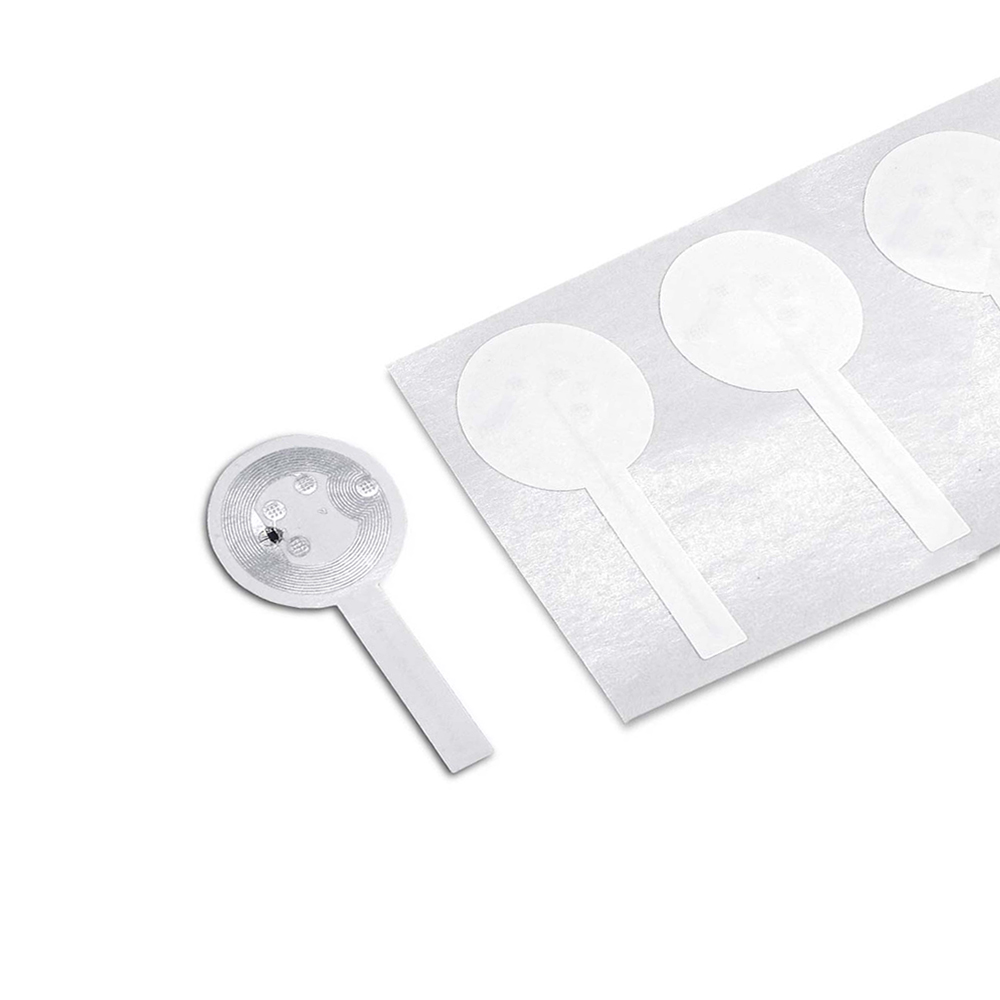
In specification terms, NFC cannabis tracking labels carry the state-mandated seed-to-sale package identifier (Metrc / BioTrack / Leaf Data) plus the lab Certificate of Analysis (COA) reference on a NTAG213 / NTAG 424 DNA chip — letting compliance officers, dispensary staff and consumers tap a product and instantly see cultivation history, lab potency + terpene + pesticide + heavy-metal results, regulatory status and tamper-evidence integrity. Bridge-antenna tamper variant prevents label transfer from a compliant package to an illicit-market product.
- For long-life deployments, seed-to-sale traceability — every plant, batch and retail unit is tracked from cultivation through processing, testing, distribution and dispensary sale with a unique NFC identifier integrated into Metrc / BioTrack.
- Regulatory compliance: the chip UID maps to the state-mandated package tag and the lab Certificate of Analysis (COA) is one tap away — pesticide / heavy-metal / microbial / cannabinoid potency / terpene profile published on tap.
- Anti-diversion: NTAG 424 DNA cryptographic SUN authentication + bridge-antenna tamper-loop CTTES register prevent label transfer to illicit-market products and surface 'Tampered' status forever after.
Used in these industries
Deployments where this product is referenced on our industry landing pages.



At a glance
Use these short answers to decide whether this page matches the project before moving into the detail.
Chip silicon
NXP NTAG213 (144 bytes user memory) — entry-tier static-URL package tag NXP NTAG216 (888 bytes) — extended user memory for COA + cultivar + lot data on-chip
State seed-to-sale platform integration
Metrc (Franwell) — 20+ US states (CA / CO / OR / NV / MI / OH / MD / MO / MA / ME / AK / LA / WV / OK / MS / NJ / RI / DC / MT) BioTrack (Forian) — WA / NM / ND / PR / I...
Next step
Ready to move forward? Start your inquiry to get specific answers for this project.
Request quote and samples- Certificate of Analysis (COA) data model
-
- Cannabinoid potency: THC / CBD / CBG / CBN / THCA / CBDA / total cannabinoids
- Terpene profile: myrcene / limonene / pinene / linalool / caryophyllene / humulene / terpinolene
- Residual pesticides: California Prop 65 + state-specific lists
- Heavy metals: Pb / As / Cd / Hg per USP <232> / <233>
- Microbial: total yeast / mould / aerobic bacteria / Salmonella / E. coli / Aspergillus (inhaled)
- Residual solvents + moisture / water activity + mycotoxins + foreign matter
- Lab integration partners
-
- CannaSafe + SC Labs + Steep Hill + Anresco + Infinite Chemical Analysis + Modern Canna
- ISO/IEC 17025:2017 testing-competence-accredited labs
- Direct API pull from lab database — consumer tap = real-time COA
- Per-state schema mapping (CA / CO / WA / OR / IL / NJ specific limit lists)
- Form factors + sizes
-
- 30×45 mm rectangle — standard retail jar lid + 1g / 3.5g / 7g flower package
- 25×60 mm slim — pre-roll tubes + cartridge boxes
- Ø22 mm round — concentrate jars + edible tins
- 50×80 mm large rectangle — case + carton + bulk-package level
- Custom void-pattern die-cuts from MOQ 5,000
- Tamper-evidence mechanism
-
- Bridge-antenna trace through frangible weak-point at sticker edge
- Peel severs trace — chip detects open circuit, sets CTTES register
- Diversion defense: label cannot be transferred from compliant package to illicit product
- Visible delamination + permanent digital record forever after
- Substrate + adhesive
-
- PET face stock 75 µm (matte white / metallic silver / transparent)
- Acrylic permanent adhesive (3M 467MP / 9472LE)
- Cold-chain rated −40 °C to +85 °C for refrigerated edibles
- Child-resistant package compatible — non-detachable die-cut
- Encoded data model
-
- GS1 Digital Link URI: https://id.gs1.org/01/{GTIN}/10/{lot}/21/{serial}
- Metrc package tag UID reference (encrypted in PICC data, NTAG 424 DNA option)
- ISO/IEC 17025 lab certificate ID + COA download URL
- Cultivation batch + harvest date + processing facility + testing-lab ID
- Regulatory framework — US
-
- Federal: cannabis = Schedule I CSA (Controlled Substances Act, Title 21)
- Hemp carve-out: 2018 Farm Bill (Pub. L. 115-334) — THC ≤ 0.3% dry weight
- State-by-state cannabis tracking: each state publishes its own tag policy
- Penalties: license suspension / product destruction / fines up to USD 50,000 per violation
- Regulatory framework — international
-
- Canada: Cannabis Act S.C. 2018 c.16 + Health Canada CTLS
- Germany: Cannabis Act (CanG) effective 1 Apr 2024 — non-commercial adult-use
- EU: Novel Food Regulation (EU) 2015/2283 — CBD food products + EFSA guidance
- Israel (IMC-GAP/GMP), Uruguay (IRCCA), Mexico (COFEPRIS), Australia (ODC)
- Consumer-tap experience
-
- Mobile-optimized COA page — interactive cannabinoid + terpene charts
- Pass / fail status per state limits + direct link to lab source document
- Cultivation story: cultivar + grower + harvest date + lighting / nutrient method
- Authenticity verification: NTAG 424 DNA SUN cryptographic check
- Procurement
-
- MOQ 1,000 (NTAG213/216), 1,000 provisioned (NTAG 424 DNA)
- Lead time 12-15 business days (NTAG21x), 15-20 business days (NTAG 424 DNA)
- Variable digital print: state-specific compliance text + lot code + batch + brand
- Universal SKU for multi-state operators — single inventory across regulatory frameworks
Compliance + tracking challenges facing the legal cannabis industry
- State cannabis regulators mandate seed-to-sale tracking through platforms like Metrc, BioTrack and Leaf Data. Operators that fail to maintain accurate tracking records face license suspension, product destruction orders and fines up to USD 50,000 per violation.
- Product diversion from the legal supply chain into the illicit market costs the regulated industry billions annually and exposes consumers to untested products. Conventional barcode labels are easily reproduced and provide no tamper evidence.
- Lab testing compliance requires that every retail unit be linked to its specific batch Certificate of Analysis (COA). Manual lot-tracking with printed labels leads to COA mismatches in 5-10% of dispensary audits.
- Multi-state operators (MSOs) managing cultivation, processing and retail across different regulatory frameworks need a unified tracking system that satisfies varying state requirements without maintaining separate label formats per state.
- Consumer confidence in legal cannabis products depends on verifiable authenticity — 68% of surveyed cannabis consumers say they would pay more for products with verifiable lab results and supply-chain transparency.
How Proud Tek NFC cannabis tracking labels deliver seed-to-sale compliance
Printed barcode + paper COA + 'tamper void' sticker
- Barcode label trivially reproduced — diversion to illicit market goes undetected
- Paper COA can be detached / mismatched / forged — 5-10% audit failure rate
- 'Tamper void' sticker is informational only, no digital diversion alert
- Per-state SKU complexity — separate label formats for CA / CO / WA / NJ
- Manual COA pull at dispensary counter slows transactions
NFC SUN + bridge-antenna + state-platform-integrated UID (this page)
- AES-128 SUN authentication: every tap is single-use cryptographic — clone defense
- Chip UID maps to state Metrc / BioTrack package tag = COA always correct on tap
- Bridge-antenna tamper-loop sets CTTES register on peel — diversion auto-flagged
- Universal label SKU — same chip carries CA / CO / WA / NJ-specific data via backend routing
- Consumer + dispensary tap = instant COA + authenticity verdict, no app required
- NTAG213 / NTAG216 / NTAG 424 DNA chip encodes a unique identifier linked to the state-mandated seed-to-sale tracking system (Metrc, BioTrack, Leaf Data). Each physical product is digitally tethered to its complete chain-of-custody record.
- Consumer tap experience displays the lab COA (potency, terpene profile, pesticide / heavy-metal test results), cultivation date, harvest batch, processing facility and dispensary allocation. Verifiable by any smartphone without an app.
- NTAG 424 DNA cryptographic AES-128 SUN authentication option detects cloned or counterfeit labels at the point of sale. Dispensary staff or consumers tap the label and receive instant authentic / counterfeit verification.
- Tamper-evident bridge-antenna die-cut fractures if the label is removed — preventing label transfer from a compliant product to a non-compliant or illicit-market product. CTTES register sets permanently and is reported on every subsequent tap.
- State-configurable data fields allow the same label SKU to satisfy different state tracking requirements — reducing label inventory complexity for multi-state operators to a single universal NFC label.
Per-tap data published from a Proud Tek NFC cannabis tracking label
- Metrc / BioTrack package UID = chip UID — single-source-of-truth identity per package.
- Lab COA pull = real-time API to CannaSafe / SC Labs / Steep Hill / Anresco / Infinite / Modern Canna.
- Cannabinoid + terpene + pesticide + heavy-metal + microbial results = full panel on tap.
- Pass / fail per state limit list = jurisdiction-aware verdict (CA Prop 65 / CO / WA / NJ).
- Tamper status = CTTES register state surfaced in SUN payload on every tap forever after.
The state-by-state seed-to-sale tracking platform landscape — Metrc, BioTrack, Leaf Data, MJ Freeway and OpenTHC
- Metrc (Franwell Inc.) is the dominant state-mandated track-and-trace platform, contracted by 20+ US state cannabis regulators (California, Colorado, Oregon, Nevada, Michigan, Montana, Ohio, Maryland, Missouri, Massachusetts, Maine, Alaska, Louisiana, West Virginia, Oklahoma, Mississippi, New Jersey, Rhode Island, Washington DC and others). Metrc uses RFID tags at the plant level and package barcodes / RFID at the product level; operators upload daily package, transfer and sales data via API or manual UI.
- BioTrack (Forian) serves Washington State, New Mexico, North Dakota, Puerto Rico, Illinois Medical, Kentucky, Hawaii, Delaware and other jurisdictions that did not select Metrc. MJ Freeway (Akerna, acquired by POSaBIT and subsequently wound down) served Pennsylvania, Washington State (medical), Utah, Kentucky, West Virginia medical historically. Leaf Data Systems (MJ Freeway legacy) served Washington and Pennsylvania. OpenTHC is a free / open-source API that bridges Metrc / BioTrack / Leaf Data for multi-state operators.
- Federal law still classifies marijuana as Schedule I under the Controlled Substances Act (CSA) — the 2018 Farm Bill (Agricultural Improvement Act, Pub. L. 115-334) carved out hemp (THC ≤ 0.3% dry weight) from CSA as a separate agricultural commodity, creating a bifurcated federal framework. Cannabis RFID / NFC tracking is therefore an entirely state-regulated domain in the US, with each state publishing its own tag requirements, COA data schema and reporting cadence.
- Our NFC cannabis tracking labels are platform-agnostic at the chip level — the same NTAG213 / NTAG 424 DNA chip can carry Metrc package tag references, BioTrack barcode mappings or proprietary MSO SKU identifiers. The business-logic integration (API push to Metrc / BioTrack, COA pull from the testing lab) lives at the MSO's compliance middleware layer; we supply the physical identity anchor + tamper evidence + consumer-tap UX.
Certificate of Analysis (COA) data model, testing-lab integration and emerging federal / EU frameworks
- The COA is the lab-issued test report that must accompany every retail cannabis product in regulated markets. Typical test panels include: cannabinoid potency (THC, CBD, CBG, CBN, THCA, CBDA), terpene profile, residual pesticides (California Prop 65 + state-specific lists), heavy metals (Pb, As, Cd, Hg), microbial contaminants (total yeast / mould, aerobic bacteria, Salmonella, E. coli, Aspergillus for inhaled products), residual solvents, moisture and water activity, mycotoxins and foreign matter. Accredited labs (ISO/IEC 17025:2017 for testing competence) generate COAs signed and dated per state schema.
- Our NFC label links each retail unit to its batch COA via the chip UID → MSO middleware → testing-lab API (CannaSafe, SC Labs, Steep Hill, Anresco, Infinite Chemical Analysis, Modern Canna). Consumer tap opens a mobile-optimised COA page with interactive cannabinoid / terpene charts, pass / fail test status per state limits and direct link to the lab's source document for regulator verification.
- The EU is diverging from the US path. Germany's Cannabis Act (CanG, effective April 1 2024) legalised non-commercial adult-use cannabis; the EU Novel Food Regulation (EU) 2015/2283 and EFSA guidance shape CBD food products; Italy, Switzerland and the Netherlands operate distinct regulatory frameworks. EU Cannabis tracking does not yet have a bloc-wide Metrc-equivalent but the EU Digital Product Passport (ESPR 2024/1781) roadmap may eventually apply to cannabis products — building on GS1 Digital Link URI and EPCIS 2.0 visibility events.
- Canada (Cannabis Act S.C. 2018, c. 16 + Health Canada Cannabis Tracking and Licensing System CTLS), Israel (IMC-GAP / GMP), Uruguay (IRCCA), Mexico (COFEPRIS) and Australia (ODC) each maintain their own tracking frameworks. Our labels are shipped pre-encoded with the jurisdiction-specified identifier format; the MSO's compliance team remains the accountable party for regulator reporting.
Cannabis tracking timeline — from CSA Schedule I to per-package NFC seed-to-sale
- 1970 — US Controlled Substances Act
Federal CSA classifies marijuana as Schedule I — the regulatory baseline that all state cannabis legalisation must work around. Establishes the bifurcated federal-vs-state framework that persists 50+ years later.
- 1996-2012 — State medical + adult-use legalisation begins
California Prop 215 (1996) — first state medical cannabis; Colorado Amendment 64 + Washington I-502 (2012) — first state adult-use legalisation. Each state defines its own seed-to-sale tracking framework with no federal standardisation.
- 2013 — Metrc + BioTrack first state contracts
Colorado contracts Metrc as state seed-to-sale platform; Washington selects BioTrack. The track-and-trace platform model becomes the de-facto compliance architecture for state cannabis programmes.
- 2018 — US Farm Bill hemp carve-out + NTAG 424 DNA + iOS 12 background NFC
Agricultural Improvement Act of 2018 (Pub. L. 115-334) declassifies hemp (THC ≤ 0.3%) from CSA — bifurcated cannabis-vs-hemp federal framework. NXP launches NTAG 424 DNA AES-128 SUN; Apple iOS 12 enables background NDEF reading — consumer-grade NFC cannabis authentication becomes feasible.
- 2020-2022 — ISO/IEC 17025 lab accreditation standardises COA
Cannabis testing labs across CA / CO / WA / OR converge on ISO/IEC 17025:2017 testing-competence accreditation; standardised COA data model emerges (cannabinoid + terpene + pesticide + heavy-metal + microbial + residual-solvent + mycotoxin panels).
- 2024 — Germany CanG + EU CBD novel-food clarity
Germany Cannabis Act (CanG) effective 1 Apr 2024 legalises non-commercial adult-use cannabis; EU Novel Food Regulation (EU) 2015/2283 + EFSA guidance clarifies CBD food-product status. EU regulatory landscape begins divergence from US bifurcated framework.
- 2025-2026 — DEA Schedule III rescheduling proposal + ESPR DPP
DEA proposes rescheduling marijuana from Schedule I to Schedule III; EU ESPR 2024/1781 Digital Product Passport framework roadmap may eventually scope cannabis / hemp / CBD products into priority categories. Cross-border identity-anchor architecture becomes increasingly important.
- 2026 — Today: NFC seed-to-sale standard practice
Operating-playbook notes for multi-state-operator, premium-flower-DTC, concentrate-cartridge, edible-confection and pre-roll-tube programmes converge on NTAG213 / NTAG 424 DNA TagTamper + state-platform UID + ISO/IEC 17025 COA-API as the default architecture for compliant + tamper-evident + consumer-trust deployment.
Useful next pages
Use these linked product, guide and comparison pages to keep the next click specific and practical.
Related NFC label products
Other NFC solutions for compliance and authentication tracking.
Industry applications
Industry deep-dives where this SKU is commonly specified.
FAQ
Does the NFC label integrate with Metrc and other state tracking systems?
Yes. The NFC chip's unique identifier is registered in the state tracking system (Metrc, BioTrack, Leaf Data) as the package tag. When the label is tapped, the cloud backend retrieves the full tracking record from the state system and displays it to the user. API integrations are available for all major state-mandated platforms.
Can consumers view lab test results by tapping the label?
Yes. Tapping the NFC label with any smartphone opens a mobile-optimised page showing the batch-specific Certificate of Analysis (COA) including THC / CBD potency, terpene profile, pesticide screening, heavy-metal testing and microbial analysis. The lab results are pulled directly from the testing laboratory's verified database (CannaSafe, SC Labs, Steep Hill, Anresco, Infinite Chemical Analysis, Modern Canna) keyed against the chip UID.
How does the tamper-evident feature prevent product diversion?
The label uses a frangible bridge-antenna trace embedded in a destructible die-cut. If someone attempts to peel the label from a compliant product to apply it to an illicit product, the antenna breaks, the chip's CTTES (Counter Tamper Tamper Event Status) register is permanently set, and the next NFC scan returns 'tampered' status in the SDM payload. The label also shows visible physical damage that cannot be concealed.
How does the Metrc RFID plant tag differ from the NFC retail package label, and do I need both?
Metrc operates a two-tier tag architecture: (1) plant tags — ultra-high-frequency (UHF) RFID tags issued by Metrc to licensed cultivators and attached to each growing plant / immature plant batch for cultivation-phase tracking; (2) package tags — UHF RFID or barcode-based labels applied to each harvested / processed retail package. Plant tags are procured directly from Metrc at a fixed per-tag fee and are non-substitutable — operators cannot use third-party tags at the plant level. Our NFC cannabis tracking labels are designed for the retail package layer, where operators have latitude to add consumer-authentication and tamper-evidence features on top of the Metrc package identifier. Typical deployment: Metrc UHF RFID plant tag during cultivation → transition at harvest to our NFC retail package label (encoded with Metrc package UID reference + COA link + tamper-evident die-cut) on the consumer-facing product. Check your state's specific tag policy as requirements vary; we support Washington State BioTrack barcode model, Oregon OLCC Metrc model, and proprietary / hybrid MSO stacks with the same chip family.
Can the label satisfy both state cannabis compliance and the upcoming EU Digital Product Passport (DPP) for cross-border hemp / CBD products?
Partially — with the right encoding architecture. EU Ecodesign for Sustainable Products Regulation (ESPR, Reg (EU) 2024/1781) establishes the Digital Product Passport framework; whether cannabis / hemp / CBD is scoped into DPP priority categories remains to be determined in delegated acts (the textile, battery, electronics categories are first waves). For cross-border hemp / CBD products (legal in EU under Reg (EU) 2015/2283 Novel Food Regulation where authorised), our label can pre-encode the GS1 Digital Link URI (https://id.gs1.org/01/{GTIN}/10/{lot}/21/{serial}) that resolves to both (a) the US state tracking record (Metrc / BioTrack) when accessed by a US dispensary reader and (b) the EU DPP-format record when accessed from an EU endpoint, with the backend serving appropriate data per jurisdiction. This single-chip dual-jurisdiction model is technically sound; the legal compliance remains the operator's responsibility. We supply the identity anchor + GS1 encoding; the operator and counsel determine what data is exposed per jurisdiction per label tap.
Sources & references
Primary standards, OEM datasheets and regulatory documents cited by this article. All URLs were verified on the access date shown below.
- Metrc — state cannabis seed-to-sale tracking platform
Dominant state-mandated track-and-trace platform — 20+ US state contracts; UHF RFID plant tags + package barcode/RFID labels; daily API/UI reporting cadence.
- BioTrack — cannabis tracking and compliance platform
Serves WA / NM / ND / PR / IL Medical / KY / HI / DE — alternative to Metrc in jurisdictions that did not select Metrc as state platform.
- Agricultural Improvement Act of 2018 (2018 Farm Bill) — hemp reclassification
Federal hemp carve-out — THC ≤ 0.3% dry weight removed from CSA Schedule I as separate agricultural commodity. Creates bifurcated cannabis-vs-hemp federal framework.
- Controlled Substances Act — Title 21 USC Chapter 13
Federal CSA — marijuana classified as Schedule I. State cannabis tracking is therefore entirely state-regulated; each state publishes own tag + COA + reporting requirements.
- ISO/IEC 17025:2017 — General requirements for the competence of testing and calibration laboratories
Cannabis testing labs converge on ISO/IEC 17025 for COA accreditation — standardised cannabinoid + terpene + pesticide + heavy-metal + microbial + residual-solvent + mycotoxin panel data model.
- Cannabis Act (Canada) S.C. 2018, c. 16 — Cannabis Tracking and Licensing System (CTLS)
Health Canada CTLS — federal cannabis tracking framework. Canadian markets diverge from US bifurcated state model with single nationwide framework.
Proud Tek is a Shenzhen-based RFID & NFC manufacturer supplying hotel chains, transit operators, event venues and retail brands worldwide. Every order includes free samples, RF testing and dedicated project support.
Get a Quick Quote
Tell us about your project and we'll respond within one business day. Fields marked (asterisk) are required.