
Spirits Anti-Counterfeit NFC
NFC Spirits Authentication Labels
NTAG 424 DNA TT

Quick answer
On the bench, NFC spirits authentication labels embed NXP NTAG 424 DNA (AES-128 + Secure Dynamic Messaging) — or NTAG 424 DNA TagTamper (TT) for cryptographically signed open / closed state. Into bridge-antenna seals that span the bottle cap and neck. Opening the bottle permanently breaks the antenna trace; the chip flags 'opened' on every subsequent tap, defeating the 'genuine duty-stamp on refilled bottle' counterfeit attack that has cost the global wine + spirits market USD 3B+ annually per OECD / EUIPO. The same chip carries provenance (cask number, bottling date, GI verification per Scotch Whisky Regulations 2009 / Cognac AOC / Tequila NOM-CRT / Champagne CIVC), tamper status, and consumer-engagement content — single tap, no app. It is the chip / bridge-antenna / GI-provenance / duty-stamp-coexistence / methanol-mass-poisoning-defense reference for premium spirits brand-protection teams.
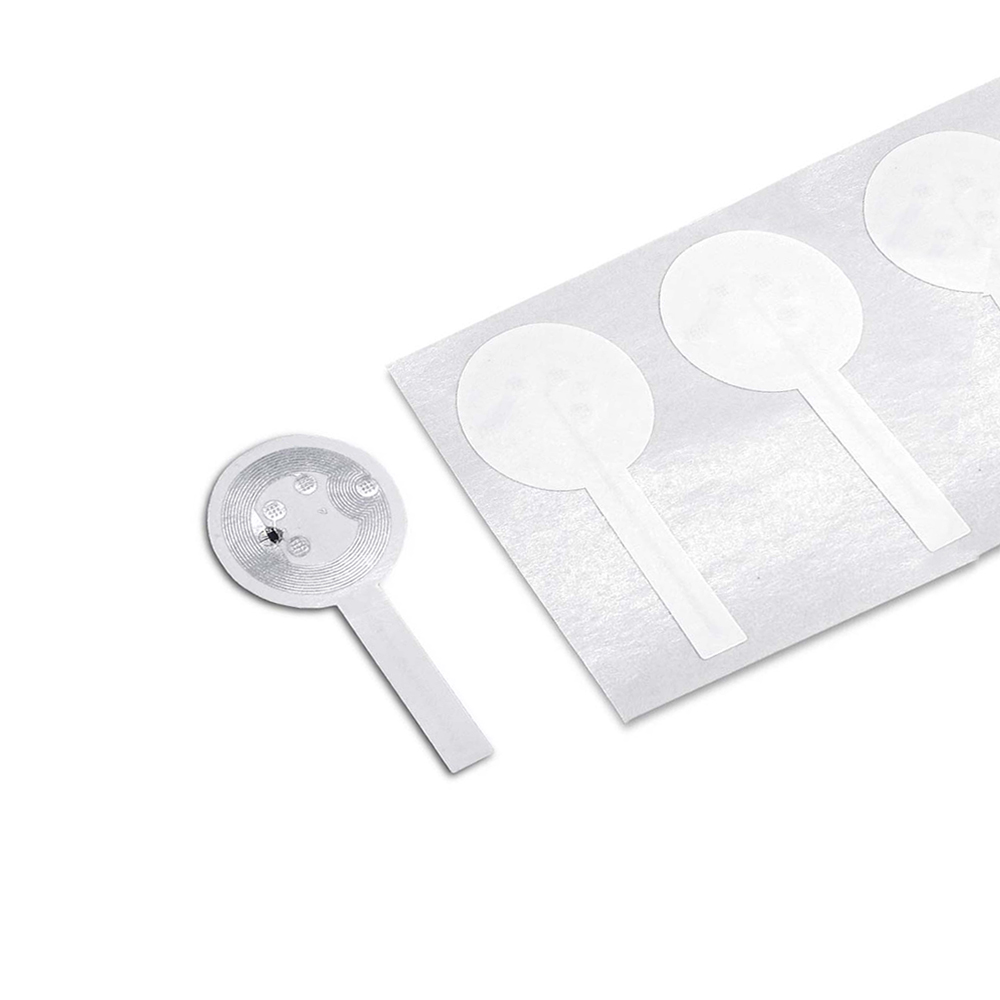
- Bridge-antenna NTAG 424 DNA / 424 DNA TT tamper-evident seal — opening the bottle permanently breaks the antenna trace and flags 'opened' on every subsequent tap. Defeats the 'genuine duty-stamp on refilled bottle' counterfeit attack that bypasses tax-stamp verification at scale.
- Per-bottle (not per-batch) AES-128 SUN cryptographic authentication + GI-protected provenance — Scotch Whisky Regulations 2009, Cognac AOC + BNIC, Tequila NOM + CRT, Champagne AOC + CIVC, EU Regulation 2019/787 GI framework. Each scan returns 'produced within GI zone, by registered producer X, batch Y, cask Z' — not just 'genuine'.
- Public-health consumer-safety layer — counterfeit spirits frequently contain methanol / ethylene glycol / industrial alcohols; WHO tracks mass-poisoning clusters annually. Branded tap-to-verify page surfaces counterfeit warning signs + WHO methanol-poisoning hotlines for the scan region. Coexists with all government tax-stamp regimes (UK HMRC DS5, EU 92/83/EEC, Russian EGAIS) as cryptographic authenticity layer on top of fiscal-control duty stamps.
Used in these industries
Deployments where this product is referenced on our industry landing pages.


At a glance
Use these short answers to decide whether this page matches the project before moving into the detail.
Chip silicon and tamper variant
NXP NTAG 424 DNA (NT4H2421Gx): AES-128 + Secure Dynamic Messaging — per-tap unique CMAC URL, ISO/IEC 14443-4 air interface, smartphone-readable on every iPhone (iOS 14+)...
Bridge-antenna anti-refill mechanism
NFC antenna designed as a physical bridge spanning bottle cap + neck. Opening the bottle (twisting cap, foil-cutter, removing closure) permanently breaks the antenna tra...
Next step
Ready to move forward? Start your inquiry to get specific answers for this project.
Request quote and samples- Per-bottle serialisation + cryptographic SUN
-
- Each bottle gets a unique chip UID + per-tap AES-128 SUN URL with monotonic counter — replay attacks rejected.
- Per-bottle (not just per-batch) provenance: cask number, bottling date, master-blender signoff, proof, GI certification.
- Backend verification: brand validates CMAC + counter + UID-bottle binding in one round-trip; flags duplicate UIDs in geographically implausible scans.
- Brand backend or third-party authentication platform (Scantrust, Authena, Legit) hosts the verification page on the brand domain.
- Geographical Indication (GI) per-bottle provenance
-
- Scotch Whisky Regulations 2009 (SI 2009/2890): statutory GI for Scotch whisky production, labelling, age-statement claims. NFC scan returns producing distillery + appellation certification at bottling.
- Cognac AOC (Appellation d'Origine Contrôlée) + BNIC (Bureau National Interprofessionnel du Cognac): origin verification within the Cognac region.
- Tequila NOM (Norma Oficial Mexicana) + CRT (Consejo Regulador del Tequila): registered producer, blue agave content, ageing class.
- Champagne AOC + CIVC (Comité Interprofessionnel du Vin de Champagne): Champagne method + appellation.
- EU Regulation 2019/787 — definition, description, presentation, labelling of spirit drinks + GI protection framework.
- GI provenance becomes per-bottle queryable: 'produced within the GI zone, by registered producer X, batch Y, cask Z' — not just 'genuine Scotch'.
- Consumer safety + methanol mass-poisoning defense
-
- Counterfeit spirits frequently contain methanol (wood alcohol), ethylene glycol, isopropanol substituted for ethanol — WHO tracks mass-poisoning clusters every year.
- Hundreds of deaths since 2010 across Russia, India, Indonesia, Cambodia, Czech Republic; permanent blindness + organ damage in survivors.
- Consumer tap-to-verify framing as 'check before you drink' — branded page surfaces counterfeit warning signs, methanol-poisoning symptoms, regulator / WHO hotlines for the scan region.
- Forensic post-incident support: regulators query authentication backend for scan distribution by postal code, retail channel, timestamp — narrows distribution pattern in hours vs weeks of paper distributor records.
- Duty-stamp + NFC coexistence (not replacement)
-
- Government excise duty stamps (UK HMRC DS5, EU member-state under Council Directive 92/83/EEC + 92/84/EEC, Russian EGAIS, US TTB strip-stamp where applicable) certify duty paid — not authenticity.
- Tax stamps are themselves counterfeited; sophisticated operations replicate them on commercial printing equipment.
- NFC bridge-antenna sits on top of the tax stamp as the cryptographic per-bottle authenticity + tamper-evident layer.
- Most brand programmes place NFC label on cap/neck bridge so it doesn't interfere with regulator tax-stamp placement on bottle neck or main label area.
- Grey-market diversion detection
-
- Bottles produced for the European market scanning in Southeast Asian duty-free → flag.
- Duty-paid UK bottles scanning in Middle-East duty-free → flag.
- Cloud backend identifies diversion patterns by geo-IP + scan-cluster analysis.
- Brand owners gain jurisdictional visibility that paper distributor documentation cannot deliver — protects authorised distributor channels + recovers excise tax revenue.
- Consumer engagement post-verification
-
- Provenance story: distillery / vineyard, master-blender signoff, cask history, vintage characteristics.
- Tasting notes: nose, palate, finish; food pairings; cocktail recipes specific to the expression.
- Brand loyalty: account registration, tasting-event invitations, exclusive bottlings access.
- Repeat-purchase support: retailer locator, online ordering, age-restricted age-gate at first tap.
- Travel-retail and duty-free accommodation
-
- Branded mobile page auto-localises by phone locale — authentication status + provenance content in traveller's native language.
- Premium positioning at travel-retail counters (high counterfeit incidence) — tap-to-verify before purchase confidence.
- Brand-protection economics: travel-retail counterfeit displacement equals direct full-price sell-through recovery.
- Premium-substrate label design
-
- Metallic foil, soft-touch laminate, embossed textures, hot-foil stamping — match the premium aesthetic of high-end spirits packaging.
- Bridge-antenna geometry adapted to standard cap shapes (screw-cap, cork-and-capsule, swing-top, T-cork).
- Compatible with standard bottling-line application equipment — no process change for the spirits producer.
- Procurement and integration
-
- MOQ 5,000 pieces; lead time 15-20 business days; per-tag cost USD 0.40-1.20 depending on form factor and chip variant (DNA vs DNA TT).
- AES-128 key provisioning at NXP secure facility — coordinated through Proud Tek as part of first production batch.
- Brand-side integration: backend verification API + branded verification page; typical proof-of-concept to production: 4-6 weeks for established brand.
- Compliance posture
-
- ISO/IEC 14443-4 + NFC Forum Type 4 Tag specification.
- EU Regulation 2019/787 spirit-drink GI framework alignment.
- OECD / EUIPO counterfeit trade quantification reference.
- WHO methanol-poisoning outbreak public-health framework.
- Co-existence with HMRC DS5 (UK), EU 92/83/EEC, Russian EGAIS, US TTB strip-stamp regimes.
Why spirits need cryptographic per-bottle authentication
- Counterfeit wine + spirits costs the industry USD 3B+ annually per OECD / EUIPO; counterfeits frequently contain methanol — WHO tracks mass-poisoning clusters every year.
- Premium spirits face systematic refilling: counterfeiters source discarded genuine bottles, refill with inferior product, reseal — conventional closure seals replicable on commercial printing equipment.
- Tax stamps + duty stamps certify duty paid, not authenticity; bridge-antenna NFC sits on top as cryptographic authenticity + tamper-evident layer.
Bridge-antenna NFC vs static QR vs duty stamp — anti-refill architecture
What bridge-antenna anti-refill actually defeats
- Refilled-bottle attack: defeated structurally by bridge-antenna trace break.
- Replay attack: defeated by AES-128 SUN monotonic counter.
- Cloned chip: defeated by per-chip AES-128 key provisioned at NXP secure facility (un-extractable from silicon).
- Grey-market diversion: detected by geo-IP scan-cluster analysis on the brand backend.
- Tax-stamp counterfeit: orthogonal to NFC authentication — both layers stack.
From hologram + tax stamp 1990s to bridge-antenna NFC + GI provenance default
- 1990s-2000s
Premium spirits anti-counterfeit relies on holograms + foil-stamped seals + duty stamps. Tax stamps under Council Directive 92/83/EEC + 92/84/EEC + UK HMRC DS5 establish fiscal-control framework.
- 2009
Scotch Whisky Regulations 2009 (SI 2009/2890) codify statutory GI framework for Scotch — production, labelling, age-statement claims become enforceable.
- 2014
Apple Pay launches with NFC reader; consumer-scale NFC tap normalises. NTAG family commoditises HF NFC silicon.
- 2017-2019
NXP NTAG 424 DNA + DNA TT (TagTamper) launch with AES-128 SUN + cryptographically signed tamper-loop. Premium spirits early adopters begin pilot programmes.
- 2019
EU Regulation 2019/787 — definition, description, presentation, labelling of spirit drinks + GI protection. Per-bottle GI provenance becomes regulatory expectation, not just brand convenience.
- 2022-2024
Major distilleries (Macallan, Glenmorangie, Hennessy, Patrón, Don Julio) deploy bridge-antenna NFC across premium expressions. Travel-retail + duty-free counterfeit risk drives accelerated adoption. Aura Blockchain Consortium spirits-sector pilots emerge.
- 2026 Today
Field-reference patterns drawn from premium-whisky-distillery, cognac-grand-marque, agave-tequila-DO, fine-wine-bordeaux-burgundy, and craft-spirits-distillery programmes converge on NTAG 424 DNA TT bridge-antenna seal + per-bottle serialisation + AES-128 SUN per-tap authentication + GI-protected provenance verification (Scotch Whisky Regulations 2009 / Cognac AOC + BNIC / Tequila NOM + CRT / Champagne AOC + CIVC) + co-existence with regulator tax stamps as the operator-side template.
Useful next pages
Use these linked product, guide and comparison pages to keep the next click specific and practical.
Related NFC label products
Other NFC solutions for product authentication and brand protection.
Industry & solution context
Brand-protection, luxury, EU compliance framework deep-dives.
Chip-level technical reference
Deep-dive specifications for NTAG 424 DNA + DNA TT bridge-antenna applications.
FAQ
How does the label detect if the bottle has been opened or refilled?
NFC antenna is designed as a bridge spanning the bottle cap and neck. When cap is twisted or removed, the antenna trace permanently breaks. On next NFC scan, chip either fails to respond (antenna fully broken) or responds with 'tampered/opened' status code (TT variant). Provides physical proof that bottle closure has been disturbed. The mechanism defeats the 'genuine bottle refilled with inferior product' attack that bypasses tax-stamp verification.
Can a counterfeiter clone the NFC chip?
No. NTAG 424 DNA contains factory-programmed secret cryptographic keys that generate a unique time-based digital signature with every tap. Keys cannot be extracted from chip; signature algorithm cannot be reproduced without them. Even with physical access to a genuine chip, a counterfeiter cannot produce a second chip that generates valid signatures. Replay attacks fail because each tap's URL contains a monotonically increasing counter; brand backend rejects URLs with previously-seen counter values.
Does the consumer need to download an app to verify the bottle?
No — tapping the NFC label with any NFC-enabled smartphone (iPhone XS+ iOS 14+ or Android with NFC) opens a mobile web page directly in the browser. Page displays verification status (authentic / counterfeit / opened), bottle details, GI-protected provenance, tasting notes, cocktail recipes. No app download or account creation required. Branded page auto-localises by phone locale for travel-retail / duty-free.
Can NFC authentication coexist with government-mandated tax stamps or duty stamps?
Yes — two layers solve different problems and are complementary. Government duty stamps (HMRC UK DS5, EU member-state under 92/83/EEC, Russian EGAIS, US TTB strip-stamps where applicable) attest excise duty paid — they're a fiscal control, not authenticity guarantee, and themselves counterfeited by sophisticated operations. NFC authentication label sits on top as cryptographic bottle-level authenticity layer with tamper-evident opening detection. Most brand programmes place NFC on cap/neck bridge so it doesn't interfere with regulator tax-stamp placement on bottle neck or main label area.
How does per-bottle serialisation help with age-stated whisky and rare-expression counterfeiting?
Age-stated whisky (18, 25, 30-year), vintage cognac, rare limited-release expressions carry the highest counterfeit premium globally — a 25-year single malt commands 10-30× retail price of standard expression. Per-bottle NFC serialisation records cask number, bottling date, master-blender signoff, proof, and (for GI-protected spirits) producing distillery's appellation certification at bottling. On consumer tap, backend verifies bottle serial against master-bottling database and displays full per-bottle provenance. Counterfeiters cannot reuse a serial (backend flags duplicate scans in geographically implausible locations); cannot fabricate a new serial (NTAG 424 DNA AES-128 cannot be reproduced without factory-provisioned secret key). Provides authentication assurance that secondary-market collector pricing has historically relied on paper certificates of authenticity to deliver.
Does the bridge-antenna NFC label survive standard bottling-line application?
Yes — bridge-antenna geometry is adapted to standard cap shapes (screw-cap, cork-and-capsule, swing-top, T-cork) and applies on standard bottling-line equipment. No process change for the spirits producer. Premium-substrate label design (metallic foil, soft-touch laminate, embossed textures, hot-foil stamping) matches the aesthetic of high-end spirits packaging. Tag chip rated for cellar conditions across decades-aged whisky / vintage cognac (200,000 write cycles + 50-year retention per NXP datasheet).
Sources & references
Primary standards, OEM datasheets and regulatory documents cited by this article. All URLs were verified on the access date shown below.
- NXP NTAG 424 DNA product page and data sheet (NT4H2421Gx) — AES-128 SUN / SDM cryptographic authentication
Authoritative chip-level reference for AES-128 SUN, SDM, NTAG 424 DNA TT (TagTamper) bridge-antenna integration.
- NXP AN12196 — NTAG 424 DNA + TagTamper features and hints (SUN / SDM, CMAC-AES, bridge-antenna application patterns)
Application note covering SUN URL generation, SDM commands, tamper-loop implementation for bottle-cap bridge-antenna seals.
- OECD / EUIPO — Trade in Counterfeit and Pirated Goods: wine and spirits sector counterfeit-trade quantification
Authoritative reference for the >USD 3B annual counterfeit wine + spirits market estimate cited in this page.
- UK HMRC Excise Notice DS5 — UK Duty Stamps Scheme for spirits
UK statutory duty-stamp placement, integrity, and counterfeit-response procedures — coexists with NFC authentication as fiscal-control layer.
- Council Directive 92/83/EEC — harmonization of structures of excise duties on alcohol and alcoholic beverages
EU excise framework underlying member-state tax-stamp programmes; coexists with NFC authentication.
- Regulation (EU) 2019/787 — definition, description, presentation and labelling of spirit drinks; GI protection
EU GI framework for spirit drinks — Scotch / Cognac / Tequila / Champagne provenance verification standard.
Proud Tek is a Shenzhen-based RFID & NFC manufacturer supplying hotel chains, transit operators, event venues and retail brands worldwide. Every order includes free samples, RF testing and dedicated project support.
Get a Quick Quote
Tell us about your project and we'll respond within one business day. Fields marked (asterisk) are required.