
Epoxy NFC Tag
NFC Epoxy Key Tag
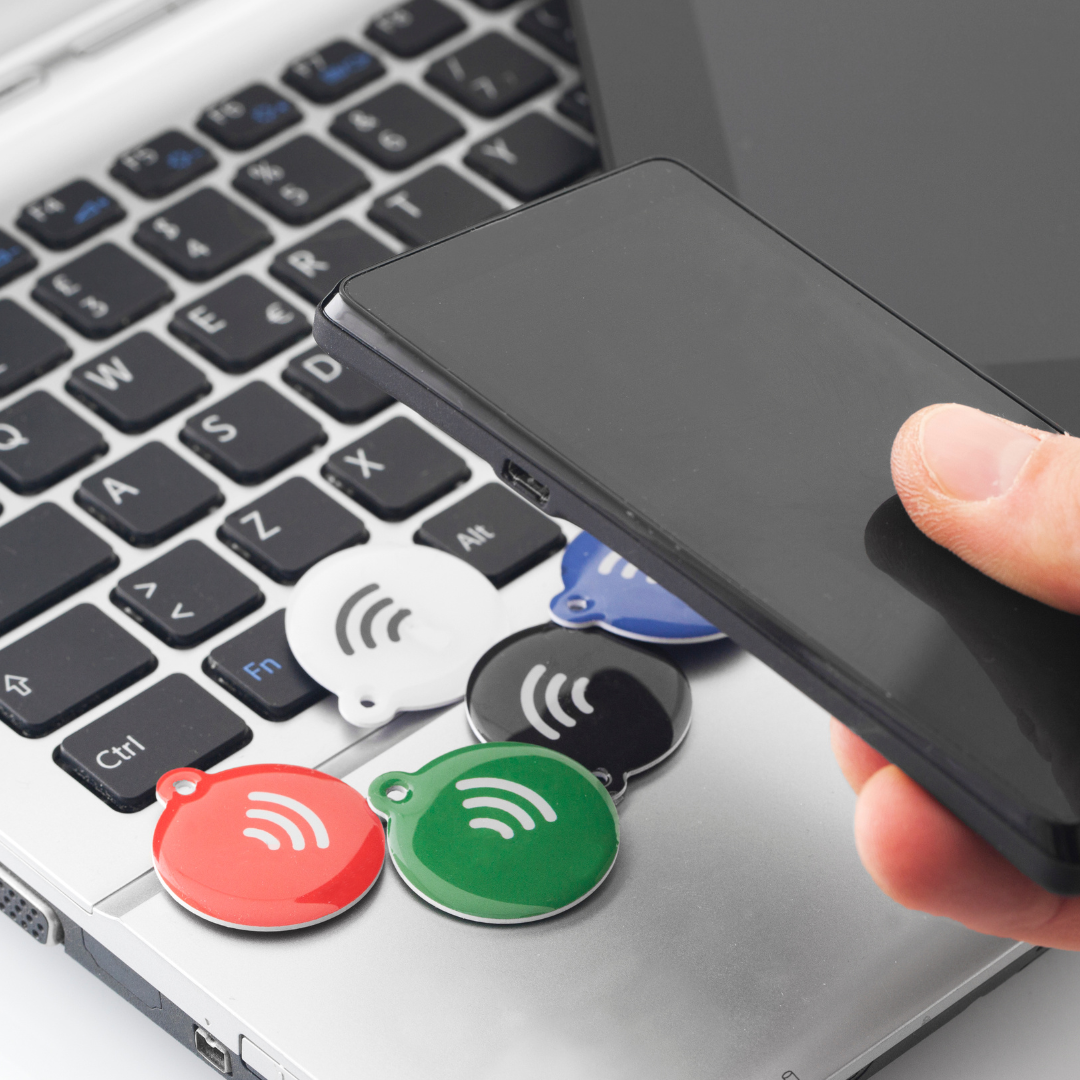
Custom Die-Cut Resin-Domed Tag

Quick answer
NFC epoxy key tags pair an NTAG 213 / 215 / 216 / 424 DNA or MIFARE DESFire EV3 HF 13.56 MHz inlay with a CMYK-printed PVC / PET face and a UV-stable clear epoxy dome, die-cut to any custom silhouette. The dome is validated against ISO 4892-2 xenon-arc weathering (1,000 h, ΔE ≤ 2) and IEC 60529 IP65 / IP67 (fully-domed variant), with a stainless-steel 316L split ring passing EN 1811 nickel release for skin-contact keychain carry. The form factor is the premium consumer-loyalty + pet-ID + NFC social-sharing NFC credential that a brand wants photographed and kept rather than discarded.
- Custom die-cut silhouette at ±0.3 mm contour tolerance with UV-stable ISO 4892-2 epoxy dome — the loyalty / pet-ID / souvenir NFC tag that members photograph, share and carry for years.
- NFC Forum Type 2 (NTAG 213 / 215 / 216) phone-tappable envelope for URL / vCard / social-handover payloads + NTAG 424 DNA SUN + MIFARE DESFire EV3 AES-128 for access-control + anti-counterfeit rollouts.
- IP65 single-dome / IP67 fully-domed per IEC 60529 with 316L stainless split ring cleared under EN 1811 nickel release — the outdoor + pool + chlorine + sweat carry envelope that indoor-only epoxy + nickel-plated rings cannot match.
Used in these industries
Deployments where this product is referenced on our industry landing pages.

At a glance
Use these short answers to decide whether this page matches the project before moving into the detail.
Form factor + die-cut envelope
Standard shapes — round Ø 30 / 35 / 40 mm, rectangular 25 × 45 mm, oval 25 × 40 mm, square 30 × 30 mm, 3-5 mm overall thickness including the self-levelling epoxy dome....
Epoxy-resin chemistry + weathering
Clear thermosetting epoxy (bisphenol-A + aliphatic-amine cure) self-levels to a 0.8-1.5 mm dome above the printed face at 23 °C cure envelope. Outdoor-rated epoxy formul...
Next step
Ready to move forward? Start your inquiry to get specific answers for this project.
Request epoxy key tag quote- Air-interface envelope
-
- 13.56 MHz HF per ISO/IEC 14443-3 (NTAG 213 / 215 / 216 / 424 DNA; MIFARE Classic 1K; MIFARE DESFire EV3; I-CODE SLIX2).
- Read range 0-30 mm at typical smartphone / POS reader tune; the epoxy dome does not attenuate the 13.56 MHz carrier — the antenna is coupled through the dielectric dome without loss.
- NFC Forum Type 2 (NTAG 213 / 215 / 216) NDEF envelope for phone-tappable URL / vCard / Wi-Fi handover; NFC Forum Type 4 Tag envelope for DESFire EV3 AES-128 session payloads.
- On-chip memory + security posture
-
- NTAG 213 — 144 bytes user memory, NFC Forum Type 2, UID read-only; the correct choice for tap-to-URL / tap-to-vCard consumer-loyalty and social-sharing payloads.
- NTAG 216 — 888 bytes user memory for larger NDEF payloads (multi-record vCard + product-passport JSON + URL); same phone-tappable posture as NTAG 213.
- NTAG 424 DNA — SUN (Secure Unique NFC) message with CMAC per NIST SP 800-38B for tap-authenticated loyalty / anti-counterfeit / ticketing; SUN URL is verified server-side before the payload is honoured.
- MIFARE Classic 1K — CRYPTO-1 cipher has been publicly broken since Garcia et al. 2008; NXP and the German BSI both recommend migration away from CRYPTO-1 for new high-value deployments; retained for drop-in parity with legacy HF reader estates only.
- MIFARE DESFire EV3 — AES-128 mutual authentication + session keys per NXP AN12343 + NXP AN10922 key-diversification, for high-security membership / cashless-loyalty rollouts.
- Ingress + mechanical durability
-
- IP65 per IEC 60529 on the single-dome variant — dust-tight, protected against low-pressure water jets, acceptable for rain / hand-wash / sweat.
- IP67 per IEC 60529 on the fully-domed variant (epoxy covers front and back) — acceptable for temporary immersion (1 m / 30 minutes).
- Drop survival — the cured epoxy dome resists typical key-ring 1-1.5 m drop on tile / concrete without cracking; chip EEPROM unaffected.
- Split-ring + attachment hardware
-
- Stainless-steel 316L split ring (Ø 25-32 mm, 50 N pull-strength) standard for fitness / pool / outdoor carry — passes EN 1811 nickel release at ≤ 0.5 µg/cm²/week and REACH Annex XVII entry 27.
- Nickel-plated split ring available on indoor-only consumer-promotional SKUs at lower unit cost; not recommended for chlorine / saltwater / sweat-heavy carry.
- Lobster-claw clasp + ball-chain + silicone lanyard alternatives — attachment hardware is de-coupled from tag SKU and is selectable per rollout.
- Consumer-loyalty + social posture
-
- Die-cut mascot / logo silhouette becomes the hero object of the loyalty programme — the tap-to-earn credential that guests photograph and share on social media as an organic brand impression.
- NTAG 424 DNA SUN URL + UID fingerprint supports tap-authenticated loyalty-points credit with per-tap counter and server-side replay protection; CMAC hash per NIST SP 800-38B.
- URL / vCard / Wi-Fi handover / Instagram / LinkedIn / TikTok NDEF records encode cleanly on NTAG 213 / 216 without re-issuing the tag — the same physical tag follows the member across campaign seasons.
- Pet-ID + outdoor-souvenir posture
-
- Pet-ID epoxy tag — bone / paw / heart silhouette, fully-domed IP67 for outdoor + pool + hose-wash; owner-contact URL or ICE vCard encoded on NTAG 216 memory slot.
- Resort / theme-park / national-park souvenir tag — die-cut mascot silhouette with NTAG 213 URL to the park website or digital trail map; printed limited-edition serial number on the PVC face.
- Outdoor-rated epoxy + 316L split ring is mandatory for pet-collar and outdoor-souvenir rollouts — indoor-default epoxy yellows inside 6 months of daily sun exposure.
- Access-control + membership posture
-
- MIFARE DESFire EV3 epoxy key tag for boutique fitness / co-working / members-club access-control credentials — AES-128 mutual authentication into Wiegand 34 / OSDP v2.2 reader estates.
- Chip compatibility verified against the specific reader brand + model before the artwork is frozen — buyers send the reader make / model and Proud Tek confirms the chip in writing; this step prevents the 500-piece unusable-tag outcome that happens when chip and reader are mismatched.
- Revocation at the PACS is the actual security control — revoke-on-loss happens at the head-end within seconds of the HRIS / member-management trigger, regardless of whether the physical tag is recovered.
- Regulatory + disclosure envelope
-
- RoHS 3 (EU 2015/863) + REACH SVHC screen on the epoxy resin, CMYK ink, PVC / PET face stock, adhesive layer and split-ring plating.
- FCC Part 15.225 (13.56 MHz) and ISED RSS-210 / RSS-GEN — the tag is a passive HF transponder paired with a reader that carries the FCC / ISED ID.
- California Proposition 65 declaration for the CMYK ink + epoxy resin where the tag SKU is distributed into the California consumer channel.
- EN 71-3 migration of certain elements (for consumer-facing children's novelty tag variants) and EU Toy Safety Directive 2009/48/EC — declared per SKU where the artwork targets a children's channel.
- End-of-life + disposal
-
- Epoxy resin + PVC face + NFC inlay separation is mechanical — cut the tag to expose the inlay, chip, and copper antenna for the WEEE-stream, and recycle the 316L split ring into the metal stream.
- UID / memory sanitisation per NIST SP 800-88 Rev. 1 when the tag housed a revocable membership credential — destroy the chip before disposal to close the physical-security audit.
- Halogen-free PET face stock + lead-free 316L split ring available on request for corporate CDP / Higg Index sustainability reporting.
Why epoxy-domed NFC key tags win where flat printed tags fail
- Clear cured epoxy acts as a dielectric lens over the CMYK artwork — colours look deeper and more saturated through the dome than on a flat print, turning the tag into a keepsake the member wants to carry rather than a disposable credential.
- ISO 4892-2 xenon-arc-weathered epoxy holds colour (ΔE ≤ 2) through 1,000 h accelerated UV exposure; the indoor-default grade yellows visibly at 6-12 months of pocket-and-daylight carry, so outdoor / pet / resort SKUs must specify the outdoor grade upfront.
- ±0.3 mm die-cut contour tolerance on custom silhouettes is the finish-quality bar — a 2-3 mm PVC margin visible around a logo die-cut is the defect signal that telegraphs a cheaper supplier.
- 316L stainless split ring (EN 1811 Ni-release ≤ 0.5 µg/cm²/week, REACH Annex XVII entry 27) is the default for fitness / pool / outdoor rollouts — nickel-plated split rings corrode in 2-3 months under chlorine / sweat and generate customer-service tickets.
- MOQ tiers — 500-piece on standard round / rectangular / oval (no tooling fee); 1,000-piece on custom die-cut silhouettes (one-time tooling fee) — keeps boutique-venue pilot rollouts in reach without compromising the premium finish.
Chip-family + artwork layer — picking what goes under the dome
Flat PVC card / printed badge + nickel-plated ring
- PVC face scratches and fades inside 6-12 months of keychain carry; the artwork is no longer photograph-worthy and the tag gets discarded.
- Nickel-plated split ring corrodes in 2-3 months under chlorine / sweat / saltwater; customer-service tickets ask for replacements.
- No IP rating on a laminated PVC card — water / sweat / lanyard wear degrade NFC reads over 6-12 months.
- Die-cut contour mismatch (2-3 mm PVC margin around a logo) telegraphs a cheap supplier and undermines the premium programme feel.
NFC epoxy key tag + 316L stainless ring
- ISO 4892-2-weathered epoxy holds colour and gloss for the 3-5 year life of the programme; members photograph and share the tag as an organic brand impression.
- 316L stainless split ring cleared under EN 1811 nickel release + REACH Annex XVII entry 27 — no corrosion under chlorine / sweat / saltwater carry.
- IP65 / IP67 per IEC 60529 validated per SKU — the tag survives pool / locker-room / outdoor / pet-collar carry.
- ±0.3 mm die-cut contour — the silhouette hugs the artwork cleanly and the finish quality is the programme differentiator.
- NTAG 213 (144 bytes) — entry-level tap-to-URL / tap-to-vCard consumer-loyalty / digital-business-card / social-media-handover payloads; UID read-only, phone-tappable on every iOS 13 + and Android NFC handset.
- NTAG 216 (888 bytes) — larger NDEF envelope (multi-record vCard + product-passport JSON + rich URL), same phone-tappable posture as NTAG 213, preferred for EU ESPR digital-product-passport continuation.
- NTAG 424 DNA — SUN (Secure Unique NFC) message with CMAC per NIST SP 800-38B, for tap-authenticated loyalty / anti-counterfeit / ticketing where replay protection + server-side verification matter.
- MIFARE DESFire EV3 — AES-128 mutual authentication + session keys per NXP AN12343 + NXP AN10922 key-diversification, for boutique fitness / co-working / members-club access-control credentials.
- MIFARE Classic 1K — retained only for drop-in parity with legacy HF reader estates; CRYPTO-1 is publicly broken (Garcia 2008) and the NXP + BSI migration guidance is explicit, so new-build rollouts should skip straight to DESFire EV3 or NTAG 424 DNA.
- Artwork layer — CMYK digital print on PVC 76 µ / PET 125 µ face stock under the dome; UV-curable CMYK ink is standard for outdoor rollouts and resists the same ISO 4892-2 xenon-arc window as the outdoor epoxy grade.
Where NFC epoxy key tags earn their place in the catalogue
- Boutique fitness / members club — 500-1,500 branded epoxy tags per programme; MIFARE DESFire EV3 chip into Wiegand 34 / OSDP v2.2 reader; outdoor-grade epoxy + 316L ring + die-cut club-logo silhouette.
- Hospitality / resort / theme park — 5,000-50,000 souvenir tags per season; NTAG 213 URL pointing to the park mascot page or digital trail map; limited-edition serial-numbered artwork.
- Pet-ID — bone / paw / heart silhouette, fully-domed IP67 for hose-wash + rain + snow carry; owner-contact URL or ICE vCard encoded on NTAG 216; 316L ring for the collar attachment.
- Digital business card / networking — NTAG 213 / 216 SKU encoded with the member's vCard + LinkedIn + Instagram URLs; dropped into the pocket / handbag as the tap-to-share credential.
- Loyalty / cashback / tap-to-earn — NTAG 424 DNA SUN URL into the retailer's POS for server-side verified per-tap points credit; CMAC replay protection per NIST SP 800-38B.
- Brand merchandise / corporate-gift / trade-show giveaway — die-cut mascot silhouette becomes the hero giveaway item; NDEF URL pre-programmed to the landing page with UTM tracking.
How to roll out an NFC epoxy key tag programme without finish-quality surprises
- Week 1 — silhouette + chip freeze
Finalise die-cut silhouette (standard round / rectangular / oval, or custom logo / mascot outline with one-time tooling fee), CMYK artwork, chip family (NTAG 213 / 216 / 424 DNA / DESFire EV3), and epoxy grade (indoor-default vs ISO 4892-2 outdoor). Confirm reader brand + model against the chip compatibility matrix in writing.
- Weeks 2-3 — physical sample + NDEF payload validation
Produce 5-10 physical samples across the chosen chip + epoxy + die-cut envelope; validate NDEF / DESFire AES authentication on the reader make + model; tap-test on iOS 13 + / Android handsets; approve the contour tolerance against the artwork.
- Weeks 4-6 — production run + finish-quality audit
Run the 500-50,000-piece production batch; audit 1 % QC sample against die-cut contour (±0.3 mm), dome optical clarity, ring-attachment pull (50 N), NFC read-rate (100 % UID + 99.5 %+ NDEF); reject any batch that fails the finish-quality bar.
- Weeks 7-8 — encoding + logistics
Stand up the encoding bench tied to the loyalty / PACS / member-management endpoint; pre-encode NDEF URL / SUN / AES-128 session credentials; polybag + retail-packaging per rollout channel; ship to the venue / brand warehouse.
- Month 3+ — audit cadence + sustainability reporting
Programme references draw from boutique-fitness, hospitality-loyalty, pet-ID, digital-business-card, tap-to-earn-loyalty and brand-merchandise NFC-epoxy-key-tag estates, with periodic compliance reviews, refresh-cycle planning and supplier-onboarding gates customised per vertical. wire issue / revoke / replace events into the member-management audit log; layer RoHS 3 + REACH SVHC + California Prop 65 + EN 1811 evidence into the CDP / Higg Index reporting feed.
- Freeze the die-cut silhouette + CMYK artwork + chip family before tooling — a logo die-cut with ±0.3 mm tolerance must be approved from a physical sample, not only a digital proof, because the dome-to-contour geometry reads differently in resin.
- Specify outdoor-grade epoxy + UV-curable CMYK ink + 316L split ring from the start for any pet / resort / fitness / outdoor rollout — the indoor-default grade yellows inside 6-12 months of sustained daylight and the nickel-plated ring corrodes inside 2-3 months under chlorine.
- Confirm chip compatibility against the specific reader brand + model in writing before artwork is frozen — a mismatched chip on 500 finished tags is the single biggest finish-quality trap; Proud Tek cross-references the compatibility matrix against the reader make at the RFQ stage.
- Plan the NDEF payload before encoding — URL / vCard / Wi-Fi handover / loyalty-SUN can all coexist on NTAG 216 memory; NTAG 424 DNA SUN + CMAC requires server-side endpoint up before the first tag ships.
- Sustain posture — halogen-free PET face stock + 316L ring + RoHS 3 + REACH SVHC evidence pack + California Prop 65 declaration feed the programme's CDP / Higg Index / sustainability reporting envelope.
Useful next pages
Use these linked product, guide and comparison pages to keep the next click specific and practical.
Related keyfob + epoxy-form adjacents
Alternative housings for the NFC credential carrier decision.
Related chip-family + NFC payload adjacents
Chip selection and payload-envelope decision context.
Industry + solution contexts
Vertical landings that this SKU serves.
FAQ
How durable is the epoxy dome against keychain scratches and UV fading?
The outdoor-grade epoxy formulation passes ISO 4892-2 xenon-arc weathering at 1,000 h accelerated exposure with ΔE ≤ 2 colour shift and zero visible crazing or yellowing — this maps to 3-5 years of typical outdoor pocket-and-daylight carry. The cured resin resists keychain scratches (typical dome hardness > Shore D 80) and survives 1-1.5 m drop onto tile / concrete without cracking. The NFC chip inside is fully encapsulated and is not affected by mechanical or UV exposure. The indoor-default grade is acceptable for pocket carry but shifts yellow inside 6-12 months of sustained daylight — for any pet / resort / fitness / outdoor rollout, specify the outdoor grade at quote time (8-12 % unit-cost upcharge).
Can I get a completely custom die-cut shape?
Yes — a custom die-cut silhouette matching any logo, mascot, product outline or brand icon is produced at ±0.3 mm contour tolerance. Custom dies carry a one-time tooling fee and a 1,000-piece MOQ. Standard shapes (round Ø 30 / 35 / 40 mm, rectangular 25 × 45 mm, oval 25 × 40 mm, square 30 × 30 mm) are available from 500 pieces with no tooling fee. A physical sample is produced and approved before the full production run begins, eliminating the 2-3 mm PVC-margin defect that signals a cheap supplier.
What NFC chip should I specify for my rollout?
For tap-to-URL / tap-to-vCard / tap-to-social consumer-loyalty payloads — NTAG 213 (144 bytes) or NTAG 216 (888 bytes), both phone-tappable on every iOS 13 + and Android NFC handset. For tap-authenticated loyalty / anti-counterfeit / ticketing with replay protection — NTAG 424 DNA with the SUN message + CMAC per NIST SP 800-38B. For access-control membership credentials — MIFARE DESFire EV3 with AES-128 mutual authentication per NXP AN12343 + NXP AN10922 key-diversification. MIFARE Classic 1K is available for drop-in parity with legacy HF reader estates, but the CRYPTO-1 cipher has been publicly broken since Garcia et al. 2008 and both NXP and the German BSI recommend migration, so new-build rollouts should go directly to DESFire EV3 or NTAG 424 DNA. Proud Tek cross-references the chip against your specific reader brand + model in writing before the artwork is frozen.
Is the tag safe for pool, outdoor pet-collar and aquatic-fitness carry?
Specify the fully-domed IP67 variant (epoxy covers front and back) + outdoor-grade formulation + 316L stainless split ring for any chlorine / saltwater / sweat-heavy carry envelope. The standard single-dome variant is IP65 — dust-tight and protected against low-pressure water jets — and is acceptable for rain / hand-wash / sweat exposure but not continuous immersion. For continuous submersion (daily pool / aquatic-fitness / dishwasher) consider the silicone keyfob variant which reaches IP68. The 316L stainless split ring clears EN 1811 nickel release at ≤ 0.5 µg/cm²/week and REACH Annex XVII entry 27, making it safe for skin-contact keychain carry and for chlorine / saltwater exposure that destroys nickel-plated rings inside 2-3 months.
Can the same tag carry multiple NFC payloads (URL + vCard + Wi-Fi)?
Yes — NTAG 216 (888 bytes) and NTAG 424 DNA comfortably carry a multi-record NDEF envelope combining URL + vCard + Wi-Fi handover + Bluetooth pairing + text-record in a single tap. NTAG 213 (144 bytes) is limited to 1-2 short records and is better suited to a single URL or short vCard. DESFire EV3 carries application-slot-separated payloads (per NXP AN10922) that are authenticated separately — the same tag can carry a high-security access-control credential in one slot and a phone-tappable loyalty URL in another, without cross-contamination. The NDEF / application-slot plan is frozen before tag production so the encoding bench can run at scale.
Sources & references
Primary standards, OEM datasheets and regulatory documents cited by this article. All URLs were verified on the access date shown below.
- ISO/IEC 14443-3 — Identification cards — Contactless integrated circuit cards — Proximity cards — Part 3: Initialization and anticollision
HF 13.56 MHz air-interface reference for NTAG + MIFARE + DESFire epoxy-tag operation.
- NFC Forum Type 2 Tag Technical Specification
NDEF envelope for NTAG 213 / 215 / 216 phone-tappable URL + vCard + social-handover payloads.
- ISO 4892-2 — Plastics — Methods of exposure to laboratory light sources — Part 2: Xenon-arc lamps
Accelerated UV weathering protocol underlying the 1,000 h ΔE ≤ 2 outdoor-grade epoxy validation.
- IEC 60529 — Degrees of protection provided by enclosures (IP Code)
IP65 / IP67 ingress rating reference for the single-dome and fully-domed epoxy variants.
- EN 1811 — Reference test method for release of nickel from items intended to come into direct and prolonged contact with the skin
Nickel-release test framework at the ≤ 0.5 µg/cm²/week threshold used to qualify the 316L stainless split ring.
Proud Tek is a Shenzhen-based RFID & NFC manufacturer supplying hotel chains, transit operators, event venues and retail brands worldwide. Every order includes free samples, RF testing and dedicated project support.
Get a Quick Quote
Tell us about your project and we'll respond within one business day. Fields marked (asterisk) are required.