
Dual-Frequency Access Credential
Dual-Frequency RFID Cards
LF + HF / HF + UHF

Quick answer
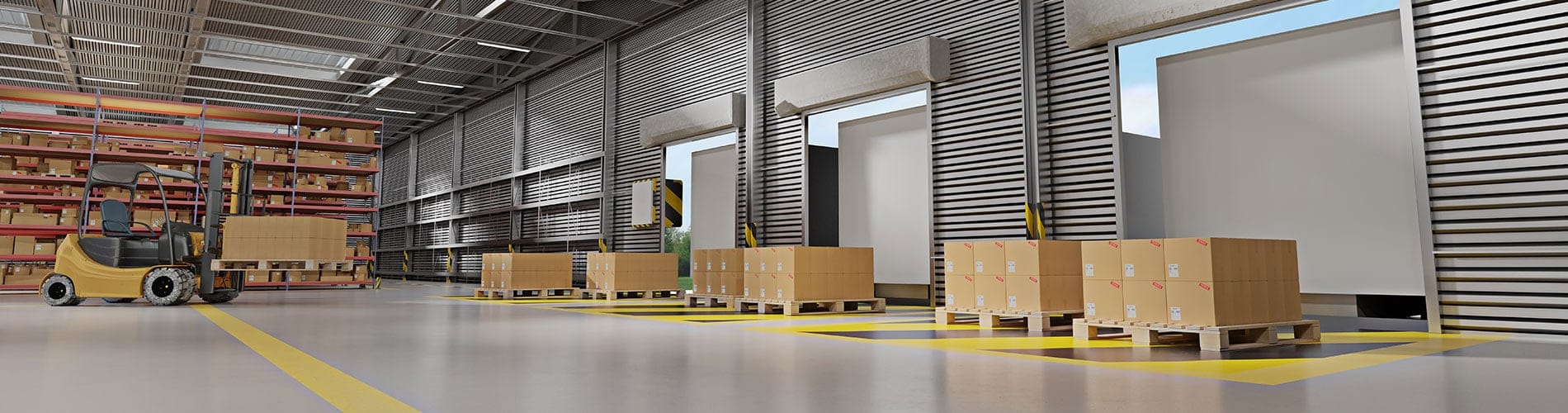
A dual-frequency RFID card embeds two electrically independent RFID inlays — tuned to different bands. Inside one ISO/IEC 7810 ID-1 card body. The common pairings are LF 125 kHz (EM4100 / EM4200 / T5577 / HID Prox) + HF 13.56 MHz (MIFARE Classic 1K/4K, DESFire EV3, NTAG21x), or HF 13.56 MHz + UHF 860-960 MHz (Impinj Monza R6/R6-P, NXP UCODE 8/9, EPC Gen2 / ISO/IEC 18000-63). One card opens a legacy 125 kHz door in the old wing, taps a MIFARE turnstile in the renovated wing, and is read at 5-8 m through a UHF portal at the warehouse dock or garage gate — no second badge, no dual-lanyard, no parallel issuance programme. For integrators running 12-36 month access-control migrations, this is the chip-pairing + antenna-isolation + UID-manifest + ACS-import reference.
- Two electrically independent RFID inlays in one ISO/IEC 7810 ID-1 card body — LF 125 kHz + HF 13.56 MHz (the access-migration pairing), or HF + UHF 860-960 MHz (the converged-credential pairing for physical access + vehicle gate / portal reads).
- Chip pairings shipped from stock: EM4100 / T5577 / HID Prox on the LF side; MIFARE Classic 1K / DESFire EV3 / NTAG216 / HID iCLASS SE on the HF side; Impinj Monza R6-P / NXP UCODE 8 on the UHF side — covering the vast majority of installed reader estates worldwide.
- UID-correlation CSV manifest + 100% dual-frequency read verification + factory pre-encoding for ACS platforms (HID ProWatch, Lenel, Genetec, C•CURE, Pro-Watch, Gallagher) — 1,000-card deployments commission in <2 hours instead of 1-2 days.
Used in these industries
Deployments where this product is referenced on our industry landing pages.



At a glance
Use these short answers to decide whether this page matches the project before moving into the detail.
Frequency pairings supported
LF 125 kHz + HF 13.56 MHz — the dominant pairing, covering the vast majority of legacy-to-modern access-control migrations. HF 13.56 MHz + UHF 860-960 MHz — the converge...
Chip combinations shipped from Proud Tek
EM4100 (read-only 64-bit) + MIFARE Classic 1K — budget migration; the most requested LF+HF combo. T5577 (rewritable LF emulator) + MIFARE Classic 1K / DESFire EV3 — when...
Next step
Ready to move forward? Start your inquiry to get specific answers for this project.
Request dual-frequency card quote- Air-interface standards
-
- LF 125 kHz: ISO/IEC 18000-2 (for EM / HID Prox-style protocols); read distance 3-10 cm at the reader.
- HF 13.56 MHz: ISO/IEC 14443 Type A (MIFARE family) or ISO/IEC 15693 for selected vicinity cards; read distance 3-8 cm.
- UHF 860-960 MHz: ISO/IEC 18000-63 / EPC Gen2v2; read distance 2-8 m with windshield or portal deployment.
- Antenna architecture and isolation
-
- Each inlay carries its own antenna: an LF copper coil (many turns, low frequency) on one layer and an HF etched-aluminium antenna on another, separated within the card body to avoid mutual coupling.
- Frequency separation between 125 kHz and 13.56 MHz is ~100× — wide enough that tuned antennas do not cross-couple in practice; verified on every production run with LF and HF bench reads.
- Card body and geometry
-
- ISO/IEC 7810 ID-1 (85.60 × 53.98 mm) with 0.84 mm thickness accommodating the dual-layer antenna stack (vs 0.76 mm for single-chip cards); still inside the ISO tolerance envelope and fits every standard card-printer holder, lanyard, wallet, and encoder.
- PVC, PET, PET-G, and polycarbonate constructions available; PVC is the default, PET-G / PC where higher durability or chemical resistance is required (industrial, healthcare).
- Printing, personalisation, and finishing
-
- Full-colour CMYK offset (ISO 12647-2) for ≥1,000 orders; UV digital (600-1,200 dpi) for short runs; dye-sublimation retransfer at the issuer for variable-data photo ID.
- Signature panel, HiCo (2750 or 4000 Oe) / LoCo (300 Oe) magnetic stripe, embossing, hot foil, spot UV, hologram overlay — all compatible with the 0.84 mm dual-frequency body.
- Pre-encoding at the factory
-
- Each chip programmed independently per the issuer's access-control spec — LF facility code + card number; HF site code + credential; UHF EPC when applicable. Factory-encoded cards ship ready to issue.
- Fully compatible with front-desk / card-office encoding at the issuer when the operator prefers to keep keys on-site; the factory simply ships blank dual-frequency stock with correct chip pairing.
- UID manifest for ACS import
-
- Every order ships with a CSV mapping LF UID ↔ HF UID (↔ UHF EPC if applicable) for direct import into HID ProWatch, Lenel OnGuard / Mercury, Genetec Security Center, Software House C•CURE 9000, Honeywell Pro-Watch, or Gallagher Command Centre.
- Same-day commissioning: 1,000-card deployments with a Proud Tek manifest typically import in under 2 hours versus 1-2 days of manual UID entry from card faces.
- QC — 100% dual-frequency read verification
-
- Every card tested on both LF and HF (and UHF when applicable) reader benches before shipment; yield report in the delivery dossier.
- Eliminates the common failure mode where a mixed batch arrives with one chip dead on a subset — a scenario that only surfaces when the deployment hits the field and generates help-desk tickets.
- Programme ROI framing
-
- Dual-frequency bridging versus a two-card issuance programme typically cuts card-loss incidents 30-40% and access-related help-desk tickets 60-70% through the migration window.
- Converging physical access + vehicle identification onto one credential typically reduces per-employee credential cost 35-50% vs separate access card + windshield UHF tag.
- Migration endpoint
-
- At steady state — when the last LF reader is decommissioned — issuance transitions from dual-frequency to HF-only or UHF-only, eliminating the LF inlay cost and the 0.84 mm premium thickness.
- Proud Tek retains the chip-pairing configuration so a re-order on steady-state stock is a single SKU swap, not a re-specification exercise.
- Compliance and end-of-life
-
- Card-side standards to cite in a tender response: ISO/IEC 7810 geometry, ISO/IEC 10373-1 durability, ISO/IEC 14443 / 15693 / 18000-2 / 18000-63 air interfaces, and the relevant NXP / HID / Impinj chip data sheets for each inlay.
- End-of-life: PVC cores route to local PVC recycling; PET / PC bodies recycle cleanly into those streams; LF coil copper and HF etched aluminium are both recoverable in shred-and-separate processing.
Why dual-frequency exists — migration arithmetic and the two-card problem
- A multi-year access-control migration forces one of three choices: swap every reader in a single programme (high CAPEX, operational hit), issue two cards per employee (cardholder confusion, double stock, elevated loss), or issue a dual-frequency card (single credential, both rails simultaneously).
- Dual-frequency is the path of least friction — the card absorbs the complexity so the operational estate doesn't have to. The stock is re-specified to single-frequency only at the endpoint, once the legacy reader estate is fully decommissioned.
- For multi-site estates where different sites run different platforms (HID Prox one site, MIFARE another), dual-frequency is not a migration tool — it is the steady-state answer for as long as the platform diversity persists.
LF + HF vs HF + UHF — two pairings, two programme shapes
LF 125 kHz + HF 13.56 MHz — access-migration pairing
- Bridges legacy 125 kHz door readers (EM, HID Prox) to modern HF (MIFARE, iCLASS, DESFire)
- Chip combos: EM4100 / T5577 / HID Prox + MIFARE Classic 1K / DESFire EV3 / iCLASS SE
- Typical horizon: 12-36 months until the last LF reader is decommissioned
- HF side carries the new security posture (AES-128 on DESFire); LF side stays legacy-compatible
- Read distance: LF 3-10 cm, HF 3-8 cm — both tap-style
HF 13.56 MHz + UHF 860-960 MHz — converged-credential pairing
- Combines tap-style door access (HF) with long-range portal / vehicle / yard reads (UHF)
- Chip combos: MIFARE Classic / DESFire EV3 + Impinj Monza R6-P or NXP UCODE 8
- Typical deployment: steady-state (not transitional) — both rails persist indefinitely
- UHF side covers parking barrier, loading dock, warehouse portal, clinician location
- Read distance: HF 3-8 cm, UHF 2-8 m (windshield / portal)
Programme ROI — what the single credential is actually buying
- Help-desk $/incident: USD 15-25 per access-failure ticket; a 1,000-employee estate running 2 tickets/employee/year through migration is 2,000 tickets — a 60-70% reduction is USD 18,000-35,000 in avoided support cost per year.
- Lost-card cost: blank stock USD 0.25-0.90 + re-issuance labour USD 10-25 per card; a 30-40% drop on a portfolio of 10,000 cards is 500-800 avoided re-issuances/year.
- One card, one lanyard, one pocket — the operational saving that does not show up in a CapEx line but dominates the user experience through the transition.
From 125 kHz dominance to steady-state HF (or HF+UHF) convergence
- 1980s-1990s
125 kHz LF proximity (EM4100, HID Prox H10301) becomes the default commercial access-control credential; millions of readers ship globally and define the installed base that later migrations must bridge.
- 1994
NXP (then Philips) launches MIFARE Classic 1K at 13.56 MHz; ISO/IEC 14443 Type A is standardised around it. The HF upgrade path opens.
- 2004-2008
EPC Gen2 / ISO/IEC 18000-63 standardise UHF; Impinj Monza and NXP UCODE families mature. Supply chain and vehicle-gate use cases become viable on the same credential as the door.
- 2008
Nohl / Plötz publish the Crypto-1 break on MIFARE Classic; enterprises plan staged HF → DESFire AES-128 migrations on top of the still-pending LF → HF migrations.
- 2014-2018
HID iCLASS SE / SEOS + MIFARE DESFire EV2 ship; dual-frequency LF + HF becomes the default bridge card for corporate, government, and university estates through their 12-36 month migrations.
- 2020-2024
DESFire EV3 (AES-128) and mobile key (BLE + NFC HCE) ship; converged HF + UHF dual-frequency becomes steady-state for logistics, healthcare, and vehicle-gate programmes.
- 2026 Today
Cross-buyer reference experience on legacy-bridge, multi-site-multi-system, transit-with-access, university-legacy-migration, and hospital-dual-system programmes shows converge on dual-frequency as the issuance default through any migration window, with UID manifests imported into ACS platforms (HID ProWatch, Lenel, Genetec, C•CURE, Pro-Watch, Gallagher) for same-day commissioning.
Popular chip combinations
| LF chip (125 kHz) | HF chip (13.56 MHz) / UHF chip (860-960 MHz) | Use case |
|---|---|---|
| EM4100 | MIFARE Classic 1K | Budget LF → HF migration |
| T5577 | MIFARE Classic 1K | Flexible LF emulation + MIFARE |
| HID Prox | HID iCLASS SE / SEOS | HID ecosystem migration |
| EM4100 | MIFARE DESFire EV3 | Legacy EM + AES-128 secure upgrade |
| T5577 | NTAG216 | LF door + NFC smartphone payload |
| — | MIFARE DESFire + UHF Monza R6-P | HF tap + UHF portal / vehicle gate |
| EM4100 | UHF UCODE 8 | Legacy door + warehouse portal |
Ordering specification checklist
- Specify both chips — name the LF (or HF) chip + the HF (or UHF) chip.
- UID correlation — we provide a mapping CSV (LF UID ↔ HF UID [↔ UHF EPC]) for every card.
- Pre-encoding — both chips can be pre-programmed with access codes, facility IDs, card numbers, or EPC values.
- Printing — full-colour artwork with variable data (employee name, photo, card number, barcode); HiCo magstripe and signature panel optional.
- Testing — 100% dual-frequency read verification before shipment; yield report in the dossier.
Useful next pages
Use these linked product, guide and comparison pages to keep the next click specific and practical.
Related card products
Complementary multi-technology options and the single-chip counterparts of each pairing.
Chip-level technical reference
Deep-dive specifications and chip-family comparisons for the dual-frequency chip pairings.
FAQ
Can both chips be read simultaneously?
No — each chip only responds to its own frequency. When the card is presented to a 125 kHz reader, only the LF chip responds; at a 13.56 MHz reader only the HF chip responds; at a UHF reader only the UHF inlay responds. The rails operate independently and do not interfere — that is the point of frequency isolation.
Is the card thicker than a standard RFID card?
Slightly. Single-chip cards are 0.76 mm; dual-frequency cards are 0.84 mm due to the additional antenna layer. The 0.08 mm difference sits inside ISO/IEC 7810 tolerance and is imperceptible in normal handling. The card fits every standard holder, lanyard, wallet, and card printer without modification.
How do I link the two chip IDs in my access-control system?
Every Proud Tek dual-frequency order ships with a CSV mapping file listing LF UID, HF UID, and UHF EPC (where applicable) for every card. Import the CSV into HID ProWatch, Lenel OnGuard / Mercury, Genetec Security Center, Software House C•CURE 9000, Honeywell Pro-Watch, or Gallagher Command Centre to associate both credentials with the same cardholder. The system then recognises the user from either rail — whether they tap at an LF door, an HF turnstile, or drive through a UHF portal.
Can dual-frequency cards be printed on a standard ID card printer?
Yes. The card conforms to ISO/IEC 7810 ID-1 and works with every standard direct-to-card and retransfer printer — Evolis, Magicard, HID Fargo, Zebra, Entrust. The inlays are positioned to avoid the print-head contact zone, so full-colour photo ID printing and lamination proceed normally. The 0.84 mm thickness requires the printer card-feeder to be set to its thick-card setting but otherwise is transparent to the operator.
What is the minimum order quantity and lead time?
MOQ 500 cards for custom-printed dual-frequency with your choice of chip pairing, artwork, and encoding. Lead time is 12-18 business days from artwork approval. Sample packs of 50 cards with standard pairings (e.g. EM4100 + MIFARE Classic 1K) in plain white are available for prototyping and pilot deployments before committing to production quantities.
Sources & references
Primary standards, OEM datasheets and regulatory documents cited by this article. All URLs were verified on the access date shown below.
- ISO/IEC 18000-2 — Information technology — RFID for item management — Parameters for air interface communications below 135 kHz
Canonical LF 125 kHz air-interface standard covering EM / HID Prox-style protocols.
- ISO/IEC 14443-1..4 — Identification cards — Proximity cards
HF 13.56 MHz air-interface standard covering MIFARE Classic / DESFire / NTAG.
- ISO/IEC 18000-63 — RFID for item management — Air interface 860-960 MHz Type C (EPC Gen2)
UHF 860-960 MHz air-interface standard for Impinj Monza / NXP UCODE pairings.
- ISO/IEC 7810 — Identification cards — Physical characteristics
ID-1 form-factor geometry and thickness tolerance covering the 0.84 mm dual-frequency body.
- NXP MIFARE DESFire EV3 product data sheet
HF-side AES-128 chip used in the secure-tier dual-frequency pairings.
- NXP MIFARE Classic 1K product data sheet
HF-side baseline chip for the LF + HF migration pairing.
- Impinj Monza R6 / R6-P UHF tag chip data sheet
UHF-side chip used in the HF + UHF converged-credential pairing.
- NXP UCODE 8 / 9 UHF tag chip data sheet
Alternative UHF silicon for HF + UHF and LF + UHF pairings.
- HID Global iCLASS SE / SEOS — credential platform overview
HF-side chip for the HID-ecosystem migration pairing.
- ISO/IEC 10373-1 — Test methods for identification cards
Durability / bend / torsion test methodology applied to dual-frequency card QC.
Proud Tek is a Shenzhen-based RFID & NFC manufacturer supplying hotel chains, transit operators, event venues and retail brands worldwide. Every order includes free samples, RF testing and dedicated project support.
Get a Quick Quote
Tell us about your project and we'll respond within one business day. Fields marked (asterisk) are required.