
NFC Marketing
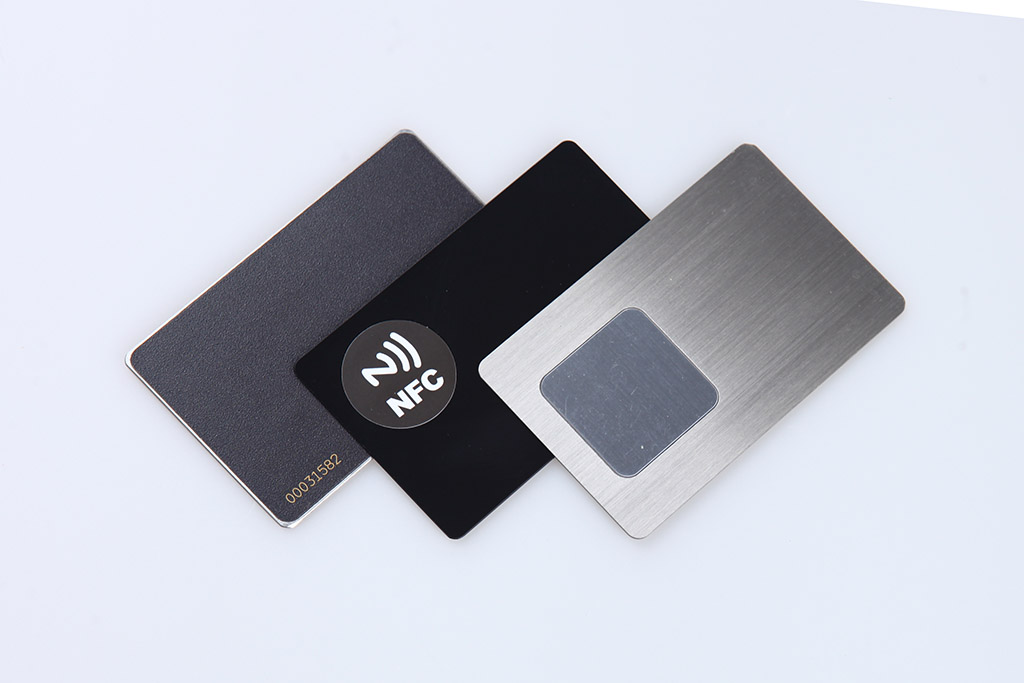
Metal NFC Cards
Premium Business Networking
Quick answer
A procurement guide to metal NFC business cards for enterprises — the card a prospect weighs in their hand instead of pocketing. Covering material options, NFC chip compatibility with metal substrates, design constraints and cost analysis for premium corporate networking programs.
- Metal NFC cards create a memorable first-contact impression that drives 3-5x higher contact save rates than paper cards.
- Ferrite shielding layers enable reliable NFC tap performance despite the metal substrate that would otherwise block RF signals.
- Per-card digital profiles can be updated after distribution, eliminating reprints when titles or contact details change.
At a glance
Use these short answers to decide whether this page matches the project before moving into the detail.
Key takeaway
Metal NFC cards create a memorable first-contact impression that drives 3-5x higher contact save rates than paper cards.
Why enterprises choose metal NFC cards
Hand someone a metal card across a conference table and watch the choreography: they pick it up, go quiet, and turn it over twice before they say anything. A paper card...
Next step
Ready to move forward? Start your inquiry to get specific answers for this project.
Request metal card samplesWhy enterprises choose metal NFC cards
Hand someone a metal card across a conference table and watch the choreography: they pick it up, go quiet, and turn it over twice before they say anything. A paper card goes into a pocket and, often, a bin by Friday — the metal one gets weighed in the hand like a poker chip. That pause is the whole pitch. In B2B sales and executive networking, the business card is often the first physical brand artifact a prospect touches. Metal cards weigh 15-20 grams compared to 4 grams for a standard PVC card, creating a tactile impression that recipients remember and keep rather than discard.

Metal cards are particularly effective for real estate, luxury brands, financial services and technology companies where brand perception directly influences deal velocity. The NFC functionality adds a digital layer. A single tap transfers a vCard, LinkedIn profile or portfolio URL to the recipient's phone, eliminating the manual entry step that causes 60-80 percent of paper business card contacts to go unrecorded.
- Recipients retain metal cards significantly longer than paper or PVC cards because of perceived value.
- NFC tap-to-save eliminates transcription errors in contact details that plague manual entry from paper cards.
- Digital profiles behind the NFC link can include video introductions, case studies and booking calendars. Content that a physical card cannot carry.
- Metal cards serve as a brand differentiator in competitive networking environments like trade shows and investor conferences.
How do metal substrate options and NFC compatibility work?
Metal blocks 13.56 MHz NFC signals. Every metal NFC card uses a ferrite isolation layer between the metal substrate and the NFC antenna to create a magnetic pathway that routes the RF energy around the metal rather than into it.
| Metal | Weight (CR80) | Finish options | NFC read range | Cost range (MOQ 200) |
|---|---|---|---|---|
| Stainless steel 304 | 18 – 22 g | Brushed, mirror, matte black PVD | 1 – 3 cm | $3.50 – $6.00 |
| Brass | 20 – 25 g | Gold-tone, antiqued, brushed | 1 – 3 cm | $4.00 – $7.00 |
| Aluminum | 8 – 12 g | Anodized colors, brushed silver | 2 – 4 cm | $2.50 – $4.50 |
| Carbon fiber composite | 6 – 10 g | Woven pattern with gloss or matte clear | 2 – 4 cm | $5.00 – $9.00 |
| Titanium | 10 – 14 g | Raw brushed, DLC black, anodized blue | 1 – 3 cm | $8.00 – $15.00 |
How do design and personalization constraints work?
Metal cards have different printing and marking limitations compared to PVC or paper. Understanding these constraints before the design phase prevents costly revisions during production.
- Laser etching is the most common marking method. It removes surface coating to reveal the base metal color. Ideal for logos, text and line art but not for photographic images.
- Silk-screen printing adds color to metal surfaces but is limited to 1-3 spot colors per card face. Full CMYK is not available on metal.
- UV digital printing on metal is possible with specialized flatbed printers but adhesion varies by alloy. Always request print adhesion samples.
- Cutout designs (die-cut windows or perforations) add visual distinction but must not intersect the NFC antenna trace area.
- Variable data (individual names, titles, QR codes) can be laser-etched per card in production runs of 50 or more.
How do NFC programming and digital profile platforms work?
The NFC chip in a metal card stores a URL that links to a digital profile. Several B2B platforms manage these profiles and provide analytics on card tap activity.
Most metal NFC card suppliers use NTAG213 chips, which store a single NDEF URI record pointing to a digital profile URL. The profile page typically includes contact details, social links, a headshot and a vCard download button. Enterprise-grade platforms add CRM integration, tap analytics and team management dashboards.
- Self-hosted profile pages give enterprises full control over branding and data privacy but require web development resources.
- SaaS platforms like Popl, Blinq and HiHello offer managed profiles with monthly per-seat pricing starting at $5-$15 per user.
- CRM sync integrations push new contacts captured via card taps directly into Salesforce, HubSpot or other CRM pipelines.
- Profile URLs should use a custom domain (card.yourcompany.com) rather than the platform's default domain for brand consistency.
Which costs less, metal NFC cards or traditional printing?
Metal NFC cards cost more per unit than paper or PVC but eliminate recurring reprint costs and deliver measurably higher contact conversion rates.
- A 200-card order of stainless steel NFC cards costs $700-$1,200 versus $40-$80 for the same quantity of premium paper cards.
- However, paper cards require reprinting with every title change, office move or rebranding. Metal NFC cards simply update the digital profile URL.
- Over a three-year period, an executive who changes roles or offices twice will spend more on three rounds of premium paper cards than on a single metal NFC card order.
- Contact capture rate is the critical ROI metric: if a $5 metal card saves 30 contacts per year versus 5 from paper, the cost per captured contact is lower with metal.
How metal NFC cards compare to V1CE, Popl, Mobilo and Linq in 2026
Most B2B buyers comparing metal NFC cards run a build-vs-buy decision against the major branded platforms. Each platform makes different tradeoffs between hardware quality, app dependence, CRM integrations, and customization depth. Understanding the live market context (including Linq's pivot away from cards in February 2026) is essential before locking in a supplier.
- V1CE — premium positioning with metal, bamboo, PVC, and 24k gold finishes. Custom engraving and full design previews. Higher price tier than budget alternatives but no recipient app required for tap-to-share. Best fit for solo executives and small premium teams who value tactile quality.
- Popl — mainstream accessibility with PVC and metal options including 24k gold. Strong app-driven editor and prism finishes. Recipients sometimes need the Popl app for advanced features. Subscription unlocks full capabilities. Strong fit for individual creators and small sales teams.
- Mobilo — enterprise-focused with native Salesforce/HubSpot integrations, real-time analytics, lead scoring, and team governance. PVC, wood, and metal finishes. Best fit for sales teams that want every tap routed into a CRM with audit trails.
- Linq — historically a strong competitor through 2024, but raised $20M in February 2026 to pivot toward AI messaging infrastructure. NFC cards linked to Linq servers carry sunset risk; SMB buyers should avoid new Linq hardware in 2026 and check existing card-server SLAs.
- White-label custom metal cards (this guide's recommendation for enterprises) — full ownership of the digital profile URL, no per-seat fees, no platform sunset risk, and the ability to use any NFC writer (NFC Tools, NXP TagWriter) to update URLs in seconds. Tradeoff: requires in-house web hosting or a static profile page.
Material-by-material reliability and care guide
The metal substrate choice cascades into NFC read distance, scratch resistance, weight, and how the card ages over 2-3 years in a wallet. Most return cases trace back to two avoidable issues: artwork that overlapped the antenna 'window', and ferrite layers that delaminated after wallet flex stress. The antenna window is the detail nobody plans for and everybody emails about afterward — keep a clear no-print zone over it, or the most beautifully machined card in the batch becomes the one that won't tap. Choose the metal first, then design around its constraints.
- Stainless steel 304 — best all-round choice for executive cards. PVD black, brushed, and mirror finishes hold up well. Antenna window must be free of laser-etched fill (etching too deep can disturb the ferrite layer). Read range stabilizes at 1-3 cm on iPhone 12+ and Pixel 6+.
- Brass — heaviest option with a warm gold-tone aesthetic. Patinas naturally over 12-24 months unless lacquered. Best for high-touch luxury verticals (real estate, private banking, jewelry). Antenna window typically requires a slightly larger cutout than steel due to brass's higher RF absorption.
- Aluminum — lightest metal at 8-12g. Anodized colors hold up well. Best read range of any metal card (2-4 cm) because aluminum is less RF-absorbent. Tradeoff: edges scratch easier and the card flexes slightly in a wallet, which can shorten antenna lifespan.
- Titanium — premium executive tier with the highest perceived value. Black DLC and brushed raw finishes are most popular. Highest cost ($8-$15 at MOQ 200) but Mobilo, V1CE, and Apple Card-style luxury positioning makes the price defensible. Pair with a no-print zone around the antenna 'window' so artwork doesn't overlap.
- Carbon fiber composite — technically not a metal but commonly grouped with premium cards. Read range matches aluminum (2-4 cm) because carbon weave is less RF-absorbent than solid metal. Best for tech, automotive, and aerospace branding. Watch for delamination at the antenna cutout edge in cards stored in hot wallets (>40°C).
Useful next pages
Use these linked product, guide and comparison pages to keep the next click specific and practical.
Metal NFC card products
Explore metal substrates, finishes and NFC chip options for premium business cards.
Related business networking products
Standard NFC cards and custom printing options for teams that need a range of card tiers.
Branded NFC card platform comparisons
Independent third-party comparisons of V1CE, Mobilo, Popl, and other branded platforms vs white-label custom metal.
FAQ
Will metal NFC cards set off metal detectors or cause issues at airports?
No. A single CR80-size metal card does not contain enough metal mass to trigger walk-through or handheld metal detectors. Cards pass through X-ray screening without issue.
Can I use a metal NFC card with a phone case on?
Yes, most standard phone cases (silicone, plastic, leather) do not block NFC signals. Very thick rugged cases or cases with built-in metal plates or magnetic mounts may reduce read range. Test with the specific case before deployment.
How do I update my contact details on a metal NFC card?
The NFC chip stores a URL, not the contact details directly. Update your information on the linked digital profile page and all future taps will display the new details without touching the physical card.
What is the minimum order quantity for custom metal NFC cards?
Most suppliers offer MOQs of 50-200 cards for metal NFC cards. Stainless steel and aluminum have lower minimums (50-100), while titanium and carbon fiber typically start at 100-200 due to material sourcing and tooling costs.
Do metal NFC cards work with both iPhone and Android?
Yes. Metal NFC cards use standard NTAG213 or NTAG215 chips that are compatible with all NFC-enabled iPhones (XS and later) and Android devices. The ferrite shielding ensures consistent read performance across both platforms.
Should we pick a SaaS platform like Mobilo or build our own profile pages?
For teams under 25 people or where lead capture into a CRM matters, SaaS (Mobilo, V1CE, Popl) is faster and gets you analytics out of the box. For 100+ seat enterprises or anyone who wants zero per-seat fees and full data ownership, white-label cards pointing to your own subdomain (card.yourcompany.com) deliver lower TCO over a 3-year horizon. The Linq pivot in February 2026 is a reminder to check vendor longevity and exit clauses before committing.
Why does my metal NFC card sometimes need a second tap on certain iPhones?
iPhone NFC antennas are at the very top edge of the device. Metal cards with a tight antenna window or thicker ferrite layer can require precise alignment with that antenna location. Two fixes: (1) specify a slightly larger antenna cutout window in production (the 'no-print zone'), and (2) train recipients to tap the top of the iPhone's back cover, not the middle. Aluminum and carbon fiber cards almost never have this issue; stainless steel and brass occasionally do.
Proud Tek is a Shenzhen-based RFID & NFC manufacturer supplying hotel chains, transit operators, event venues and retail brands worldwide. Every order includes free samples, RF testing and dedicated project support.
Get a Quick Quote
Tell us about your project and we'll respond within one business day. Fields marked (asterisk) are required.