
Nursery RFID
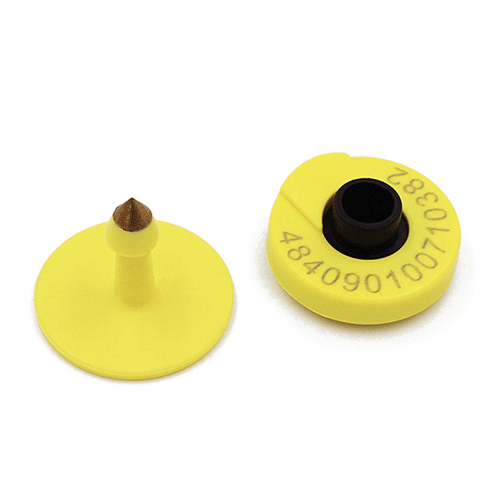
RFID Plant Nursery Label
UV-Stable 12 mo Outdoor

Quick answer
RFID plant nursery labels are passive UHF tags (ISO/IEC 18000-63 EPC Gen2v2) on UV-stabilised polypropylene + outdoor-rated acrylic adhesive that hold to 1-25 gallon pots, plug trays, flats and balled-and-burlapped field stock through 12+ months of full-sun UV, daily overhead irrigation, soil contact, fungicide / pesticide / fertiliser exposure and -20 °C to +60 °C cycling. They carry the GS1 SGTIN-96 EPC + variety code + pot size + production date + USDA APHIS PPQ phytosanitary certificate number + state Nursery Stock Certificate ID + GS1 Digital Link URI, integrate with SBI Software Growing Assistant, Advanced Nursery Systems NurseryWorks, Starcom NMS, Practical Software MyPlantShop, Linnaeus CareManager, Priva, Argus, Link4 and the EDI 856 ASN + GS1-128 SSCC stack used for Home Depot, Lowe's, Walmart and Costco wholesale shipping.
- UV-stabilised polypropylene + outdoor-rated acrylic adhesive — full-sun UV, overhead irrigation, soil splash, fertiliser / fungicide / pesticide chemistry; 12+ months outdoor service life.
- Pre-encoded EPC + variety + pot size + APHIS PPQ certificate number + state Nursery Stock Certificate ID; supports EU Plant Passport 2016/2031 + Commission Reg 2017/2313 format via GS1 Digital Link URI.
- Pallet RFID portal builds the EDI 856 Advance Ship Notice + GS1-128 SSCC label automatically — 1,000 pots in <15 min vs 4-6 h manual barcode capture for big-box retailer compliance.
Used in these industries
Deployments where this product is referenced on our industry landing pages.

At a glance
Use these short answers to decide whether this page matches the project before moving into the detail.
Substrate stack — UV, soil and chemical exposure
Top face — UV-stabilised polypropylene 100 µm with HALS (hindered amine light stabiliser) + UV absorber package; ASTM G154 cycle 1 ≥1,000 hours QUV-A. Inlay — passive UH...
Form factor variants
Pot-stake label — 25×80 mm rigid spike inserted in container substrate, visible on top of pot. Pot-wrap label — 30×100 mm flexible adhesive wrap on outside of pot; survi...
Next step
Ready to move forward? Start your inquiry to get specific answers for this project.
Request quote and samples- Chip silicon and read distance
-
- Impinj M730 — read sensitivity -22.7 dBm, default for nursery + retail mix.
- Impinj Monza R6-P — proven >5-year outdoor reliability, retail-source compatible.
- NXP UCODE 8 — robust + cost-effective for high-volume pot-stake.
- NXP UCODE 9 — highest UCODE-family sensitivity, suited for dense block reads.
- Handheld 1.5-3 m on 3-gal pot; portal 4-6 m on pallet of 1-gal pots; line-speed reader 8-12 m/min on conveyor.
- Encoding — what goes on every label
-
- GS1 SGTIN-96 EPC — GTIN-14 + serial number; serves as pot-level Item Identifier.
- User memory — variety code (botanical binomial), pot size (1-25 gal), production date, growing zone / block ID, crop-stage, wholesale price tier.
- USDA APHIS PPQ phytosanitary certificate number + state Nursery Stock Certificate ID encoded into a state-specific TID block.
- GS1 Digital Link 1.3 URI ('https://nursery.com/01/<gtin>/21/<serial>') resolves to PHIS / EU Plant Passport / consumer-tap PDP per jurisdiction.
- Lock bits + AFI byte armed per customer specification.
- USDA APHIS PPQ phytosanitary framework
-
- 7 CFR Part 319 — Foreign Quarantine Notices (international shipping).
- 7 CFR Part 301 — Domestic Quarantine Notices (interstate Sudden Oak Death, EAB, citrus greening etc.).
- 7 CFR Part 330 — Federal Plant Pest Regulations.
- PPQ phytosanitary certificate referenced per shipment-level identifier; EPC traceback narrows pest-detection scope from 'production run' to 'specific pots'.
- State plant-quarantine programmes
-
- California CDFA — Nursery Stock Certificate; Sudden Oak Death (Phytophthora ramorum) regulation.
- Florida FDACS — Nursery Stock Certificate of Quarantine Compliance; citrus greening (HLB).
- Oregon ODA, Washington WSDA — Sudden Oak Death + boxwood blight.
- New York DAM, Texas TDA, Pennsylvania PDA — emerald ash borer, spotted lanternfly.
- RFID EPC links pot to state certificate number + inspection date — instant digital verification at receiving garden centre.
- EU Plant Health Regulation 2016/2031 compliance
-
- In force 14 Dec 2019; replaces Directive 2000/29/EC.
- Risk-based Union quarantine pest list — Reg (EU) 2019/2072.
- Plant Passport mandatory for intra-EU movement of listed plants — operator registration number, botanical binomial, traceability code, country of origin.
- Commission Implementing Reg (EU) 2017/2313 specifies plant passport format; encoded as GS1 Digital Link URI for digital readability.
- EPPO Standards PM 5/8 + PM 9 series — pest-specific contingency plans referenced when shipping host plants.
- ISPM 15 wood packaging
-
- International Plant Protection Convention (FAO 2002, revised 2018).
- Pallets + crates carrying nursery stock across borders must carry HT (heat-treated) or MB (methyl-bromide) treatment mark + IPPC logo.
- RFID-tagged skids simplify USDA customs audit trail under 7 CFR 319.40.
- Pallet-level EPC associates the wood-packaging treatment mark with the nursery-stock contents.
- Horticultural ERP integration
-
- SBI Software Growing Assistant — North American wholesale nursery default.
- Advanced Nursery Systems (ANS) NurseryWorks — multi-site nursery groups.
- Starcom Technologies NMS — vertically integrated nursery + retail.
- Practical Software Solutions MyPlantShop — small-to-mid wholesale.
- Linnaeus CareManager — perennial / herb specialist nurseries.
- Standard REST / CSV API for EPC-to-SKU mapping; scanner events update location / crop-stage / order allocation in real-time.
- Greenhouse environmental controls
-
- Priva Connext / Priva Maximizer — climate, irrigation, EC/pH nutrient control.
- Argus Controls — North American greenhouse default.
- Link4 Corporation iGrow — small-to-mid greenhouse.
- Hortimax Synopta — multi-zone greenhouse + propagation.
- RFID-EPC cohort linked to environmental sensor data → variety R&D analytics on growth + flowering performance.
- Big-box retailer compliance and EDI
-
- Home Depot Vendor Compliance Program — EDI 856 ASN + GS1-128 SSCC required.
- Lowe's LowesLink — EDI 856 + 810 + 875.
- Walmart Retail Link — EDI 856 + 753/754 routing.
- Costco Vendor Onboarding — EDI 856 + UCC-128 / GS1-128.
- RFID pallet portal generates ASN automatically; rejection fees avoided.
- What this product is NOT
-
- Not a chip-level frozen-food label — adhesive Tg unsuited for blast-freezer (-40 °C); use the dedicated frozen-food label.
- Not a HF NFC consumer-tap label — UHF for inventory + portal reads; pair with NTAG21x consumer-tap label on retail-ready stake if needed.
- Not a plant-health sensor — pair with pH / EC / soil-moisture sensors at the block level.
- Not a substitute for the printed plant tag — most nurseries keep the printed tag for visual species identification + retail consumer.
Why printed plastic stakes fail and why nursery shrink stays at 5-10%
- Manual count of 100,000-plant nursery = 1-3 weeks; output stale on day 1.
- Printed plastic stakes fade in 2-3 months, illegible after rain, separated by wind — 5-15% of inventory unidentifiable at any time.
- Wrong-variety / wrong-size order errors damage wholesale relationships disproportionately to their unit cost.
Printed stake + paper traceability vs RFID-encoded plant passport
Printed plastic stake + paper APHIS / state certificate
- Stake fades in 2-3 months; reprint cost + worker-hours scale with acreage.
- Phytosanitary certificate matched manually at receiving DC — 4-6 hours/pallet.
- Pest detection downstream → recall scope = entire production run.
- EU plant passport handwritten on tag → digital readability zero.
- Big-box ASN built by hand from barcode capture; 4-6 h per pallet, frequent rejections.
RFID nursery label (UV-stable + APHIS-encoded + EU passport URI)
- EPC permanent on UV-stabilised polypropylene; survives full growing season.
- EPC ↔ APHIS PPQ certificate ↔ state Nursery Stock Cert linked in nursery ERP — instant verification.
- Pest detection → recall scope = exact pots; cost 5-10× lower.
- EU plant passport encoded as GS1 Digital Link URI; resolves operator + binomial + traceability code at scan.
- Pallet RFID portal builds EDI 856 ASN automatically; 1,000 pots in <15 min, zero rejection.
- EU Plant Passport (Reg 2017/2313 format) digitally readable via Digital Link URI is the 2024-2026 inspection trend.
- USDA APHIS phytosanitary certificate traceback is the single largest justification for nursery RFID adoption in the US.
- Big-box retailer ASN compliance is the second largest — measured in avoided rejection fees rather than internal labour.
USDA APHIS + EU 2016/2031 + ISPM 15 — the regulatory architecture this label is designed for
- California CDFA Sudden Oak Death + Florida FDACS citrus greening + Oregon/Washington boxwood blight — all enforce intra-state quarantines that RFID instantly traces back.
- EPPO Standards PM 5/8 + PM 9 — pest-specific contingency plans referenced when shipping host plants intra-EU.
- Cold-chain transit of tropicals + perennials in winter shipping — pair RFID label with Sensitech / DeltaTrak loggers at pallet level for dispute-resolution evidence.
Where RFID nursery labels earn their unit cost — the workflow inventory
- Step 1Production tagging — printer-applicator (Zebra ZE511) prints + encodes + applies as plug trays / pots leave the propagation line.
- Step 2Block inventory — handheld reader counts 1,000-2,000 plants per worker-hour; 100,000-plant nursery in 1-2 days vs 1-3 weeks manual.
- Step 3Crop-stage updates — handheld scan triggers ERP update (propagation → finishing → ready-to-ship) without paper logs.
- Step 4Wholesale order picking — handheld guides worker to growing block + confirms variety / size / pot count match the order line.
- Step 5Pallet build — RFID portal scan builds EDI 856 ASN + GS1-128 SSCC label in <15 min for 500-1,000 pots.
- Step 6Phytosanitary inspection — APHIS PPQ + state inspector scans pallet, reads certificate trail digitally.
- Step 7Cold-chain transit — pallet RFID + temperature logger (Sensitech / DeltaTrak) reconciled at receiving DC.
- Step 8Receiving (garden centre) — handheld scan auto-receives and updates POS variety + price.
From Nokia 6131 NFC to EU Plant Passport URI — milestones that shaped nursery RFID
- 1996
FAO publishes IPPC ISPM 1 — first International Standards for Phytosanitary Measures; basis for cross-border plant-stock traceability.
- 2000
EU Directive 2000/29/EC — first EU-wide framework on protective measures against plant-pest introduction.
- 2002
ISPM 15 published — wood packaging material in international trade; HT + MB treatment marking becomes mandatory.
- 2010
California Sudden Oak Death (Phytophthora ramorum) interstate quarantine triggers USDA APHIS PPQ traceback rules; nursery RFID early adopters emerge.
- 2017
Commission Implementing Reg (EU) 2017/2313 publishes Plant Passport format; sets up digital readability via GS1 Digital Link.
- 2019
EU Reg 2016/2031 in force (14 Dec); Plant Passport mandatory for intra-EU movement of listed plants.
- 2024
EU Digital Product Passport (ESPR Reg 2024/1781) extends machine-readable traceability beyond plants; nursery passport pattern proves the architecture for textiles + electronics.
- 2026 — Today
From buyer conversations across wholesale-nursery-multi-site, garden-centre-receiving-dc, big-box-retail-vendor-compliance, eu-export-plant-passport, propagation-tray-tagging and field-stock-bnb programmes.
Useful next pages
Use these linked product, guide and comparison pages to keep the next click specific and practical.
Related RFID label products
Other durable RFID labeling solutions for outdoor environments.
Chip-level technical reference
Deep-dive specifications and chip-family comparisons relevant to this SKU.
FAQ
Will the label survive outdoor nursery conditions for a full growing season?
Yes. UV-stabilised polypropylene face stock with HALS + UV-absorber package on outdoor-rated permanent acrylic adhesive (peel ≥18 N/25 mm to PE/PP/HDPE), tested to ASTM G154 cycle 1 ≥1,000 hours QUV-A and weatherometer 12+ months at +60 °C / 95% RH. Real-world service life covers full-sun exposure, daily overhead irrigation, soil splash, fertiliser / fungicide / pesticide chemistry and -20 °C to +60 °C cycling. Printed text and RFID performance remain intact through the growing season; we supply COA on UV stability and adhesive-peel testing on request.
Can the label be read when the pot is wet from irrigation?
Yes. UHF 13.56 MHz signals are minimally affected by surface water on the label face. Our nursery labels maintain reliable handheld reads at 1-3 m even when label and pot are dripping wet from overhead irrigation. Water pooling directly on the antenna reduces range by 10-20% but readings remain reliable at typical handheld scanning distances. For dense blocks where every pot is wet simultaneously, dock-door portal reads at 4-6 m on pallet build are the recommended workflow rather than handheld block sweeps during irrigation cycles.
How does RFID improve wholesale order accuracy?
Each plant's RFID tag encodes the variety code + pot size + production date + crop-stage + wholesale price tier. During order picking, the handheld reader is loaded with the order details and guides the worker to the correct growing block and pot row. As each plant is picked, the reader confirms variety and size match the order line; mismatches trigger an immediate alert preventing wrong-variety and wrong-size errors before the order leaves the nursery. At pallet build, the RFID portal scan generates the EDI 856 Advance Ship Notice with GS1-128 SSCC pallet label automatically — 1,000 pots in <15 min vs 4-6 h manual barcode capture, and ASN-rejection fees from Home Depot / Lowe's / Walmart / Costco vendor-compliance failure are eliminated.
How does RFID support USDA APHIS phytosanitary and state plant-quarantine compliance?
Each RFID EPC is unique per pot and is linked in the nursery ERP to the USDA APHIS PPQ phytosanitary certificate number, state Nursery Stock Certificate ID, inspection date, and origin greenhouse / field block. When a plant ships across state lines or internationally, the handheld scan captures the full compliance lineage without manual certificate matching. If a downstream pest detection (Phytophthora ramorum, citrus greening / HLB, boxwood blight, emerald ash borer, spotted lanternfly) triggers a recall or quarantine action, the EPC-linked records enable instant traceback to all affected shipments within minutes vs days of paper-record review. For EU-destined shipments under Plant Health Regulation 2016/2031, the same EPC encodes a GS1 Digital Link URI resolvable to the full plant passport data (operator registration number, botanical binomial, traceability code, country of origin) per Commission Implementing Reg 2017/2313.
How does RFID integrate with nursery ERP and big-box retailer EDI shipping mandates?
Our RFID nursery labels integrate with leading horticultural ERP platforms — SBI Software Growing Assistant, Advanced Nursery Systems NurseryWorks, Practical Software Solutions MyPlantShop, Starcom Technologies NMS, Linnaeus CareManager — through standard REST API or CSV import of EPC-to-SKU mappings. At pallet build-time, a handheld scan of 500-1,000 pots captures every variety, size and order-line association, then generates the EDI 856 Advance Ship Notice with GS1-128 SSCC pallet labels automatically for Home Depot Vendor Compliance, Lowe's LowesLink, Walmart Retail Link and Costco Vendor Onboarding. This eliminates 4-6 h of manual barcode capture per pallet and the rejection fees associated with ASN inaccuracies. For cold-chain transit of tropicals and perennials, RFID pot labels pair with reusable temperature loggers (Sensitech TempTale, DeltaTrak FlashLink) at pallet level, providing dispute-resolution evidence if arrival quality issues occur after multi-day transcontinental truck moves.
Sources & references
Primary standards, OEM datasheets and regulatory documents cited by this article. All URLs were verified on the access date shown below.
- USDA APHIS Plant Protection and Quarantine — 7 CFR Part 319 Foreign Quarantine Notices + 7 CFR Part 301 Domestic Quarantine Notices
Federal phytosanitary framework for interstate + international movement of nursery stock; certificate referenced per shipment-level identifier that the RFID EPC provides.
- ISPM 15 — International Standards for Phytosanitary Measures, Regulation of wood packaging material in international trade (revised 2018)
HT + MB wood-packaging treatment marking + IPPC logo; pallet-level RFID associates the wood-packaging treatment mark with nursery-stock contents.
- Regulation (EU) 2016/2031 — Protective measures against pests of plants (Plant Health Regulation)
In force 14 Dec 2019; Plant Passport mandatory for intra-EU movement of listed plants; the regulatory framework that drives EU nursery RFID.
- Commission Implementing Regulation (EU) 2017/2313 — format of the plant passport for movement within the Union
Plant Passport format spec — operator registration number, botanical binomial, traceability code, country of origin; encoded as GS1 Digital Link URI on the RFID label.
- EPPO Standards PM 5/8 and PM 9 — pest-specific contingency plans and national regulatory control systems
Pest-specific contingency plans referenced when shipping host plants intra-EU; the framework the EU plant passport supports.
- California CDFA — Nursery Stock Certificate of Quarantine Compliance + Sudden Oak Death (Phytophthora ramorum) regulation
Largest US state nursery-quarantine programme by volume; the prototype for state-level RFID-traceability verification.
- GS1 — Digital Link Standard Release 1.3
Web-resolvable URI syntax used to encode EU Plant Passport + USDA PPQ certificate trail + consumer-tap PDP from a single physical RFID label.
- AmericanHort — industry association for horticultural producers and retailers + Horticultural Research Institute
US wholesale-nursery industry standards body; co-publishes the Society of American Florists / AmericanHort Order Management practices that frame ASN + GS1-128 SSCC nursery shipping.
- Impinj M700 series RAIN RFID tag chips datasheet
M730 read sensitivity -22.7 dBm, Autopilot tuning, -40 °C to +85 °C operating envelope; default chip for nursery + retail mix UHF deployments.
- USDA NASS Census of Horticultural Specialties (most recent)
Federal census of US wholesale-nursery industry sizing; basis for the 100,000-500,000-plant typical-nursery range cited in this brief.
Proud Tek is a Shenzhen-based RFID & NFC manufacturer supplying hotel chains, transit operators, event venues and retail brands worldwide. Every order includes free samples, RF testing and dedicated project support.
Get a Quick Quote
Tell us about your project and we'll respond within one business day. Fields marked (asterisk) are required.