
Retail Source Tagging
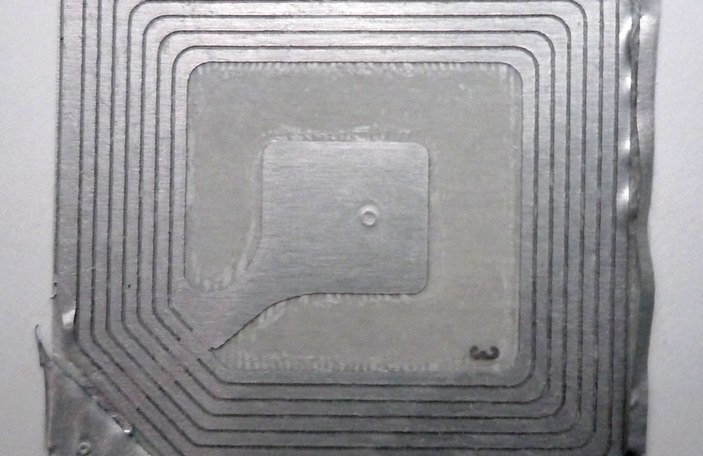
RFID Garment Source Tag
Pre-Encoded ASN-Ready

Quick answer
RFID garment source tags are factory-applied during garment manufacturing, embedding item-level RFID into every garment before it enters the supply chain. Major retailers (Walmart, Target, Macy's, Nordstrom, Nike, Inditex Zara, H&M, Kohl's) now mandate RFID source tagging from suppliers — non-compliant shipments face USD 1-5/item chargebacks or outright rejection. Pre-encoded SGTIN-96 EPC + 100% read-rate verification + EDI 856 ASN + EPCIS 2.0 JSON-LD visibility events delivered with every order. Auburn ARC Category F (folded garment) + H (high-density hanging) + M (metal-hardware proximity) certified inlays.
- Retail mandate compliance — meet RFID tagging requirements from Walmart, Target, Macy's, Nordstrom, Nike, Inditex Zara, H&M, Kohl's. First-shipment compliance 99.8%+ with pre-encoding (vs USD 50-200K chargeback exposure for first-time RFID compliers).
- Factory application — applied during garment production (sewn into care label, attached as hang tag, integrated into price ticket, or adhesive label). Multi-format SKU stocked + validated against retailer-specific compliance specs.
- SGTIN-96 encoded — each tag carries unique serialised GTIN linking physical garment to retailer inventory system. EDI 856 ASN + EPCIS 2.0 JSON-LD + GS1 Digital Link URI delivered with every order.
Used in these industries
Deployments where this product is referenced on our industry landing pages.
At a glance
Use these short answers to decide whether this page matches the project before moving into the detail.
Frequency + chip silicon
UHF 860-960 MHz RAIN per ISO/IEC 18000-63:2015 Impinj M750 (Monza R6-P) — recommended high-sensitivity
Source tag form factors
Sewn-in care label — sewn at neck or side seam during garment assembly Hang tag — cardboard hang tag with embedded RFID inlay
Next step
Ready to move forward? Start your inquiry to get specific answers for this project.
Request garment source tag quote- GS1 SGTIN-96 encoding
-
- GS1 EPC TDS 2.0 SGTIN-96 binary encoding
- Company Prefix + Indicator + Item Reference + 38-bit Serial
- Serial-range allocation per retailer specification
- 100% read-rate verification before shipment
- CSV / Excel mapping EPC ↔ serial ↔ GTIN per order
- ASN + EPCIS data delivery
-
- EDI 856 Advance Ship Notice with SGTIN list embedded
- GS1 US Implementation Guide 5010 SLN/REF segments
- EPCIS 2.0 (ISO/IEC 19987:2015) ObjectEvent JSON-LD batch
- bizStep='shipping' + disposition='in_transit'
- GS1 Digital Link URI for Sunrise 2027 2D alignment
- Auburn ARC certification
-
- Category F — folded garment on shelf
- Category H — high-density hanging garments
- Category M — metal-hardware proximity (retail rack)
- Category A-D — apparel-adjacent general scenarios
- Walmart cites F+H; Target + Macy's cite F+H combos
- Nike adds Category M for hardware-proximity DTC
- Retailer mandate compatibility
-
- Walmart — apparel + home + electronics + GMM 2022-2024
- Target — apparel + accessories + consumables 2024
- Macy's — all departments since 2019
- Nordstrom + Dillard's + JCPenney + Kohl's — apparel
- Nike — direct + wholesale RFID + Category M
- Inditex Zara + H&M Group + Uniqlo + Lululemon — internal programmes
- Read-rate + performance
-
- 1-5 m read range on fabric (handheld)
- 3-8 m read range with fixed reader
- 99%+ read-rate retailer-mandated minimum
- 99.8%+ first-shipment compliance with Proud Tek pre-encoding
- 2-3% extra tags supplied per order for field replacement
- USD 1-5/item chargeback avoided per non-compliant prevention
- Pre-encoding service workflow
-
- Buyer provides GTIN list + serial range + retailer destination
- Proud Tek encodes every tag at factory before shipment
- 100% read-rate QC + EPC-to-GTIN report
- CSV / Excel + EDI 856 stub + EPCIS 2.0 JSON-LD batch artifacts
- Encoded tags shipped ready-to-attach to garment factory
- No encoding equipment + EPC expertise required at factory
- Factory application workflow
-
- Sewn-in: needle-applied at neck or side seam during assembly
- Hang tag: plastic-fastener attach during finishing
- Adhesive: sticker-apply to hang tag / packaging at packing
- Verification scan at end of production line
- Defective-tag replacement on the spot
- Carton-pack with 100% pre-pack read confirmation
- Multi-retailer SKU management
-
- 2-3 standard tag formats serve 6-10 retailer mandates
- Retailer-specific encoding profile per buyer GTIN range
- Stocked SKUs validated against compliance specs
- Single procurement cycle for multi-retailer suppliers
- Buyer-portal access to encoding-profile management
- Standards + compliance
-
- ISO/IEC 18000-63:2015 EPC Gen2v2 RAIN RFID
- GS1 EPC TDS 2.0 SGTIN-96 + EPCIS 2.0
- GS1 Digital Link URI 1.3
- Auburn ARC Category F / H / M certification
- ANSI ASC X12 EDI 856 ASN format
- RoHS / REACH compliant materials
- Procurement
-
- MOQ 10,000 pieces (standard sewn-in / hang tag)
- Lead time 12-18 business days
- 3-4 weeks factory implementation timeline (vs 8-12 weeks self-setup)
- ARC test report + retailer-spec match at quote time
- Per-retailer encoded-data CSV + EDI 856 + EPCIS 2.0 JSON-LD
- Factory floor training + verification station setup included
Problems garment manufacturers and brands face meeting retailer RFID tagging requirements
- Non-compliant RFID shipments to Walmart, Target or Macy's are subject to chargeback penalties of USD 1-5 per non-compliant item or outright shipment rejection. A supplier with a 100,000-unit order facing rejection loses the entire seasonal revenue opportunity with no time to recover before shelf-set dates.
- Factory-level RFID encoding requires GS1 SGTIN-96 serialisation linked to the retailer's item master database. Suppliers without encoding expertise frequently submit incorrect EPC data that fails retailer receiving scans, triggering costly re-tag operations at the retailer's DC at the supplier's expense.
- Managing retailer-specific tag format requirements (Walmart hang tag vs. Target sewn-in label vs. Macy's price ticket) across 5-10 retail customers requires maintaining multiple SKUs of RFID consumables and encoding profiles — a logistical and quality control burden that overwhelms small factory operations.
- Serial number assignment and ASN (Advance Shipping Notice) filing with RFID EPC data must happen before shipment, but factories without RFID expertise miss the data-submission deadline, causing goods to sit in the retailer's receiving dock unprocessed for 3-7 days while the system error is resolved.
- Read-rate verification — retailers require 99%+ tag read rates; a batch of 10,000 garments with 1% tag failures means 100 garments that will fail receiving scans, generating chargebacks even on otherwise compliant shipments.
How Proud Tek source tag programs ensure retail compliance from the first shipment
Self-encoding factory + manual ASN + missed serial-format spec
- Factory self-encoding: 8-12 weeks setup + USD 50-200K equipment investment
- Encoding-error chargeback exposure on first shipment: full seasonal revenue at risk
- Multi-retailer SKU complexity: 6-10 different label items + encoding profiles
- ASN data-submission missed deadline: 3-7 days dock-hold per retailer system error
- <99% read-rate batch: 100 garments fail receiving scan = chargebacks even on compliant
Proud Tek pre-encoded source tag + 100% read QC + auto-EDI 856 + EPCIS (this page)
- Pre-encoded SGTIN-96 at Proud Tek factory: 3-4 weeks implementation timeline
- 99.8%+ first-shipment compliance + 100% read-rate verification + retailer-ready docs
- 2-3 standard formats stocked + validated for 6-10 retailer mandates
- EDI 856 ASN + EPCIS 2.0 JSON-LD batch generated per order — no missed deadline
- Verification station at production line + 2-3% extra tags = zero shipment failure
- Pre-encoding service encodes every tag with the correct SGTIN-96 per your GTIN and retailer-provided serial number range before tags ship to your factory. No encoding equipment or EPC expertise required at the factory.
- Retailer-specific tag formats (hang tag, sewn-in care label, price ticket, adhesive label) are stocked and validated against the compliance specifications of Walmart, Target, Macy's, Nordstrom, Nike and Inditex, eliminating format mismatches.
- 100% read-rate verification with EPC-to-GTIN report included with every shipment. Each tag's EPC, serial number and GTIN are confirmed readable before dispatch, providing the retailer-ready compliance documentation needed at receiving.
- Factory floor training and verification station setup ensure your team can apply, scan and confirm tags correctly during production without a dedicated RFID specialist on staff.
- GS1 ASN data file (CSV or EDI 856) with all encoded EPCs is generated and provided with each order, ready for submission to the retailer's portal before shipment departs.
Per-tap data published from a Proud Tek RFID garment source tag
- EPC SGTIN-96: Company Prefix + Indicator + Item Reference + 38-bit Serial.
- EDI 856 ASN: SGTIN list in PackagingCodeIdentification MEA + SLN/REF segments.
- EPCIS 2.0 JSON-LD: ObjectEvent + bizStep='shipping' + disposition='in_transit'.
- GS1 Digital Link URI: Sunrise 2027 2D-companion label alignment.
- 100% read-rate verification: 99%+ retailer-mandated threshold guaranteed.
Retailer RFID mandates
Major retailers have moved from RFID pilots to mandates. Walmart requires RFID on all apparel, home goods and electronics from suppliers. Target mandates RFID on apparel and accessories. Macy's, Nordstrom, Nike and Inditex (Zara) all have active RFID programmes requiring source tagging from their supply base.
For garment manufacturers and brands selling to these retailers, RFID source tagging is no longer optional — it is a condition of doing business. Non-compliant shipments may be rejected, charged back or subject to vendor penalties. The source tag must be applied at the factory and encoded with the retailer-specified SGTIN data before the garment ships.
Source tag form factors
| Form factor | Application point | Removal | Best for |
|---|---|---|---|
| Sewn-in care label | Sewn into neck or side seam at garment assembly | Permanent (stays with garment) | Brands wanting lifetime RFID capability |
| Hang tag (cardboard) | Attached to garment with fastener at finishing | Removed by consumer at purchase | Most common — lowest cost, easy to apply |
| Price ticket | Printed ticket with embedded RFID inlay | Removed at POS | Retailers using price tickets |
| Adhesive label | Stuck to hang tag, packaging or garment bag | Removed or left on | Flexible application, easy retrofit |
Encoding and data requirements
- GS1 SGTIN-96 — the standard encoding format required by all major retailers. Contains the GTIN (Global Trade Item Number) and a unique serial number.
- Serial number assignment — retailers typically provide a serial number range or the supplier generates unique serials per GS1 guidelines.
- Commission and association — the SGTIN on the RFID tag must be associated with the item's barcode and ASN (Advance Shipping Notice) in the retailer's system.
- Pre-encoding at Proud Tek — provide your GTIN list and serial number ranges; we encode each tag before shipping to your factory.
- Factory encoding — alternatively, we supply blank RFID tags and encoding equipment for your factory to encode during production.
Factory implementation
- Training — we provide factory floor training on RFID tag application, encoding verification and quality control.
- Verification station — handheld or fixed reader at the end of the production line confirms every garment is tagged and encoded correctly.
- ASN integration — RFID serial numbers are included in the ASN transmitted to the retailer's WMS before shipment.
- Quality assurance — 100% tag read verification before carton packing ensures zero unreadable tags in the shipment.
- Reject handling — clear process for replacing defective tags before the garment leaves the factory.
RFID garment source tag timeline — from Walmart 2005 mandate to multi-retailer pre-encoded standard
- 2005 — Walmart RFID apparel source-tagging mandate
Walmart introduces first major-retailer RFID source-tagging mandate for apparel suppliers. Establishes industry pattern of supplier-applied RFID on garment ready at DC receipt + per-item chargeback exposure for non-compliance.
- 2010 — Auburn University RFID Lab + ARC protocol founded
Auburn University RFID Lab establishes ARC (Auburn RFID Certification) protocol — Categories F (folded garment), H (high-density hanging), M (metal-hardware proximity) become de-facto industry test standards for retailer-mandate compliance.
- 2014-2018 — UHF RAIN RFID maturity
Impinj Monza R6 + NXP UCODE 8 chips reach apparel-source-tag-compatible sensitivity + cost; ISO/IEC 18000-63:2015 EPC Gen2v2 ratified; GS1 EPC TDS 2.0 publishes SGTIN-96 binary encoding spec.
- 2018-2019 — Target + Macy's apparel RFID launch
Target launches apparel source-tagging programme; Macy's launches item-level RFID across apparel + footwear + accessories. Industry adoption tipping point + Nike + Inditex Zara internal programmes scale.
- 2020-2022 — H&M + Uniqlo + Lululemon + Kohl's adoption
Major fashion brands deploy internal RFID programmes for inventory accuracy. Auburn ARC certification becomes universal expectation for source-tag suppliers. EDI 856 ASN + RFID EPC data integration becomes standard.
- 2022-2024 — Walmart general-merch + Target consumables expansion
Walmart RFID source-tagging mandate expands beyond apparel to general merchandise + CPG (2022-2024). Target consumables (2024). Massive volume scale-up + multi-retailer SKU complexity drives pre-encoding service demand.
- 2024 — EU ESPR DPP + GS1 Sunrise 2027 alignment
EU ESPR 2024/1781 textile DPP priority category + GS1 Sunrise 2027 2-D-at-POS migration target — single SGTIN-96 + GS1 Digital Link URI doubles as DPP identifier + retailer-mandate EPC.
- 2026 — Today: RFID garment source tag standard practice
Cross-buyer reference experience on walmart-supplier-source-tagging, target-apparel-mandate, macys-item-level-rfid, nike-direct-to-consumer, inditex-internal-store-rfid, h-and-m-source-tagging programmes shows converge on Impinj M730/M750 + NXP UCODE 9 + ARC F+H+M + pre-encoded SGTIN-96 + EDI 856 + EPCIS 2.0 + Sunrise 2027 DataMatrix companion as the default architecture.
Useful next pages
Use these linked product, guide and comparison pages to keep the next click specific and practical.
Related retail RFID products
Other RFID solutions for retail.
Chip-level technical reference
Deep-dive specifications and chip-family comparisons relevant to this SKU.
FAQ
Which retailers require RFID source tagging?
As of 2025-2026, the major retailers mandating RFID from apparel suppliers include: Walmart (all apparel, home, electronics), Target (apparel, accessories), Macy's (all departments), Nordstrom (apparel), Nike (direct and wholesale), Inditex / Zara (all garments), H&M Group (phased rollout) and Kohl's (apparel). The list is growing — most major retailers have RFID programmes in some stage of deployment. Contact us for the latest mandate requirements for your specific retail partners.
Can you encode tags at your facility before shipping to our factory?
Yes. Pre-encoding is our recommended approach for factories without RFID encoding equipment. Provide your GTIN numbers and serial number assignments (or let us generate serials per GS1 rules). We encode every tag, verify 100% read rate, and ship the encoded tags to your factory ready to attach. A CSV or Excel file mapping each tag's EPC to its serial number and GTIN is included with every shipment.
What happens if a tag is defective?
Our tags have a 99.5%+ yield rate. At the factory, a verification scan at the end of the production line catches any unreadable tags. The defective tag is replaced with a new tag and re-encoded on the spot. We supply 2-3% extra tags per order to cover field replacements. The verification process takes seconds per garment and should be integrated into your existing quality control checkpoint.
Which Auburn ARC tag-performance category is required for garment source tagging — and how do I choose between Category F (folded garment), H (high-density hanging) and others?
Retailer mandates cite Auburn University RFID Lab ARC test categories to standardise tag-performance expectations. Category F tests performance on folded garments on a shelf, H tests densely packed hanging garments, M tests on metal (for retail racks with metal hardware), and A-D test general apparel-adjacent scenarios. Walmart's apparel spec typically cites Category F + H; Target and Macy's cite similar F / H combos; Nike's direct-to-consumer programme often adds Category M for hardware proximity. We publish ARC category ratings for every standard inlay + antenna combination (Impinj M730 / M750 + AD-237, AD-227, AD-661 equivalents) so buyers can spec the correct SKU against their retailer's cited category without a re-test cycle.
How does the SGTIN-96 encoding integrate with EPCIS 2.0 visibility events and retailer ASN / EDI 856 workflows?
Each source-tagged garment carries a unique SGTIN-96 EPC per GS1 TDS 2.0 (Company Prefix + Indicator + Item Reference + 38-bit Serial). The serial is published at shipment time in three coordinated data streams: (1) the retailer's ASN transmitted as EDI 856 with the SGTIN list embedded in the PackagingCodeIdentification (MEA) or SLN / REF segments per GS1 US Implementation Guide 5010; (2) an EPCIS 2.0 ObjectEvent (ISO/IEC 19987:2015) JSON-LD with bizStep='shipping' + disposition='in_transit' posted to the retailer's visibility platform; and (3) a GS1 Digital Link URI embedded in the 2D barcode companion label for Sunrise 2027 alignment. Our pre-encoding service outputs all three artifacts (CSV EPC manifest, EDI 856 stub, EPCIS 2.0 JSON-LD batch) per order, allowing factories without EDI or EPCIS expertise to meet retailer submission deadlines from first shipment.
Sources & references
Primary standards, OEM datasheets and regulatory documents cited by this article. All URLs were verified on the access date shown below.
- GS1 EPC Tag Data Standard (TDS) 2.0 — SGTIN-96 encoding
GS1 EPC TDS 2.0 SGTIN-96 — Company Prefix + Indicator + Item Reference + 38-bit Serial binary encoding for retailer-mandate-compliant source tags.
- GS1 EPCIS 2.0 (ISO/IEC 19987:2015) — supply-chain visibility events
EPCIS 2.0 ObjectEvent JSON-LD batch with bizStep='shipping' + disposition='in_transit' delivered with every Proud Tek source-tag order.
- GS1 Digital Link URI syntax — Sunrise 2027 alignment
GS1 Digital Link 1.3 URI — single AI 21 serial shared across UPC + DataMatrix + RFID encodings for Sunrise 2027 2-D-at-POS migration.
- Auburn University RFID Lab — ARC tag performance test methodology (Categories A-M)
ARC test methodology — Categories F (folded garment) / H (high-density hanging) / M (metal-hardware proximity) cited by Walmart + Target + Macy's + Nike retailer mandates.
- Walmart Supplier RFID Program — apparel mandate requirements
Walmart supplier RFID programme — apparel since 2005, expanded to general merchandise + CPG 2022-2024. Reference programme for all retailer source-tagging mandates.
- ISO/IEC 18000-63:2015 — RAIN RFID EPC Gen2v2 air-interface
UHF RAIN RFID 860-960 MHz air-interface standard — basis for Impinj Monza + NXP UCODE chip families used in garment source tags.
- ANSI ASC X12 EDI 856 Advance Ship Notice — standard retail ASN format
EDI 856 ASN — standard retail Advance Ship Notice format. SGTIN list embedded in PackagingCodeIdentification MEA + SLN/REF segments per GS1 US Implementation Guide 5010.
- RAIN Alliance — retail source-tagging industry briefs
RAIN Alliance — UHF RFID industry consortium publishing retail source-tagging briefs + best-practice guidance for retailer-mandate compliance.
- Impinj M700 series / M750 RAIN RFID tag chips
Impinj M750 (Monza R6-P) — recommended high-sensitivity option for garment source tagging. M730 + M770 alternatives for retailer-mandate compliance.
- GS1 US Implementation Guide 5010 — EDI 856 ASN with SGTIN encoding
GS1 US Implementation Guide 5010 — defines SGTIN list embedding in EDI 856 ASN PackagingCodeIdentification + SLN / REF segments. Reference for retailer-spec ASN delivery.
Proud Tek is a Shenzhen-based RFID & NFC manufacturer supplying hotel chains, transit operators, event venues and retail brands worldwide. Every order includes free samples, RF testing and dedicated project support.
Get a Quick Quote
Tell us about your project and we'll respond within one business day. Fields marked (asterisk) are required.