
Document RFID
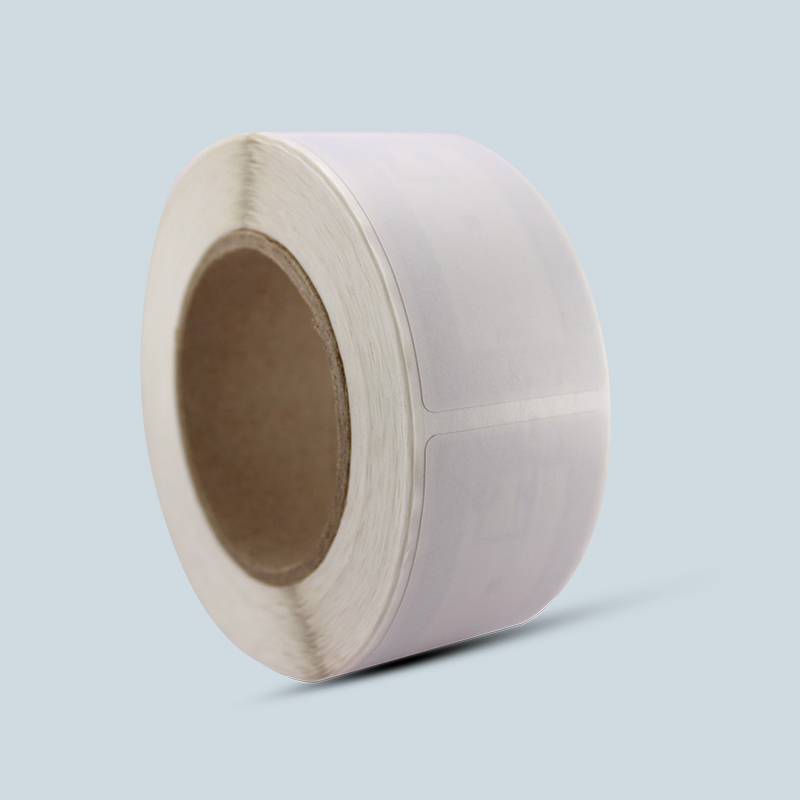
RFID Document Tracking Label
Chain-of-Custody

Quick answer
In specification terms, RFID document tracking labels carry an Impinj M730 / NXP UCODE 8 (UHF, 1-3 m room-level) or NTAG213 / ICODE SLIX2 (HF / NFC, 2-5 cm desktop) chip on a paper or synthetic face stock — attaching to file folders, legal files, medical records, contracts and archive boxes. Locates any tagged file in <60 sec via handheld audio-proximity (vs 18 min average manual search), eliminates 15-25 min/day per worker spent searching misfiled documents, automates chain-of-custody at file-room portals, completes 10,000-folder room inventory in <30 min vs 5-10 person-days. Satisfies HIPAA Security Rule 45 CFR §164.310 + FRCP Rule 37(e) ESI + SEC Rule 17a-4(f) + FINRA 4511 + NARA 36 CFR Part 1236. Integrates with iManage Work 10 + NetDocuments + Laserfiche + OpenText + SharePoint Syntex via REST API.
- Find any file in seconds — handheld RFID reader locates tagged documents on shelves, desks and filing cabinets within 1-3 m range via audio proximity guidance. <60 sec avg vs 18 min manual search.
- Automated chain of custody — RFID portals at room entries track who took what file and when it was returned. Satisfies HIPAA + FRCP + SEC 17a-4 + FINRA 4511 documentation standard.
- Bulk inventory — scan an entire 10,000-folder filing room in under 30 minutes via handheld vs 5-10 person-days of manual shelf-reading. Misfiling rate 2-4% → <0.2%.
Used in these industries
Deployments where this product is referenced on our industry landing pages.


At a glance
Use these short answers to decide whether this page matches the project before moving into the detail.
Frequency + chip silicon options
UHF 860-960 MHz — Impinj M730 / NXP UCODE 8 (room-level 1-3 m) HF / NFC 13.56 MHz — NTAG213 / ICODE SLIX2 (desktop 2-5 cm)
Form factors + sizes
70×15 mm — file tab 100×25 mm — folder spine
Next step
Ready to move forward? Start your inquiry to get specific answers for this project.
Request document tracking label quote- Substrate + adhesive
-
- Paper face stock — standard thermal-transfer / laser printable
- Synthetic PET / PP — long-life archival use (5-10+ years)
- Acrylic permanent PSA for paper folder + cardboard binder
- Removable adhesive for short-term project files
- Acid-free archival adhesive for long-term records
- Read distance + use case mapping
-
- UHF 1-3 m handheld — file-room search + walk-by inventory
- UHF portal — doorway custody tracking 4-8 antennas
- HF 2-5 cm desktop reader — deliberate check-in / check-out
- Phone NFC 2-3 cm — ad-hoc spot verification + audit
- Shelf-mount antenna option — continuous real-time location
- Search-mode performance
-
- Audio-proximity-guidance handheld reader
- <60 sec avg file-find time (vs 18 min manual search)
- 10,000-folder room: <30 min full inventory (vs 5-10 person-days)
- Misfiling rate: 2-4% → <0.2% with portal accountability
- 12-20 person-hours/week recovered per 50-person operation
- DMS platform integration
-
- iManage Work 10 (iManage Cloud + on-prem) REST API
- NetDocuments + ndOffice + NetDocuments REST
- Laserfiche Workflow + Laserfiche API
- OpenText Content Server + eDOCS
- Microsoft SharePoint + SharePoint Syntex
- Custom DMS integration via Zebra Savanna + Impinj ItemSense middleware
- Healthcare regulatory framework
-
- HIPAA Security Rule 45 CFR §164.310(d)(2) physical-access controls
- Media accountability for PHI-containing records
- Automated RFID custody log = HHS-OCR documentation standard
- Up to USD 50,000/violation HIPAA fine prevention
- Joint Commission medical-record-management standards
- Legal + discovery framework
-
- FRCP Rule 26 discovery + Rule 37(e) ESI spoliation sanctions
- Recent case law extends Rule 37(e) to physical files
- FRE 901 authentication evidentiary chain-of-custody
- Court-ordered deadline file production support
- Bates-numbered + privileged document tracking
- Financial-services + records-retention framework
-
- SEC Rule 17a-4(f) — broker-dealer records 3-6 year retention
- FINRA Rule 4511 — financial-firm records preservation
- GLBA + Sarbanes-Oxley records-retention requirements
- WORM storage of RFID log stream for preservation
- Bank-of-America-scale loan-file chain-of-custody
- Government + federal records framework
-
- NARA 36 CFR Part 1236 — electronic + paper records management
- ISO 15489-1:2016 — Records management general principles
- FOIA + Privacy Act records request fulfilment
- Classified document access logging (CONFIDENTIAL / SECRET)
- Federal court Bates-numbered + protective-order tracking
- Application verticals
-
- Law firms — client files + case folders + evidence + courthouse transit
- Healthcare — patient charts + imaging films + consent forms
- Government — classified + sensitive document access logging
- Financial services — loan files + contracts + compliance
- Human resources — employee personnel files
- Archives + records management — retention + retrieval + boxes
- Procurement
-
- MOQ 1,000 labels (paper face stock standard sizes)
- Lead time 10-15 business days
- Pre-encoded EPC + per-folder ID + DMS-mapping CSV
- Per-DMS-platform integration test report on request
- Acid-free archival adhesive option for long-term records
- RoHS / REACH compliant materials
Pain points legal, healthcare and government records teams face with manual file management
- Office workers in document-intensive industries spend 15-25 minutes per day searching for misfiled or misplaced physical documents. In a 50-person legal department, that is 750-1,250 lost productive hours every year, equivalent to USD 75,000-125,000 in billable time at USD 100/hour.
- A single misfiled medical chart or missing consent form in a healthcare setting can trigger a HIPAA compliance finding with fines up to USD 50,000 per violation. Yet manual re-shelving by busy staff produces misfiling rates of 2-4% per day.
- Law firms with active discovery obligations face sanctions and adverse rulings when physical files cannot be produced within court-ordered deadlines; manual searches through filing rooms holding 10,000+ folders can take 4-8 hours, often failing before the deadline.
- Financial services firms under audit cannot prove chain of custody for loan files and compliance documents without automated check-out / return records. Paper sign-out logs are routinely incomplete, creating regulatory findings.
- File inventory audits in records management centres containing 100,000+ folders take 5-10 person-days of manual shelf-reading — leaving inventory data immediately out of date and providing no real-time visibility into which files are missing.
How Proud Tek RFID document tracking labels solve records management challenges
Manual paper sign-out log + visual shelf search + annual person-day inventory
- 18 min avg manual file search → 15-25 min/day/worker lost productivity
- 2-4% daily misfiling rate → HIPAA compliance findings + fines
- Manual sign-out log incomplete → SEC 17a-4 + FINRA 4511 audit findings
- 5-10 person-days annual 100,000-folder shelf-read inventory
- FRCP Rule 37(e) ESI sanctions on file-production deadline failure
RFID portal custody + handheld audio-proximity search + bulk inventory (this page)
- <60 sec audio-proximity handheld file-find (vs 18 min manual)
- Misfiling 2-4% → <0.2% with portal accountability
- Automated portal log = HIPAA + SEC 17a-4 + FINRA chain-of-custody
- 10,000-folder room inventory in <30 min via handheld
- RFID portal log = FRE 901 authentication evidentiary record
- Handheld UHF RFID readers in search mode locate a specific tagged file within 15-30 seconds using audio proximity guidance — eliminating multi-minute manual shelf searches even in rooms with thousands of folders.
- RFID portal readers at file room doorways automatically log every file entering and leaving, timestamped to the second and linked to the badge of the person carrying it — creating an automated chain of custody with zero manual data entry.
- Bulk room inventory using a handheld reader covers a 10,000-folder filing room in under 30 minutes versus 5-10 person-days of manual shelf-reading, providing accurate inventory data that is actually current.
- Paper face stock on the RFID label accepts standard thermal transfer and laser printing (barcode, file reference, case number) so the label doubles as the visible file tab without any workflow change.
- HF / NFC labels for check-in / check-out at a desktop reader and UHF labels for room-level tracking are available in the same size formats, allowing a staged deployment that starts with high-risk file categories and expands facility-wide.
Per-tap data published from a Proud Tek RFID document tracking label
- EPC encoding: file ID + DMS document record reference + custody-event chain.
- Portal log: timestamp + badge ID + entry / exit direction + file ID per event.
- FRE 901 authentication: portal-tracked custody record evidentiary admissibility.
- WORM-storage log stream: SEC 17a-4(f) + FINRA 4511 preservation compliance.
- DMS integration: iManage / NetDocuments / Laserfiche / OpenText / SharePoint REST API.
The document search problem
Studies estimate that office workers spend 15-25 minutes per day searching for misfiled or misplaced physical documents. In document-intensive industries (legal, healthcare, government, finance) this adds up to hundreds of hours per employee per year. Misfiled documents also create compliance risks: HIPAA violations in healthcare, discovery failures in legal proceedings and audit findings in financial services.
RFID eliminates document search time by enabling instant file location (walk through the room with a handheld reader and it beeps louder as you approach the tagged file) and automated tracking (portals at doorways record every file entering and leaving the room).
HF vs UHF for document tracking
| Feature | HF (13.56 MHz) | UHF (860-960 MHz) |
|---|---|---|
| Read range | 2-5 cm (intentional scan) | 1-3 m (walk-by detection) |
| Bulk reading | One at a time | Hundreds simultaneously |
| Use case | Check-in / check-out at a desk reader | Room inventory, doorway tracking |
| Cost per label | $$ | $ |
| Metal filing cabinet impact | Minimal | May need tuning for metal shelving |
| Phone compatible | Yes (NFC tap) | No (requires UHF reader) |
Applications
- Law firms — track client files, case folders and evidence through offices, conference rooms and courthouses.
- Healthcare — track patient medical records (where physical charts are still used), imaging films and consent forms.
- Government — manage classified and sensitive documents with automated access logging and custody tracking.
- Financial services — track loan files, contracts, compliance documents through approval workflows.
- Human resources — manage employee personnel files with automated check-out / return tracking.
- Archives and records management — inventory archive boxes, track retrieval requests and manage retention schedules.
System components
- RFID labels — applied to each file folder, document or archive box.
- Desktop reader — check-in / check-out station at reception, mail room or file room entrance.
- Handheld reader — locate specific files on shelves; inventory shelves section-by-section.
- Portal / gate reader — installed at file room doorway for automated entry / exit tracking.
- Shelf antenna — embedded in shelving units for continuous, real-time file location (premium deployments).
- Software — document tracking application integrated with your DMS (SharePoint, OpenText, Laserfiche, etc.).
RFID document tracking timeline — from manual paper sign-out log to FRE 901 evidentiary chain-of-custody
- 1996 — HIPAA enacted
HIPAA enacted with Security Rule 45 CFR §164.310 physical-access controls + media accountability for PHI. Establishes 25+ year regulatory framework that drives healthcare document-tracking compliance demand.
- 2003 — FRCP discovery + ESI preservation framework
FRCP amendments establish discovery + ESI preservation framework. Rule 26 + Rule 37(e) sanctions for spoliation become precedent-setting for legal-firm document-management practice.
- 2010 — NARA 36 CFR Part 1236 + ISO 15489-1
NARA publishes 36 CFR Part 1236 electronic records management; ISO 15489-1 records management general principles. Federal + international records-management framework matures.
- 2014-2018 — UHF RAIN + HF/NFC ICODE SLIX maturity
Impinj M730 + NXP UCODE 8 (UHF) + NTAG213 + ICODE SLIX2 (HF) reach document-label-compatible cost + sensitivity. Dual-frequency RFID document-tracking deployment becomes commercially viable.
- 2018 — FRCP Rule 37(e) extended to physical files
Recent case law extends FRCP Rule 37(e) ESI spoliation sanctions to physical files. RFID portal-tracked custody records become evidentiary risk-mitigation tool for law firms + corporate legal.
- 2020-2022 — iManage + NetDocuments + Laserfiche REST API integration
Major DMS platforms (iManage Work 10, NetDocuments, Laserfiche, OpenText, SharePoint Syntex) publish REST APIs for RFID-edge integration. Middleware-bridge integration pattern matures (Zebra Savanna + Impinj ItemSense).
- 2022 — SEC Rule 17a-4(f) modernised + FINRA 4511
SEC modernises Rule 17a-4(f) electronic-record retention framework; FINRA 4511 financial-firm records preservation refined. WORM-storage RFID log stream becomes compliant preservation pattern.
- 2026 — Today: RFID document tracking standard records-management practice
Operating-playbook notes for law-firm-discovery, hospital-medical-records, federal-classified-tracking, financial-loan-file-custody, hr-personnel-file, archives-retention-management programmes converge on Impinj M730 / NXP UCODE 8 + NTAG213 / ICODE SLIX2 dual-frequency + iManage / NetDocuments / Laserfiche REST API + portal-event WORM storage as the default architecture.
Useful next pages
Use these linked product, guide and comparison pages to keep the next click specific and practical.
Related RFID label products
Other RFID labelling solutions.
Chip-level technical reference
Deep-dive specifications and chip-family comparisons relevant to this SKU.
FAQ
Can I print on the RFID label like a regular file label?
Yes. Our document tracking labels have a standard paper or synthetic face stock that accepts thermal transfer or laser printing. Print the file name, barcode, case number or any text directly on the label. The RFID inlay is embedded inside the label and does not affect print quality. Compatible with standard label printers (Zebra, Brady, Brother).
How do I find a specific file on the shelf?
Use a handheld UHF RFID reader in 'search' mode. Enter or scan the file ID, then walk along the shelving. The reader emits an audible beep that increases in frequency and volume as you get closer to the tagged file. Most users can locate a specific file within 15-30 seconds, even in a room with thousands of files.
Does the label work inside metal filing cabinets?
Yes, with some considerations. HF (NFC) labels work well inside metal cabinets because HF reading is intentional (you open the drawer and scan). UHF labels can be read through metal cabinets if the drawer is open, but metal attenuates UHF signals when the drawer is closed. For UHF deployments with metal cabinets, we recommend shelf-mount antennas inside the cabinet or a policy of scanning when drawers are open.
How do RFID document-tracking labels integrate with DMS platforms like iManage, NetDocuments, Laserfiche, OpenText and SharePoint?
Every leading legal and records-management DMS exposes a REST API or ODBC-style metadata hook: iManage Work 10 (iManage Cloud + on-prem), NetDocuments (ndOffice / NetDocuments REST), Laserfiche (Workflow + Laserfiche API), OpenText Content Server + eDOCS, and Microsoft SharePoint + SharePoint Syntex. The RFID middleware (Zebra Savanna, Impinj ItemSense, or a custom handler written against Alien Gateway / ATID reader SDKs) maps each EPC / UID to a DMS document record, then fires check-out / check-in / location-update events into the DMS. For legal holds, the portal-read event pattern satisfies chain-of-custody evidentiary requirements under FRE 901 authentication and FRCP 37(e) ESI preservation.
Which compliance frameworks drive RFID adoption in records management — HIPAA, FRCP, SEC Rule 17a-4, GLBA, FOIA?
HIPAA Security Rule 45 CFR §164.310(d)(2) requires physical-access controls and media accountability for PHI-containing records; automated RFID custody logs satisfy the documentation standard. FRCP Rule 26 discovery and Rule 37(e) sanctions for ESI spoliation extend to physical files under recent case law; portal-tracked custody records materially reduce sanctions exposure. SEC Rule 17a-4(f) and FINRA 4511 require financial firms to preserve books and records for 3-6 years with verifiable custody — RFID portal logs plus WORM storage of the log stream satisfy the preservation requirement. For federal records, 36 CFR Part 1236 (NARA electronic records management) increasingly extends to RFID-tracked paper holdings. We supply labels qualified for HIPAA, FRCP and SEC 17a-4 deployments and coordinate integration with established compliance-software vendors.
Sources & references
Primary standards, OEM datasheets and regulatory documents cited by this article. All URLs were verified on the access date shown below.
- HIPAA Security Rule 45 CFR §164.310 — physical safeguards
HIPAA Security Rule 45 CFR §164.310(d)(2) — physical-access controls + media accountability for PHI-containing records. Automated RFID custody logs satisfy HHS-OCR documentation standard.
- Federal Rules of Civil Procedure Rule 26 + 37(e) — ESI preservation and sanctions
FRCP Rule 26 discovery + Rule 37(e) ESI spoliation sanctions framework. Recent case law extends Rule 37(e) to physical files; portal-tracked custody records materially reduce sanctions exposure.
- SEC Rule 17a-4(f) — electronic record retention for broker-dealers
SEC Rule 17a-4(f) — broker-dealer records 3-6 year preservation. RFID portal logs + WORM storage of log stream satisfy preservation requirement. FINRA Rule 4511 parallel framework.
- NARA 36 CFR Part 1236 — electronic records management
NARA 36 CFR Part 1236 — electronic + paper records management framework. Increasingly extends to RFID-tracked paper holdings. Federal records-management standard.
- ISO/IEC 18000-63:2015 — RAIN RFID EPC Gen2v2 air-interface
UHF RAIN RFID 860-960 MHz air-interface standard — basis for Impinj M730 + NXP UCODE 8 chip families used in document tracking labels (room-level).
- ISO/IEC 15693:2018 — vicinity HF RFID for library and file tracking
ISO/IEC 15693 vicinity HF air-interface — basis for ICODE SLIX2 chip family. Library + file-tracking + desktop-reader 2-5 cm intentional-scan deployment.
- iManage Work 10 platform + REST API — legal DMS integration
iManage Work 10 (iManage Cloud + on-prem) REST API — most-deployed legal DMS for RFID document-tracking integration. Fires check-out / check-in / location-update events.
- Impinj ItemSense platform — enterprise RFID item-tracking middleware
Impinj ItemSense + Zebra Savanna — RFID middleware bridge between RFID-edge readers + DMS / CMDB / records-management platform. Maps EPC / UID to document record.
- ISO 15489-1:2016 — Records management general principles
ISO 15489-1 records management general principles — international standard for records-management systems. RFID document-tracking deployment satisfies records-quality + chain-of-custody clauses.
- FINRA Rule 4511 — financial firm records preservation
FINRA Rule 4511 — financial-firm books-and-records preservation. Parallel framework to SEC Rule 17a-4(f). RFID portal log + WORM storage compliant preservation pattern.
Proud Tek is a Shenzhen-based RFID & NFC manufacturer supplying hotel chains, transit operators, event venues and retail brands worldwide. Every order includes free samples, RF testing and dedicated project support.
Get a Quick Quote
Tell us about your project and we'll respond within one business day. Fields marked (asterisk) are required.