
Gaming NFC
NFC Gaming & Collectible Tag
NTAG215 Amiibo-Ready

Quick answer
NFC gaming and collectible tags are 13.56 MHz HF NFC Forum Type 2 chips (NTAG215 504-byte standard or NTAG 424 DNA AES-128 SUN for IP-defended SKUs) supplied as PVC cards (CR-80 0.76 mm), Ø25 mm coin epoxy discs, Ø25 mm round stickers and dry inlays for embedding in 3D-printed PLA / resin / ABS figures. They run on the same chip silicon Nintendo Amiibo uses (since 2014), drive Skylanders Imaginators / Pokemon TCG Live / Disney Infinity-style toys-to-life, and authenticate IP-defended limited-edition collectibles via NTAG 424 DNA Secure Unique NFC messages on iOS Core NFC + Android HCE. Low MOQ (200 pcs PVC, 500 pcs disc, 1,000 pcs inlay) makes them practical for indie launches, crowdfunding fulfilment and convention-debut runs.
- NTAG215 (504 B user memory) — the chip Nintendo Amiibo uses since 2014; matches Amiibo data format byte-for-byte for indie toys-to-life.
- NTAG 424 DNA AES-128 SUN — cryptographic per-tap authentication for IP-defended luxury collectibles, brand-protected releases and anti-counterfeit campaigns.
- MOQ 200 (PVC card) / 500 (epoxy disc + sticker) / 1,000 (dry inlay) and 7-12 day lead time — accessible for indie studios, crowdfunding and convention runs.
Used in these industries
Deployments where this product is referenced on our industry landing pages.


At a glance
Use these short answers to decide whether this page matches the project before moving into the detail.
Chip silicon — NTAG215 is the Amiibo default; NTAG 424 DNA the IP-defence option
NXP NTAG215 — 504 byte user memory + 7-byte UID + 32-bit PWD memory-area password (NOT AES — NTAG215 has no on-chip crypto); matches Nintendo Amiibo memory layout exactl...
Amiibo data format — what NTAG215 actually stores
540-byte structure: 7-byte UID + 14-byte Amiibo character/model ID + encrypted AppData blocks (per-game save state). Encryption: AES-128 + HMAC-SHA256; keys are the 'Ami...
Next step
Ready to move forward? Start your inquiry to get specific answers for this project.
Request NFC gaming tag quote- Toys-to-life precedents — what NFC gaming tags can do
-
- Nintendo Amiibo (2014) — flagship NTAG215 toys-to-life ecosystem; >100 figure runs, Switch / 3DS / Wii U.
- Skylanders (Activision, 2011-2017) — first major toys-to-life; SuperChargers + Imaginators NFC tower.
- Disney Infinity (2013-2016) — discontinued but technically successful; NFC base + figure-stored progression.
- LEGO Dimensions (2015-2017) — NFC toy pad + minifigure base.
- Pokemon Trading Card Game Live (2023+) — NFC-bonded physical-digital crossover via TCG Live app.
- NFL / NBA Topps Bunt — NFC trading card to digital collectible.
- IP authentication — NTAG 424 DNA SUN for the brand-protected SKU
-
- AES-128 Secure Unique NFC message regenerates a different cryptographic value on every tap.
- Server-side verification proves: (a) tag silicon is genuine NTAG 424 DNA; (b) tap is fresh, not replayed.
- Server-side ban list lets brand revoke a tag if the figure is reported stolen / fake.
- Apple iOS Core NFC + Android HCE both support SUN read in browser without app — same tap UX as NTAG215.
- Form factors and sourcing reality
-
- PVC card CR-80 (86×54 mm, 0.76 mm) — standard trading-card thickness; chip + antenna invisible by feel.
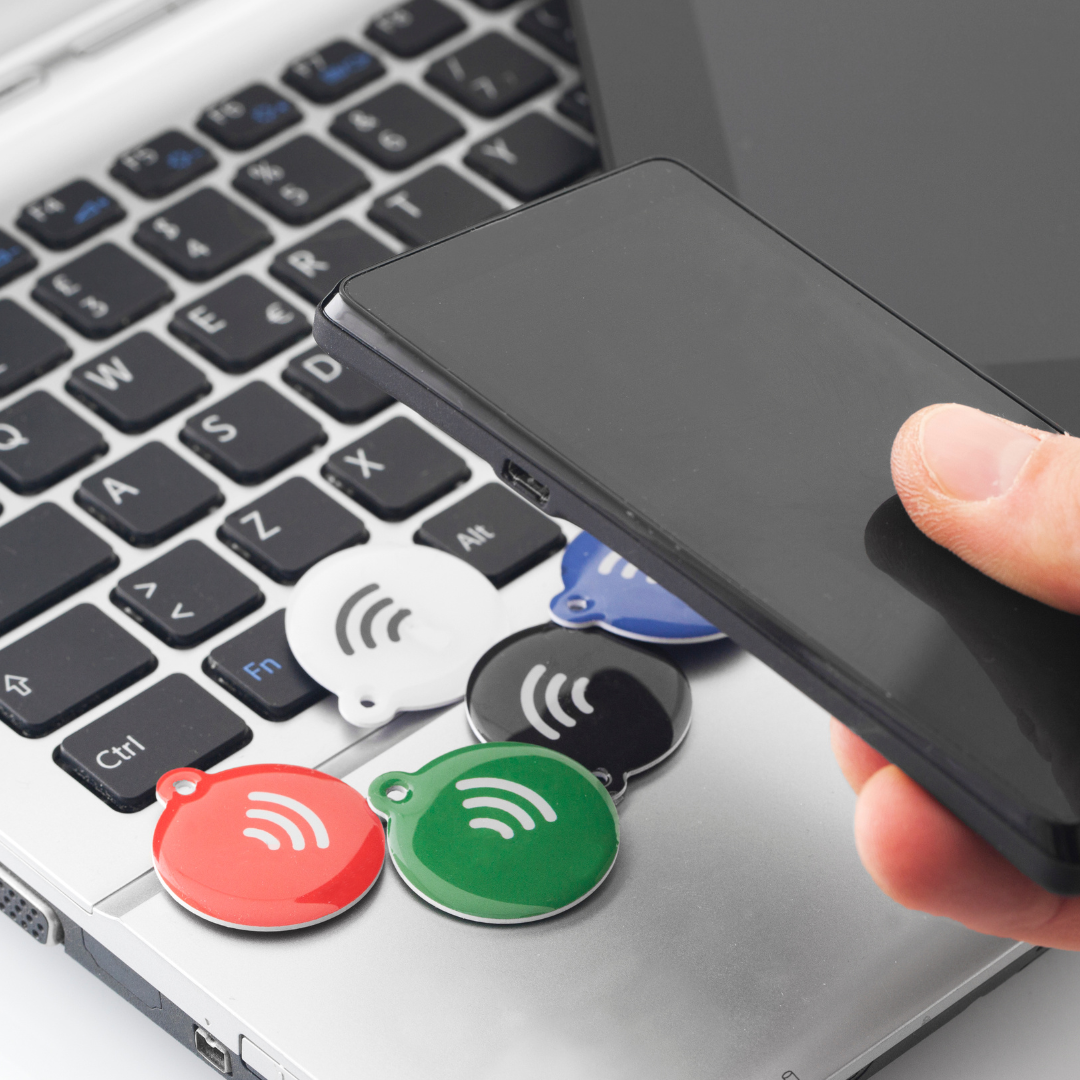
- Coin epoxy disc Ø25 mm × 2 mm — standalone token, Skylanders-style base, key-tag.
- Round sticker Ø25 mm — apply to existing figures, packaging, retail-ready stake.
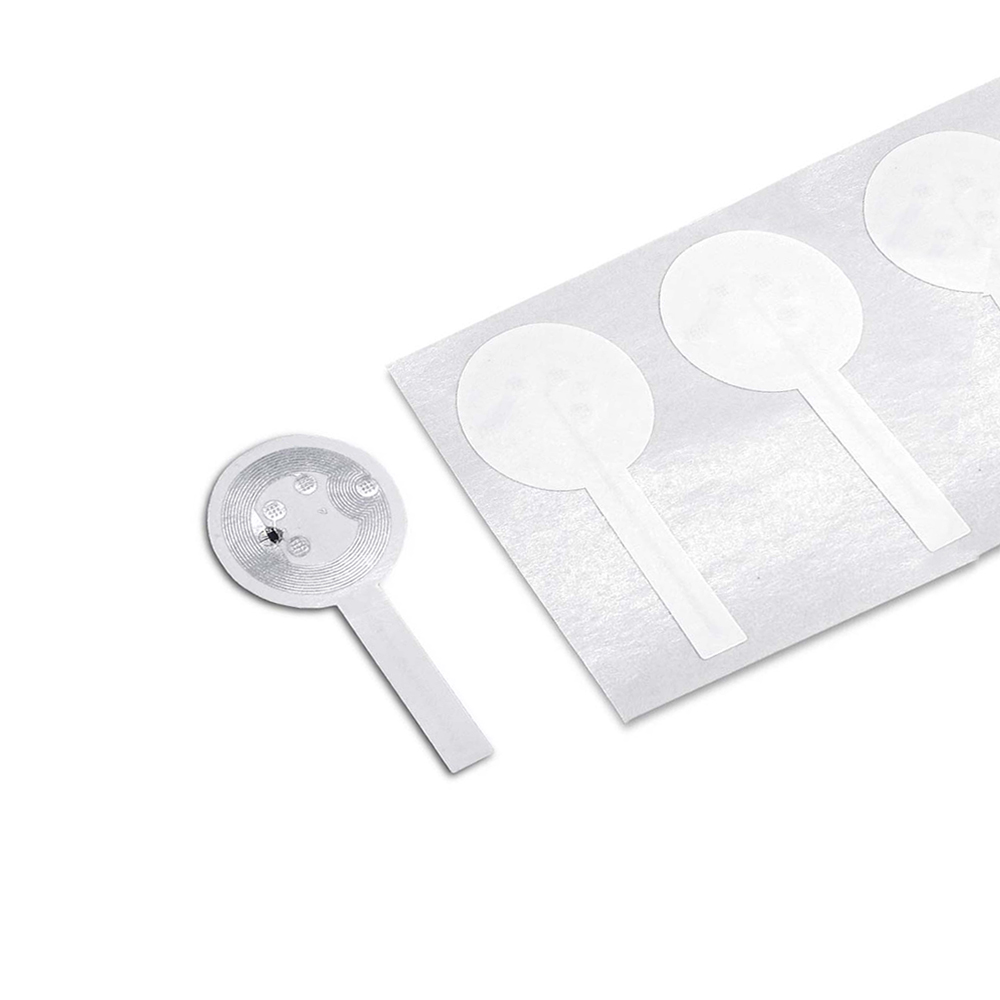
- Dry inlay 22 mm — for embedding inside 3D-printed PLA / resin / ABS figures.
- Embedding NTAG215 in 3D-printed figures
-
- Antenna face within 3-5 mm of the user-tap surface (typically the figure base).
- FDM PLA — print a recess mid-print, pause, drop in Ø22 mm dry inlay, resume; antenna ends up 2-3 mm above table surface.
- Resin casting — cast inlay inside the base during pour; antenna face toward flat bottom.
- ABS / nylon — same as PLA but watch for shrinkage; size recess +0.5 mm.
- Avoid metal-filled or mineral-filled filaments around the inlay; detunes the 13.56 MHz antenna.
- Custom card-game production
-
- Pre-encoded with game data structure (character stats, abilities, collection IDs, ban-list flags).
- Per-card design printing on either 0.76 mm PVC or 0.50 mm thin PVC for trading-card-feel.
- Companion-app reads NFC card and interacts with cloud or local game state.
- MOQ 200 cards across mixed designs in single order — accessible for indie publishers.
- Console + reader compatibility
-
- Nintendo Switch / Switch OLED / Switch Lite — built-in HF NFC reader on Joy-Con (R) and Pro Controller.
- Nintendo 3DS / 2DS XL — NFC reader built-in (3DS XL via accessory).
- Nintendo Wii U — NFC reader on GamePad.
- PortalKey USB reader — Skylanders / Disney Infinity portal hardware, USB to PC / console.
- Mobile — Pokemon TCG Live + indie companion apps via iPhone XS+ + Android NFC.
- Desktop NFC reader-encoder for studio QA + factory encoding.
- Encoding and lock options
-
- Factory pre-encoded — receive tags ready to play; supports Amiibo data, NTAG 424 DNA SUN, custom NDEF.
- Customer-side encoding — TagMo (Android), Placiibo (iOS), NFC Tools, factory desktop encoder.
- Permanent write-lock — NTAG215 supports one-way lock; once written + locked, tag is read-only.
- Password-protected — 32-bit password + 16-bit pack; reversible vs permanent lock.
- IP and trademark risk
-
- Chip itself — commodity NXP silicon, no Nintendo / Activision / Disney patent.
- Amiibo data format — interoperable with Nintendo consoles by design; gray-zone homebrew use.
- Character / model IDs — Nintendo / Activision / Disney trademarks; do NOT reproduce on packaging or figures.
- Original-IP game tokens — clean use; many indie creators use NTAG215 for original toys-to-life with zero trademark conflict.
- Nintendo has not sued TagMo / Placiibo style tools but reserves the right to update Switch firmware to reject unofficial tags.
- Procurement reality
-
- MOQ — 200 (PVC card mixed designs) / 500 (epoxy disc) / 500 (round sticker) / 1,000 (dry inlay).
- Lead time — 7-12 business days for stock chip / 14-18 days for custom face print.
- Unit price — USD 0.30-0.85 (PVC card), USD 0.80-1.80 (epoxy disc), USD 0.20-0.45 (sticker), USD 0.12-0.30 (inlay).
- Encoding service included for orders ≥1,000; sample-tested on customer's reader hardware before mass production.
- What this product is NOT
-
- Not a UHF retail-source tag — wrong frequency for store-level inventory; pair with UHF tag if also tracking inventory.
- Not a payment tag — NTAG21x / NTAG 424 DNA cannot host EMVCo / Visa / Mastercard tap-to-pay.
- Not an EAN/UPC barcode replacement — POS scanning still needs the printed barcode unless GS1 Digital Link is also encoded.
- Not a Nintendo-licensed product — NTAG215 chip is genuine NXP silicon; figure / artwork must not infringe Nintendo trademarks.
Generic NFC chip vs Amiibo-compatible NTAG215 — what changes when the chip is right
Generic NFC distributor sourcing
- Distributor substitutes NTAG213 'because it's NFC' → 144 B can't hold Amiibo's 540-byte structure.
- MOQ 10,000-50,000 from chip distributors → indie launches priced out of toys-to-life.
- Blank tags shipped to customer → end-user must run TagMo / Placiibo to encode → support tickets spike.
- Random card thickness (1.0-1.2 mm) → cards feel different from standard trading cards, breaks shuffle.
- Inlay placement guidance generic → 3D-printed figure read failures discovered post-production.
NTAG215-confirmed Amiibo-compatible sourcing
- NTAG215 confirmed in product description; chip silicon stamped on COA.
- MOQ 200 (PVC), 500 (disc + sticker), 1,000 (inlay) — accessible for indie + crowdfunding.
- Factory pre-encoded with custom Amiibo data + write-lock → out-of-box ready.
- Standard trading-card thickness (0.76 mm) maintained; inlay invisible by feel and shuffle.
- Per-figure inlay engineering — Ø22 mm inlay tested in customer's PLA / resin / ABS sample before production.
- Sourcing wrong chip wastes tooling — replacing 5,000 figures with NTAG213 retro-fitted = USD 8K-25K material + labour.
- Standardised 0.76 mm card thickness preserves trading-card-game shuffle UX — measurable in customer NPS.
- Pre-encoding service = fewer customer-support tickets; gaming studios report 40% reduction post-launch.
AES-128 SUN authentication — when collectibles need cryptographic IP defence
- Limited-edition collectibles + crowdfunding-fulfilled IP — the use case where the NTAG 424 DNA premium pays back via brand-protection insurance value.
- Server-side replay-protection + ban-list = the architecture the spirits / cosmetic anti-counterfeit programmes pioneered.
- Same tap UX on iPhone + Android as NTAG215 — no app download, no Wi-Fi, no QR-code framing.
Where NFC gaming tags earn their unit cost — the application inventory
- Amiibo-compatible custom figures — NTAG215 dry inlay embedded in 3D-printed PLA / resin / ABS for indie toys-to-life or homebrew Amiibo.
- Original-IP toys-to-life — clean trademark use; companion app drives game state via NTAG215 read.
- Collectible card games — NFC-bonded trading cards unlock digital characters, abilities, deck-building progression in companion app (Pokemon TCG Live model).
- Board game pieces — NFC tokens score-track + drive AR overlays in companion app.
- Promotional / fast-food toys — embedded NFC unlocks mobile-game content; high-volume runs.
- Convention-debut limited editions — NTAG 424 DNA SUN cryptographic authentication; ban-list lets brand revoke if reported stolen.
- Fan-merch crowdfunding — Kickstarter / Indiegogo run-of-1,000 NFC cards at indie-friendly MOQ.
- Educational toys — NFC-tagged learning toys play sounds, stories, interactive content on tap.
From Amiibo launch to NTAG 424 DNA SUN — milestones that shaped collectible NFC
- 2011
Activision Skylanders launches with NFC-bonded figures; first major toys-to-life success and proof of NFC-collectible UX.
- 2013
Disney Infinity launches with NFC base + figure-stored progression; Sony / Microsoft / Nintendo console cross-platform.
- 2014
Nintendo Amiibo launches on NTAG215 — 540-byte data format becomes the de-facto homebrew standard for indie toys-to-life.
- 2015
LEGO Dimensions ships NFC toy pad + minifigure base; TagMo (Android) extracts Amiibo Key Retail Binary.
- 2017
Skylanders franchise ends; Activision pivots away from toys-to-life. NTAG215 indie scene sustains via 3D-printed figures + crowdfunding.
- 2020
NXP releases NTAG 424 DNA + TagTamper — AES-128 SUN authentication brings cryptographic anti-counterfeit to the gaming-collectible market.
- 2023
Pokemon Trading Card Game Live launches with NFC-bonded physical-digital crossover; collectible-card NFC moves mainstream.
- 2026 — Today
Operating-playbook notes for indie-toys-to-life-figure, custom-trading-card-game, fan-merch-crowdfunding, brand-protected-limited-edition, convention-debut-collectible and educational-tappable-toy programmes.
Useful next pages
Use these linked product, guide and comparison pages to keep the next click specific and practical.
Related NFC products
Other NFC tag and card products.
Brand-protection cluster
Cryptographic NFC for IP-defended collectibles and luxury authentication.
FAQ
Will these work as Amiibo replacements?
NTAG215 tags use the same NXP chip silicon and 504-byte memory layout as official Nintendo Amiibo. With tools like TagMo (Android) or Placiibo (iOS), Amiibo data can be written to blank NTAG215 tags; the tags then function identically to official Amiibo when tapped to a Nintendo Switch / 3DS / Wii U. Note: writing Amiibo data to blank tags operates in a gray zone regarding Nintendo's terms of service. The chip itself is commodity NXP silicon (no Nintendo patent), and the Amiibo data format is interoperable with Nintendo consoles by design, but the character / model IDs and physical figure artwork are Nintendo trademarks — custom figures and packaging should not reproduce Nintendo character art. Many creators use NTAG215 for original-IP toys-to-life with zero trademark conflict.
Can I create my own NFC-enabled card game?
Yes. We produce custom-printed PVC cards (CR-80, 0.76 mm — standard trading-card thickness) with embedded NTAG215 chips. Each card is pre-encoded with your game data structure: character stats, abilities, collection IDs, ban-list flags, deck-building progression, etc. Your companion app reads the NFC card and interacts with cloud or local game state. We handle card design printing, NFC encoding and packaging. MOQ for custom card games is 200 cards across mixed designs in a single order — accessible for indie publishers, Kickstarter / Indiegogo crowdfunding fulfilment and convention-debut runs.
Can the tag data be locked to prevent modification?
Yes. NTAG215 supports permanent one-way write-lock — once data is written and the tag is locked, it becomes read-only and cannot be modified or erased even with the password. This is the same mechanism official Amiibo use. Tags can be locked at our factory during the encoding process, or shipped unlocked for customer-side programming and locking via TagMo / Placiibo / NFC Tools. NTAG215 also supports password-protected (reversible) lock — 32-bit password + 16-bit pack — as an alternative for studios that want to update tag data over the product life. For IP-defended collectibles, NTAG 424 DNA SUN authentication is the cryptographic alternative — server-side replay protection + ban-list let the brand revoke a tag remotely if it is reported stolen or counterfeit.
How does the Amiibo data format work and what IP constraints apply to writing Amiibo data to blank NTAG215?
Nintendo Amiibo data is a 540-byte structure stored in NTAG215 memory: 7-byte UID (bytes 0-1 + 4-7 in NTAG215 convention), 14-byte Amiibo character / model ID identifying the figure (e.g., Link BOTW, Splatoon Callie), and encrypted AppData blocks that game titles populate during save. Encryption uses AES-128 + HMAC-SHA256 with keys extracted from original Amiibo chips by the homebrew community (the 'Amiibo Key Retail Binary'). Writing Amiibo data to blank NTAG215 operates in a gray IP zone: NTAG215 chip itself is commodity NXP silicon (no Nintendo patent), Amiibo data format is interoperable with Nintendo consoles by design, but character / model IDs + physical figure artwork are Nintendo trademarks — custom Amiibo cards and figures should not reproduce Nintendo character art. Many creators use NTAG215 for original-IP toys-to-life where no trademark conflict exists. Nintendo has not filed suit against TagMo / Placiibo-style tools but reserves the right to update console firmware to reject unofficial tags.
How should NTAG215 be embedded into 3D-printed resin or PLA figures for reliable tap performance?
Two primary constraints govern placement: (1) the NTAG215 inlay must be positioned within 3-5 mm of the figure surface the user will tap (typically the base) — NFC read range through plastic / resin is 1-3 cm measured from the antenna, not from the figure surface; and (2) the inlay must not be sandwiched between metal-filled or mineral-filled polymer layers that detune the 13.56 MHz antenna. For FDM PLA printing (0.2 mm layer height), the common pattern is: print a recess in the base mid-print, pause, drop in a Ø22 mm dry inlay, resume — inlay ends up 2-3 mm above table surface, reads reliably with Switch / 3DS / Wii U at their normal hover distance (1-2 cm above the NFC reader). For resin casting, cast the inlay inside the base during pour with antenna face toward the flat bottom. ABS / nylon is the same as PLA but watch for shrinkage — size recess +0.5 mm. We provide Ø22 mm dry inlay datasheets with antenna orientation diagrams and pre-test a sample figure through our inlay engineering service before committing a production run.
Sources & references
Primary standards, OEM datasheets and regulatory documents cited by this article. All URLs were verified on the access date shown below.
- NXP Semiconductors — NTAG 213/215/216 NFC Forum Type 2 Tag Compliant IC Datasheet (rev 3.5)
Memory layout (144 / 504 / 888 byte user memory), 7-byte UID, 32-bit password + 16-bit pack, write-lock + 100,000 cycle endurance + 10-year retention; NTAG215 is the Amiibo-compatible chip.
- NXP Semiconductors — NTAG 424 DNA + TagTamper Datasheet (rev 3.6)
AES-128 + CMAC SUN message; tamper-loop detection; the chip the IP-defended limited-edition collectible market moved to since 2020.
- NFC Forum — Type 2 Tag Operation Technical Specification 1.2 + Type 4 Tag Operation Specification 2.0
Type 2 (NTAG 21x) + Type 4 (NTAG 424 DNA) command sets; the protocols every NFC-Forum-certified phone supports.
- ISO/IEC 14443-3:2018 — Identification cards — Contactless integrated circuit cards — Initialization and anticollision
13.56 MHz HF physics + anti-collision used by NTAG 21x and NTAG 424 DNA — the chips that drive collectible NFC.
- Nintendo — Amiibo Product Information and Compatibility
Official Amiibo compatibility list; the canonical reference for which Switch / 3DS / Wii U titles read NTAG215 figures.
- NIST FIPS PUB 197 — Advanced Encryption Standard (AES)
AES-128 spec used by both Amiibo data encryption (with HMAC-SHA256) and NTAG 424 DNA SUN authentication.
- NIST SP 800-38B — Recommendation for Block Cipher Modes of Operation: The CMAC Mode for Authentication
CMAC mode used in NTAG 424 DNA SUN message construction for cryptographic per-tap authentication.
- Apple Developer — Core NFC Background Tag Reading on iPhone (iOS 14+)
Background NDEF dispatch on iPhone XS / XR / 11 and later — tap-to-open URL works without an app, the property that makes NFC collectible tags work in a phone-free hand.
- ISO/IEC 18092:2013 — Near Field Communication Interface and Protocol (NFCIP-1)
NFC peer-to-peer + reader-mode protocols; the international standard the NFC Forum specs implement.
- Pokemon Trading Card Game Live — Official Reference and Card-NFC Integration Brief
Major mainstream NFC-bonded physical-digital crossover collectible launch; sets the 2023+ pattern for collectible-card NFC.
Proud Tek is a Shenzhen-based RFID & NFC manufacturer supplying hotel chains, transit operators, event venues and retail brands worldwide. Every order includes free samples, RF testing and dedicated project support.
Get a Quick Quote
Tell us about your project and we'll respond within one business day. Fields marked (asterisk) are required.