
Gift & Stored Value
RFID Gift Cards
Contactless Stored-Value Cards

Quick answer
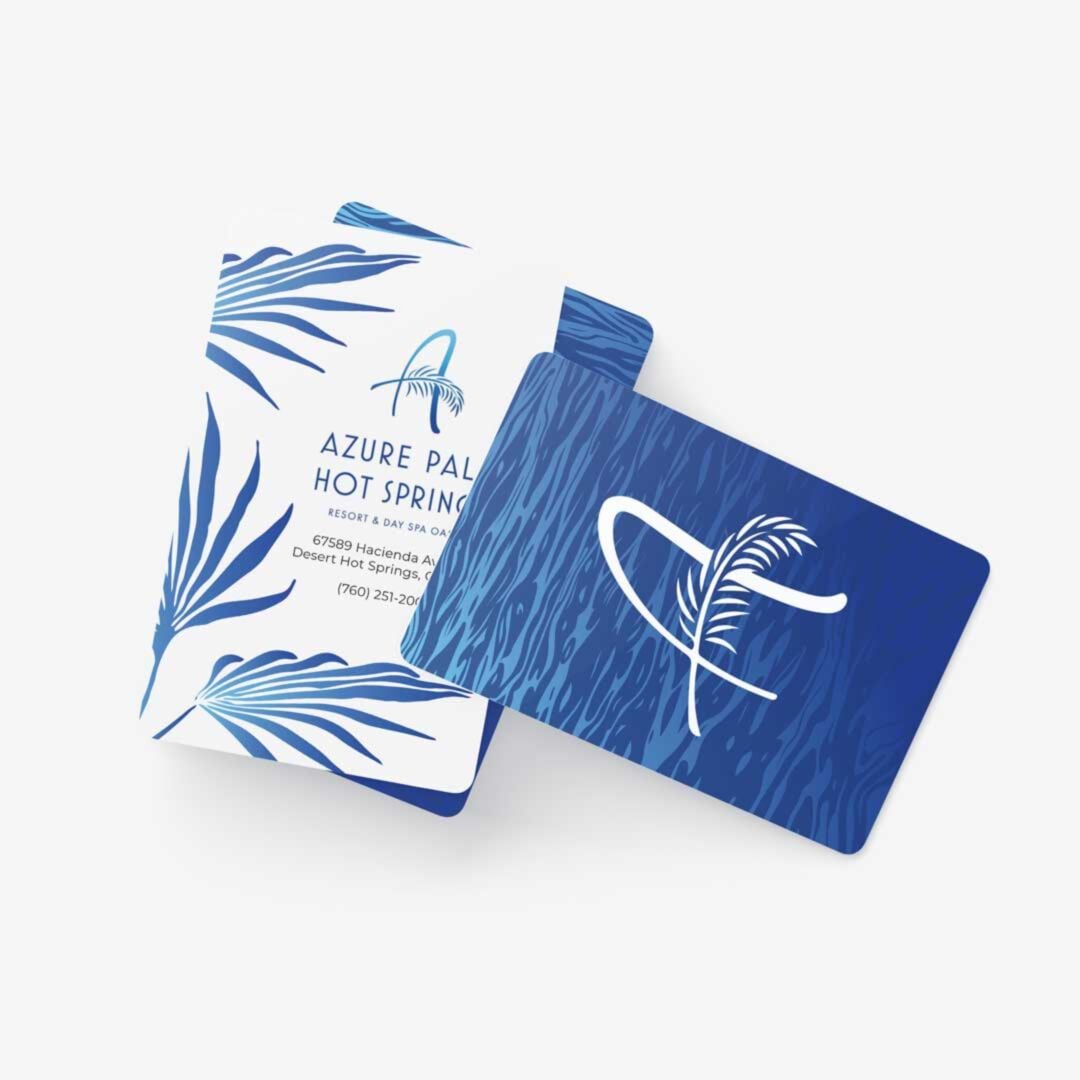
RFID gift cards combine the familiar stored-value gift card experience with contactless NFC tap-to-pay convenience. Customers load a dollar amount and redeem it by tapping at the point of sale. Premium printing, custom shapes and branded packaging transform the gift card into a brand ambassador that recipients keep and reuse.
- Tap-to-redeem: NFC gift cards process at the POS in under 1 second; no swiping, inserting or barcode scanning required.
- Brand-building design: full-color printing, metallic foil, spot UV, die-cut shapes and custom packaging make your gift card a premium branded product that customers are proud to give.
- Fraud-resistant: each NFC chip carries a unique, unclonable ID; unlike magnetic stripe gift cards, NFC gift cards cannot be skimmed or duplicated at the point of sale.
Used in these industries
Deployments where this product is referenced on our industry landing pages.

At a glance
Use these short answers to decide whether this page matches the project before moving into the detail.
Card body and form factor
ISO/IEC 7810 ID-1 (85.60 × 53.98 × 0.76 mm) is the retail-POS standard; rack-friendly fit into every display unit, wallet and envelope already in the store. Die-cut non-...
Gift-card market context
Global gift-card market tracked by Mercator Advisory Group / PYMNTS / NRF; U.S. alone tops USD 170 B annually, with Europe close behind under the EU Gift Card Directive...
Next step
Ready to move forward? Start your inquiry to get specific answers for this project.
Request quote and samples- Chip selection by programme tier
-
- NTAG213 (144 B) — URL-based balance lookup for low-stakes retail and café programmes; the cheapest credible NFC gift card.
- NTAG216 (888 B) — room for a promo payload plus the balance-URL; the default for mid-market retail.
- MIFARE Classic 1K — sector-based balance storage for legacy POS stacks that read sectors directly (not recommended for new builds).
- MIFARE DESFire EV3 — AES-128 encrypted stored-value for high-volume or high-value programmes; keeps the server the source of truth but authenticates every tap.
- Activation and anti-theft
-
- Cards ship deactivated with zero balance; activation at POS (barcode-scan + PIN-reveal) prevents theft of pre-loaded inventory from the display rack.
- Scratch-off PIN panel over a 4-digit or 6-digit activation PIN is the in-store standard; some programmes print the PIN as a VOID-on-lift overlay instead.
- Fraud posture — NFC vs mag-stripe
-
- Magnetic-stripe gift cards are routinely skimmed off-rack with handheld readers; criminals clone the stripe and drain the balance after activation.
- NFC cards carry a unique chip UID that a skimmer cannot replay against the POS; DESFire EV3 + AES-128 key diversification (AN10922) raises the bar to cryptographic attack.
- Digital overlay — tap-to-balance
-
- NDEF URI record programmed to `https://brand.example.com/gc?uid={uid}` opens the balance page on a stock iPhone (iOS 12+ Background Tag Reading) or Android phone without app install.
- Apple Wallet Passes and Google Wallet generic passes can mirror the physical card, but physical card still sells as a gift (the wallet overlay is not a substitute for the giftable object).
- Premium finishing — the gift ambience
-
- Hot-foil stamping (gold / silver / copper / holographic), embossing and spot-UV varnish on ISO/IEC 7810 ID-1 PVC is the standard gift-aesthetic stack.
- Card carrier / hanger / envelope / magnetic-closure box are ordered with the card and sequenced on the packing line so the unit walks out as a giftable SKU.
- Regulatory stack — Europe
-
- EU PSD2 (Directive (EU) 2015/2366) defines the 'limited-network' exemption under which most retailer-issued closed-loop gift cards operate without becoming e-money.
- EU Consumer Rights Directive 2011/83/EU requires clear pre-contractual disclosure of expiry and fees on retailer gift cards.
- Regulatory stack — United States
-
- U.S. CARD Act 2009 (Title IV of the Credit CARD Act, §402) prohibits expiry inside 5 years and restricts dormancy fees on retail gift cards; state-level escheatment rules layer on top.
- U.S. state escheat rules (Delaware, California, New York) trigger unclaimed-property reporting on dormant balances — operational tax cost the programme owner carries.
- POS and back-end integration
-
- Back-end gift-card processors (InComm, Blackhawk Network, Givex, CashStar, PayPoint) expose activation / redemption APIs that the POS calls on each tap.
- In-store reader (HID Omnikey 5127CK, Feig CPR40, ACS ACR1252) sits on the POS lane and passes UID to the processor; latency target < 500 ms round-trip.
- Reloadable / multi-visit programmes
-
- Reloadable NFC gift cards turn a one-time gift into a repeat-visit prepaid tool — the processor toggles a 'reloadable' flag on the card record; the chip itself does not change.
- Reload channels: POS top-up, e-commerce reload page, and (for wallet-provisioned mirror passes) in-app top-up via Apple Pay / Google Pay.
- Production workflow and lead time
-
- Artwork → pre-press proof → plate / RIP → offset (MOQ 500) or UV digital (MOQ 100) → lamination → punch → chip encoding (UID registration + NDEF URL) → scratch panel → optional packaging.
- Lead time 12–15 business days; + 3–5 days for foil / emboss / die-cut; free samples after artwork lock.
Why businesses upgrade to NFC gift cards from magnetic stripe
- Gift card fraud: magnetic stripe gift cards are vulnerable to skimming and cloning; criminals use handheld readers to copy the stripe data in-store and drain the balance before the recipient attempts to use the card. NFC chip-based gift cards eliminate this attack vector.
- Checkout experience: swiping a magnetic stripe gift card often requires multiple attempts due to worn stripes; NFC tap is reliable on the first attempt every time, reducing checkout friction and cashier frustration.
- Premium gifting experience: customers purchasing gift cards as holiday and birthday presents want a product that feels like a gift, not a disposable plastic rectangle; premium NFC cards with foil stamping, embossing and custom packaging justify a higher perceived value.
- Digital bridge (NFC gift cards can be programmed to open a web page when tapped on a phone, linking recipients to your online store, gift card balance checker or promotional landing page) creating an omnichannel experience from a physical card.
- Reloadable programs: NFC-enabled stored-value cards can be reloaded at the POS or online, turning a one-time gift into a repeat-visit tool that builds long-term customer relationships.
Gift-card programme at a glance
NFC vs magnetic-stripe vs barcode gift cards
NFC gift card (NTAG216 / DESFire EV3)
- Tap-to-redeem; reliable on first attempt; no mechanical wear on stripe or barcode.
- Unique chip UID; DESFire EV3 adds AES-128 and per-card key diversification.
- Opens a balance landing page on a stock phone — omnichannel loop with no app install.
- Premium-finish friendly: foil, emboss, spot-UV; the card is kept as a gift object.
- Higher unit cost (USD 0.30–2.50); the fraud and experience lift usually pays back.
vs magnetic-stripe and barcode gift cards
- Magnetic-stripe: cheapest per unit (USD 0.10–0.30) but routinely skimmed off the rack — documented industry-wide attack pattern.
- Barcode / QR: cheap and paper-capable, but photo-capture-clonable and sensitive to print wear and wrinkling.
- Mag-stripe / barcode carries no phone-tap affordance; omnichannel loop needs a separate printed URL or QR.
- Both feel like disposable ephemera; the gifting ambience has to be rebuilt in packaging.
- Regulatory stack (CARD Act / PSD2) is identical — the stored-value framework is independent of read interface.
Breakage — the economics every programme owner reads first
Proud Tek RFID gift card solutions
- Chip options: NTAG213 (URL link to balance page), NTAG216 (on-card stored data), MIFARE Classic 1K (sector-based balance storage) or MIFARE DESFire EV3 (AES-secured balance for high-value programs).
- Premium printing: full-color offset printing, metallic gold/silver foil stamping, spot UV varnish, soft-touch lamination, embossed logos and card numbers, and die-cut shapes (non-standard card outlines like circles, bottles or product shapes).
- Packaging: custom gift card holders, branded envelopes, magnetic closure boxes and retail-ready blister packaging for in-store display.
- Activation integration: cards ship deactivated with zero balance; your POS activates the card and loads the initial balance at the time of sale, preventing theft of pre-loaded inventory.
- Variable data: sequential card numbers, unique QR codes, scratch-off PIN panels and pre-programmed NFC URLs printed on each card for individual tracking and online balance management.
Milestones in gift-card programmes and the RFID transition
- 1994 — Blockbuster closed-loop gift card
Mag-stripe closed-loop gift cards become the modern retail standard; the form factor and rack display unchanged for 30 years.
- 2009 — U.S. CARD Act
Title IV of the Credit CARD Act locks in 5-year minimum expiry and restricts dormancy fees on gift cards; the contractual baseline for every U.S. programme.
- 2015 — EU PSD2
Directive (EU) 2015/2366 defines the limited-network exemption, the exit ramp that keeps retailer gift cards out of e-money regulation in the EU.
- 2018 — iOS 12 Background Tag Reading
iPhone XS / 11 read NFC NDEF tags in the background without app install; tap-to-balance-page becomes a credible mass-market UX.
- 2020 — Apple Wallet + Google Wallet generic passes
Digital wallet mirror passes become standard; physical gift card keeps the gift ambience, wallet pass keeps the redemption convenience.
- 2022 — Dual-interface gift cards
Retailers add NFC chip + preserved mag-stripe + barcode to catch every POS generation in one card; transitional pattern while mag-stripe racks retire.
- 2024 — NTAG424 DNA SUN anti-counterfeit
Authenticated tap (dynamic URL + AES signature) reaches gift-card price points; the premium-tier anti-fraud option for high-value stored-value.
- 2026 — Today
Proud Tek ships custom-printed NFC gift cards with chip encoding, scratch-PIN, packaging and POS-integration sequencing. Field-reference patterns drawn from retail-holiday-gift, hospitality-stored-value, restaurant-chain-gift, corporate-rewards-bulk and e-gift-redemption-card gift-card programmes.
Useful next pages
Use these linked product, guide and comparison pages to keep the next click specific and practical.
Related retail card products
Other card solutions for retail and hospitality.
FAQ
How is the balance stored and managed on NFC gift cards?
The balance is typically stored in your POS or gift card management system, not on the card itself. The NFC chip carries a unique ID that links to the account record in your system. When the customer taps the card, the POS reads the chip ID, looks up the balance, deducts the purchase amount and updates the record. This server-side approach is more secure than storing the balance on the card and enables online balance checking.
Can recipients check their gift card balance on their phone?
Yes. If the card is programmed with an NDEF URL, the recipient taps the card on their NFC-enabled phone and a web page opens showing their current balance and transaction history. No app download required. This works on iPhone (XS and newer) and most Android phones with NFC.
What is the MOQ and lead time for custom gift cards?
Custom-printed NFC gift cards: MOQ 500, lead time 12-15 business days from artwork approval. Premium features (foil stamping, embossing, die-cut shapes) add 3-5 business days. Gift card packaging (holders, envelopes, boxes): MOQ 500, produced concurrently with the cards. Contact us with your design concept for a quotation.
Sources & references
Primary standards, OEM datasheets and regulatory documents cited by this article. All URLs were verified on the access date shown below.
- ISO/IEC 7810:2019 — Identification cards — Physical characteristics
ID-1 form factor (85.60 × 53.98 × 0.76 mm) that every retail gift-card rack is built around.
- ISO/IEC 14443-1:2018 — Proximity cards at 13.56 MHz
Operating frequency, modulation and anti-collision protocol for NFC tap-to-redeem gift cards.
- NXP NTAG 213/215/216 product data sheet
Memory sizes (144 / 504 / 888 bytes) and UID framework underpinning most NFC gift cards.
- NXP MIFARE DESFire EV3 product data sheet (MF3D(H)x3)
AES-128 + per-card key diversification chip for premium high-value stored-value programmes.
- U.S. Credit CARD Act of 2009 — Title IV (Gift Cards)
Federal 5-year minimum expiry and dormancy-fee restriction framework for U.S. retail gift cards.
- EU Directive (EU) 2015/2366 — PSD2 (limited-network exemption)
Closed-loop / limited-network exemption that keeps retailer gift cards out of e-money licensing in the EU.
- National Retail Federation — Annual Gift Card Spending Survey
U.S. gift-card market sizing (USD 170 B+) and holiday-season spending benchmarks.
- FASB ASC 606 — Revenue from Contracts with Customers
Revenue-recognition standard that governs how gift-card breakage is booked on U.S. GAAP financial statements.
- IFRS 15 — Revenue from Contracts with Customers
International equivalent of ASC 606 governing gift-card breakage revenue recognition outside U.S. GAAP.
- NFC Forum — NDEF 1.0 and URI Record Type Definition
URI record framework for tap-to-balance-page omnichannel gift-card landing pages.
Proud Tek is a Shenzhen-based RFID & NFC manufacturer supplying hotel chains, transit operators, event venues and retail brands worldwide. Every order includes free samples, RF testing and dedicated project support.
Get a Quick Quote
Tell us about your project and we'll respond within one business day. Fields marked (asterisk) are required.